

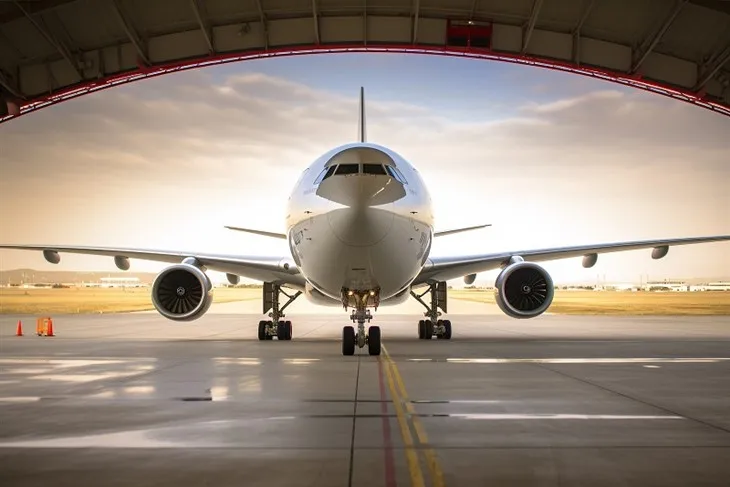
Air Transport Logistics
Air transport logistics is a comprehensive logistics platform designed to simplify and streamline the transportation of goods and products by air.
Product Introduction
Products Description
Moving and transporting goods via air carriers, whether charter or commercial, is what air cargo logistics is all about. Many in the logistics industry choose this option because packages can be sent from commercial and passenger aircraft gateways to anywhere aircraft can fly and land.
Air cargo also has the advantage of being high-speed and time-sensitive and can be delivered to any location in the world, which is extremely beneficial to small and medium-sized enterprises as it allows them to participate in international trade quickly and efficiently.
Additionally, air freight offers the highest level of security as airport security monitors and controls every shipment entering and leaving the country.
Air cargo is an important part of modern aviation logistics and air cargo business. Air cargo is an indispensable way of transporting valuables, fresh goods and precision instruments in international trade.
Air cargo provides safe, fast, convenient and high-quality services. Air freight has won a considerable market due to its speed, safety and punctuality, greatly shortening the delivery time.
Different types of air cargo services:

Express air freight service
If your goods are transported by express air, it will be arranged a direct flight to the final destination. The most expensive flying service is Air Express.

Standard air service
If your cargo is transported by regular air, it will most likely make a stop at an airport or two, where it will change planes or be loaded and unloaded with other cargo. The most popular air service is Standard Air Service.

Delayed air service
If shipped via Deferred Air Service, your shipment will make multiple stops on its way to its final destination. While this air freight service is cheaper than express air freight, it is still more costly than sea freight LCL (less than container load).
What is the air freight process or how does it work?
Air freight is usually arranged by an experienced freight forwarder. Freight forwarders work with multiple companies to transport goods by sea, air or road on behalf of their customers.
Although some freight forwarders have their own warehouses and trucks, they are not always responsible for shipping.
We handle the entire process as a one-stop solution at an affordable price, dealing with the International Air Transport Association (IATA) and the stringent regulations that control what is allowed on board aircraft, and handle complex transactions with the International Air Transport Association (IATA) (International Air Transport Association) Air Transport Association).
Importance of different types of logistics in supply chain
Why use a freight forwarder?
Freight forwarding is part of the supply chain transportation logistics process and its main role is to ensure that air cargo is managed in a way that it can be delivered by aircraft operators.
Freight forwarders are not affiliated with any carrier. Finding and negotiating the best shipping rates on behalf of customers is an important part of their job.
Freight forwarders are experts in rerouting for better prices through our contacts and knowledge. Freight forwarders are in a good buying position to drive down prices, and we send a lot of business to carriers through a variety of different customers.
Freight forwarders also handle all the paperwork involved in international trade. This includes
-
Track inland shipments
-
Prepare shipping and export documents
-
Warehousing
-
Reserve cargo space
-
Negotiate shipping costs
-
Freight consolidation
-
cargo insurance
-
Submit an insurance claim

Choose Jiaxing Heyuan Supply Chain Company to negotiate and determine the cost of transporting your goods.
We arrange for you to pick up pre-packaged goods or complete packaging before shipping.
Products will be shipped to the airport and subject to customs inspection at the point of origin.
The plane is loaded with cargo. If delivered as part of a consolidated shipment, the aircraft will remain on the ground until the cargo is loaded, which can take several days.
When the package reaches its final destination, it will undergo another customs inspection and will not be allowed into the country until all duties and taxes are paid.
Goods will be delivered to you according to the terms of your freight forwarding agreement.
High Value Cargo and Security Practices
Every shipper has a reasonable expectation that their shipment will arrive intact, but when the value of the shipment is high, the risk increases significantly. Such cargo requires a variety of specific processes and security measures to protect the internal cargo from unforeseen events at every stage of the transportation process.
Shippers and airlines must work together to maintain the highest level of security for high-value cargo at all times.
The transportation of valuable cargo presents airlines and logistics companies with many unique challenges compared to other types of air cargo.
Preparation and training in cargo loss prevention techniques is a daunting task. There are multiple touch points along the supply chain, each of which presents a high-risk potential for loss.
Complaints of lost or stolen goods have been reported at every stage of the supply chain, from warehouses to transport and even high-security airport areas. In addition, other factors such as geography, culture, business practices, current events, etc., create additional risks that must be considered for each destination or market.
We often ship valuable items that require special handling. With digital video recording systems, guarded shipping, additional insurance and security experts, valuables are extra secure from pickup to transport and delivery.
E-commerce logistics:
E-commerce logistics is the process of storing and transporting inventory for an online store or marketplace, including inventory management, picking, packaging and shipping of online orders. E-commerce logistics starts with shipping the manufacturer’s inventory and continues until the goods reach the customer.
Millions of packages are shipped around the world every day, so systems must be in place to keep them on track and ensure they get to the right place on time.

Air freight service
As one of the world's leading air freight forwarders, Jiaxing Heyuan Supply Chain Company serves all major commercial routes around the world. We are committed to providing safe, fast air freight and air freight services at affordable prices, with flexible delivery speeds and service options to give you a hassle-free experience.
With the help of our partner carriers operating in all major destinations across the globe, we ensure safe and on-time delivery of goods around the world.
Why choose us?

Global direct shipping

Air freight brokerage between shippers and carriers

Short transit times within the transport chain

Daily direct flights to multiple destinations

Combined shipping

Air transport of heavy and oversized cargo

Choose a carrier based on quality and service

Express delivery

In-flight express delivery to multiple destinations

special service

An alternative to pure air freight for emergency cargo

charter flight
What types of cargo are transported by air?
What is general cargo?
What is special cargo?
What do you need to know about transporting dangerous goods?
Dangerous Goods Transportation Restrictions
Dangerous goods classification
Dangerous goods identification
Other dangerous goods publications
What do you need to know about transporting temperature-controlled goods?
Documentation and Labeling of Temperature Controlled Goods
Acceptance and control of temperature-controlled items
What do you need to know about shipping perishable goods?
Applications and regulations for transporting perishable goods
Marking and Labeling for Shipping Perishable Goods
Packaging for transporting perishable goods
What do you need to know about transporting live animals?
Application and regulations for the transportation of live animals
Marking and labeling of live animals for transport
Animal Behavior and Live Animal Transport
Handling Procedures for Live Animal Transport
What types of cargo are transported by air?
Looking at the various types of cargo transported by air, they are mainly divided into two categories: general cargo and special cargo. Special cargo is then divided into smaller specialized groups
What is general cargo?
General cargo refers to items that do not fall into the special cargo category and do not require any additional precautions or special handling during air transport. These types of goods include retail and most consumer goods (except mobile phones, tablets, and laptops), dry goods, hardware, textiles, and more. Think of your normal, everyday items; most of them will fall into the general cargo area.
What is special cargo?
Specialty cargo is where things get a little complicated. Special cargo is cargo that, because of its nature, weight, dimensions and/or value, may have specific requirements, including packaging, labelling, documentation and handling throughout the transport chain. The transportation of these goods is addressed by specific regulations that must be followed when preparing, offering, accepting and handling such goods. Items include dangerous goods, live animals, perishable goods, wet goods, time and temperature sensitive products, etc.
What do you need to know about transporting dangerous goods?
The IATA Dangerous Goods Regulations (DGR) manual is the global reference for air transport of dangerous goods and the only standard recognized by airlines. It provides everything needed to classify, prepare, receive and handle dangerous goods cargo in compliance with international air transport regulations. IATA has been publishing DGR for over 60 years. The DGR is published annually to ensure the industry has the latest information regarding the transport of dangerous goods. IATA works closely with governments, other industry associations and the International Civil Aviation Organization (ICAO) to develop these regulations. In this way, IATA ensures that regulations for the transport of dangerous goods by air are effective, efficient and internationally recognized to facilitate the transport of dangerous goods while prioritizing the safety of everyone on board.
Dangerous Goods Transportation Restrictions
While some dangerous goods are too dangerous to be transported by air unless there are very detailed allowances from the Civil Aviation Authority, many dangerous goods can only be transported by cargo aircraft, while others can be transported by both cargo and passenger aircraft. Regardless of the type of aircraft used to transport dangerous goods, there are specific requirements that must be followed.
When considering restrictions on the carriage of dangerous goods, it is never acceptable to transport any substance which is likely to "explode, react dangerously, produce flames or dangerously exotherm or emit dangerous emissions of toxic, corrosive or flammable gases or vapors under conditions normally encountered ".
There are many other materials that can only be carried in very specific circumstances. These are considered "dangerous goods prohibited from carriage unless exempted."
Other everyday items may not appear hazardous on the surface but need to be checked for dangerous ingredients, such as battery-powered equipment, respirators and dental equipment. Therefore, passenger check-in, cargo booking, sales and passenger reservation staff must be provided with appropriate information so that they are fully aware of hazardous materials and are well trained.
Dangerous goods classification
Dangerous goods are divided into nine categories:
Class 1 - Explosives
Class 2 gas
Class 3 - Flammable Liquids
Level 4 - Flammable solids; substances prone to spontaneous combustion; substances that release flammable gases on contact with water
Class 5 - Oxidizing Substances and Organic Peroxides
Class 6 - Toxic and Infectious Substances
Class 7 - Radioactive Materials
Class 8 - Corrosives
Class 9 - Miscellaneous hazardous substances and articles, including substances harmful to the environment
Several categories are divided into subcategories due to the wide range of hazards within the categories
Dangerous goods identification
Dangerous goods are assigned a UN number and correct shipping name based on their hazard classification and composition. Identification of dangerous goods is critical for proper packaging, documentation, acceptance and handling. The IATA DGR lists approximately 3,000 substances and items commonly transported by air freight.
Other dangerous goods publications
Recognizing that there is a degree of segmentation in the shipper base, with a large number of shippers transporting only lithium batteries or equipment powered by lithium batteries, and the biomedical industry transporting only infectious materials, IATA has developed separate manuals to address this these goods.
What do you need to know about transporting temperature-controlled goods?
Some commodities, such as pharmaceuticals, blood supplies, organs, or other life sciences products, require specific controls on the temperatures to which they are exposed during transportation. Complying with the IATA Temperature Control Regulations (TCR) ensures safe and reliable delivery no matter what kind of temperature-controlled cargo you transport.
Documentation and Labeling of Temperature Controlled Goods
When shipping temperature-controlled goods, it is critical that all documentation is filled out completely and clearly. It is recommended to use the complete information and phone numbers of the shipper and consignee. It is always recommended to use IATA's 3-letter processing codes.
If the shipment is accompanied by any certificates or health documents, these should be recorded in the "Handling Information" box of the air waybill. You should complete the "Nature and Quantity of Cargo" section of your air waybill and indicate whether dry ice is used as the refrigerant as it is considered dangerous goods.
Acceptance and control of temperature-controlled items
Before a carrier can accept a time- and temperature-controlled shipment from a shipper, many details about the shipment must be worked out in advance. Some of the details include:
Time and Temperature Commodity Contents
type of packaging
Flight schedules and routes
Aircraft type
environmental conditions
Temperature control possible in all stages
Estimated travel time
24-hour emergency contact number
National specific regulations
What do you need to know about shipping perishable goods?
As fresh fruits and vegetables become increasingly popular year-round, the transportation of perishable goods is in high demand. Short travel times and controlled temperatures make air freight perishable cargo the preferred mode of transportation.
Applications and regulations for transporting perishable goods
When shipping perishable goods by air, specific steps and regulations apply to the air freight process. Is the goods acceptable? Are there markings and labels? Does it meet the prescribed conditions, etc.? Shippers and carriers must also meet their responsibilities. Every step of the process must be followed. You can learn more about these responsibilities in sections 1.2 and 1.3 of the IATA Perishable Cargo Rulebook (PCR).
Marking and Labeling for Shipping Perishable Goods
Shipping perishable goods requires extensive documentation. The process begins with ensuring that the air waybill is completed completely and accurately and does not place unreasonable demands on the handling of perishable items.
The cargo manifest should be marked with the correct IATA handling code. These codes are for internal use only but ensure your perishable goods are handled correctly. Cargo handling codes can be found in IATA PCR Appendix D.
Additional documentation may be required, such as a license number that may be included on the cargo manifest in some countries.
Shippers should always mark what is included in the package and whether dry ice is used, as it is classified as a hazardous material. The packaging should then be properly labeled with a standard IATA label such as: "Perishable", "Mobile Goods" or "Wet Goods".
Packaging for transporting perishable goods
There are many types of perishable goods, and each commodity is susceptible to spoilage, some more quickly than others. Proper packaging and handling are essential for perishable goods to be delivered in good condition.
Packaging must facilitate the integrity of the goods as well as their handling and storage.
Packaging must comply with food safety regulations and meet food-grade standards, while still being durable enough to withstand temperature changes and stacking. Creating suitable packaging for perishable goods takes a lot of effort.
What do you need to know about transporting live animals?
Global standards for the transport of live animals by air are set by the IATA Live Animal Regulations (LAR). These regulations are in place to ensure the safety of animals as well as transportation workers and passengers.
Application and regulations for the transportation of live animals
Forty-five countries or regions have officially incorporated IATA’s LAR into their national regulations. This list is updated annually in the current IATA LAR to include the latest information on which countries apply and enforce these regulations.
In these live animal transportation regulations, it is stated that all live animals, except service dogs, must be placed in a container specified by the regulations. IATA LAR meets the strictest regulations, so when you comply, you are fully compliant.
Marking and labeling of live animals for transport
Proper marking and labeling is critical and always required when dealing with the transport of live animals. The label should be printed and affixed to the outside of the animal container. English must always be used in addition to the original language spoken by the shipper.
Each container should be clearly and legibly labeled with the shipper, consignee's full name, address, current contact number and 24 hour contact information if they are not one of the above. It should also list the common and scientific names of the animals and list the number of animals in the container. Other information that should be included is whether the animal is venomous or can bite. Any feeding or care instructions should also be clearly posted.
Depending on what is being transported, each container must have a label that complies with IATA requirements, such as: "Live Animals," "Up" and "Laboratory Animals." Each label has the exact size and color specified by IATA regulations; however, the label can be printed on the container itself.
Animal Behavior and Live Animal Transport
It is important to understand the basic behavior of a given animal under stress, as this will influence how they react during transport. Their reactions can cause problems or even harm to the animal or the handler. There are some guidelines for handling animals in heat, mammals, and pups traveling with other pups. For animals and keepers alike, adhering to these guidelines is critical for the safety and well-being of all.
Animals should be disturbed as little as possible, handled by as few people as possible, and only when properly trained.
Handling Procedures for Live Animal Transport
When transporting live animals, it is the shipper's responsibility to ensure that all animals are healthy and in good condition. The carrier is responsible for ensuring that the shipper complies with all regulations.
When ensuring compliance with the guidelines, they must check:
Document details.
Container design.
Marks and labels.
Directions and booking information.
A step-by-step acceptance checklist must be completed to comply with IATA LAR requirements. Staff performing these processes must be fully trained and comply with IATA rules and regulations, so it is critical to be aware of the changes enacted each year.
Animals may only be loaded into approved transport compartments and never into aircraft unit load devices (ULDs). Animal containers should always be loaded in an upright position with as little disruption as possible. They should be loaded as close to departure as possible.
Transporters should take precautions to ensure that no other cargo falls onto the live animal container during transport. Live animals should not be stored next to certain hazardous items or foods unless sealed. When unsure about which items can be loaded with live animals, carriers should refer handlers and loaders to the incompatibility table in Chapter 10 of the IATA LAR.
After unloading live animals, the cargo area must be adequately cleaned and disinfected by personnel wearing appropriate gloves and boots. There are clear guidelines for disinfectants and an approved deodorizer should be used after use, ensuring all movable equipment, enclosures and containers, and loading ramps are cleaned. Every importing and exporting country must adhere to these guidelines.
Hot Tags: air transport logistics, China air transport logistics, air line cargo, air freight, global cargo airlines, Air Freight Service, aircraft cargo, Air Freight Trucking Company
You Might Also Like
Send Inquiry
