Shipping From China To Belgium 2025
Shipping from China to Belgium plays a vital role in the economic growth of both countries, with bilateral trade exceeding $30 billion per year. Key industries include technology, pharmaceuticals and the automotive industry, which have contributed to GDP growth and created jobs.
Belgium's trade with China is growing day by day. Belgium is an important global trade and logistics hub, and transportation demand is also growing. Timeliness is something every import customer wants to know. This article will introduce the timeliness of shipping from China to Belgium in detail and understand the approximate shipping time.

Table of Contents
1. The Current Situation of China-Europe Logistics under the Background of Global Trade
2. The Main Modes of Transport from China to Belgium
3. Analysis of Transportation Process and Key Links
4. Technical Defects and Challenges: Problems and Room for Improvement
1. The Current Situation of China-Europe Logistics under the Background of Global Trade
1.1 Global Trade Situation and China-Europe Economic Cooperation
Against the background of the continuous advancement of global economic integration, trade activities between China and Europe are becoming increasingly frequent. As the world's largest manufacturing country, China has a rich variety of products and strong competitiveness; while Europe is known for its high value-added products and high-quality services. China-Europe trade has not only promoted the rapid development of the economies of both sides, but also promoted the upgrading of logistics and supply chain management. Especially driven by the "Belt and Road" initiative and the Eurasian interconnection policy, China-Europe logistics and transportation are gradually transforming from traditional models to digitalization, intelligence and greening.
1.2 The strategic position of Belgium as a European logistics hub
Belgium is located in the heart of Europe and has major international ports such as Antwerp and Zeebrugge. These ports have world-class facilities and efficient logistics services, making them one of the most important logistics hubs in Europe. Belgium not only connects the Nordic, Eastern and Central European markets, but is also an important gateway for global goods to enter and exit Europe. For goods from China, Belgium provides efficient and convenient customs clearance services and a wide range of market docking platforms, attracting a large number of multinational companies to enter the European market through Belgium.
1.3 The development status of China's export trade
In recent years, China's export trade has continued to innovate and break through. From low-cost manufacturing to high-tech product output, the competitiveness of Chinese companies in the global market continues to improve. At the same time, the continuous advancement of logistics and freight technology provides export companies with more diverse transportation options. The goods shipped from China to Belgium cover a wide range of fields from electronic products, mechanical equipment to clothing and textiles, food and beverages, meeting the increasingly diversified needs of the European market.
2. The main modes of transportation from China to Belgium
In cross-border logistics transportation, companies can choose the appropriate mode of transportation according to the type of goods, time requirements and cost budget. The following are the main modes of transportation and their characteristics:
2.1 Ocean transportation-the first choice for economic and bulk goods
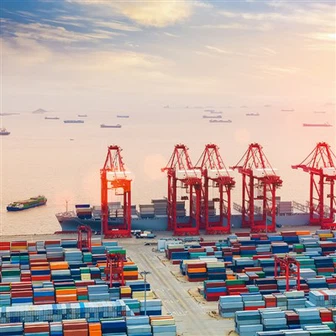
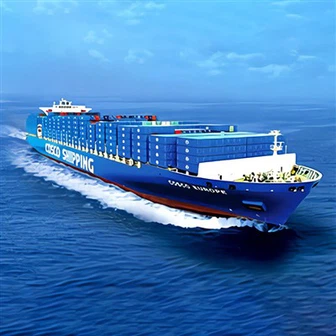
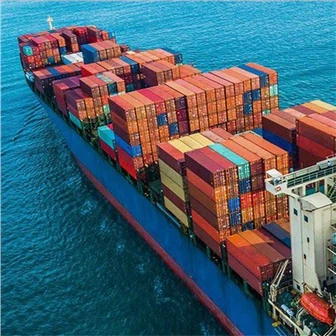
Ocean transportation has always been one of the mainstream modes of international logistics transportation. Due to its large capacity and low cost, ocean transportation is suitable for bulk goods and non-emergency transportation. Enterprises can choose full container load (FCL) or less than container load (LCL) mode, and ship from major Chinese ports such as Shanghai, Ningbo, Shenzhen, etc., and directly reach major Belgian ports (such as Antwerp Port and Zeebrugge Port) via international routes. Although the shipping time is longer (usually 20 to 40 days), its low cost and high loading efficiency have obvious advantages for goods that are not in a hurry to be delivered.
However, there are also some defects in sea transportation, such as port congestion during peak hours, cargo loss during transshipment, and temperature and humidity control of cargo during long-distance transportation, which need to be solved through a complete warehousing, loading and unloading and transportation monitoring system.
2.2 Air transport - guarantee of timeliness and high-value goods
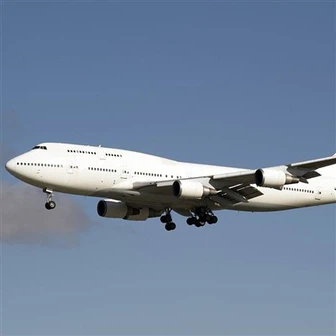
Air transport has become the preferred mode of transporting high-timeliness or high-value goods with its fast and punctual characteristics. Goods shipped from major international airports in China can usually reach major airports in Belgium (such as Brussels Airport or Antwerp Airport) within 3 to 7 days. Although air freight is more expensive, it is undoubtedly the best choice for time-sensitive goods such as electronic products, pharmaceutical products and perishable foods.
The main technical challenges of air freight are strict safety inspection and cargo packaging requirements, as well as insufficient monitoring of cargo temperature and humidity during air transportation. To this end, logistics companies continue to introduce advanced monitoring systems and temperature control equipment to ensure the stability and safety of goods during transportation.
2.3 Railway transportation - China-Europe Express and multimodal transport
In recent years, with the continuous expansion of China-Europe Express, railway transportation, as an important way to connect China and Europe, has gradually attracted attention from all walks of life. Compared with sea transportation, railway transportation has the advantages of shorter time and stronger environmental protection, and is between the two in terms of cost. China-Europe Express generally takes 15 to 25 days and is suitable for medium-sized cargo and some urgent items. In addition, railway transportation can also form a multimodal transport combination with sea and air transportation to achieve door-to-door integrated logistics services.
However, the disadvantages of railway transportation are also obvious, such as limited train schedules, different cross-border railway operation standards, and possible delays during transshipment. Therefore, how to achieve efficient connection between railway systems of various countries and improve transportation time efficiency has become a technical problem that needs to be solved urgently.
2.4 Road transportation and last-mile delivery
After bulk goods arrive at Belgian ports or airports, road transportation undertakes the "last-mile" delivery task. Road transportation not only includes inland transshipment of containers, but also involves the precise delivery of goods in the region. Thanks to Belgium's developed road network and information management system, road transportation can deliver goods to customers quickly and accurately.
The defects of road transportation are mainly reflected in unstable road conditions, weather influences and vehicle maintenance issues in long-distance transportation. To this end, logistics companies usually cooperate with professional transportation companies to use GPS tracking systems and real-time scheduling systems to ensure the efficiency and safety of road transportation.
2.5 Comprehensive transportation and multimodal transport solutions
The comprehensive transportation mode is to provide customers with a one-stop logistics solution through the seamless connection of multiple modes of transportation. Enterprises can flexibly choose a combination of sea transportation, air transportation, rail transportation and road distribution according to their own needs, which can not only reduce transportation costs but also shorten transportation time. Intermodal transport not only requires technical docking and process connection between various modes of transport, but also requires the use of advanced information systems and data platforms to achieve transparent cargo tracking and dynamic management throughout the process.
The technical challenges of intermodal transport lie in the lack of uniform information standards between different modes of transport and the connection of transshipment nodes. By establishing a cross-border logistics information platform, applying Internet of Things technology and blockchain technology, the future integrated transportation mode will become more efficient and intelligent.
3. Analysis of transportation process and key links
No matter which mode of transport is chosen, the entire process of shipping goods from China to Belgium can be divided into several key links. The following is a detailed analysis of each link:
3.1 Cargo preparation and packaging requirements
First of all, the packaging of goods is the basis of the entire transportation process. In order to ensure the safety and integrity of goods in long-distance transportation, enterprises must use packaging materials and technologies that meet international standards. In particular, for fragile, perishable and high-value goods, multiple protective measures must be adopted to prevent collision, vibration and temperature changes during transportation.
Inadequate packaging design may lead to damage to goods and transportation delays, which in turn affects customer satisfaction. To this end, professional packaging design not only requires technicians to have rich experience, but also requires customized packaging strictly in accordance with customer needs.
3.2 Booking, loading and cargo tracking
After the goods are prepared, the company needs to book through a logistics platform or freight forwarder. The booking stage involves signing a transportation contract with the carrier (sea, air or railway company) and determining the transportation date and flight of the goods. For bulk goods, full container transportation (FCL) can maximize the reduction of unit transportation costs; for scattered goods, less than container transportation (LCL) is more economical.
During the loading process, how to reasonably layout the goods and ensure the density and weight balance of the cargo in the container is the key to ensuring the safety of the goods during transportation. Modern logistics platforms provide real-time tracking systems, allowing customers to understand the status of the goods in real time throughout the transportation process and prevent accidents.
3.3 Customs declaration and customs clearance process
From China to Belgium, customs declaration is an indispensable and important link. Enterprises need to prepare a series of documents such as commercial invoices, packing lists, bills of lading, certificates of origin, etc. in advance, and declare them in accordance with Belgian customs regulations. During the customs declaration process, any incomplete or incorrect documents will lead to customs clearance delays or additional costs.
In order to improve customs clearance efficiency, logistics companies maintain close communication with customs departments and apply intelligent customs declaration systems to realize automated document processing and risk warning to ensure that goods can pass customs inspection smoothly.
3.4 Application of logistics digitization and real-time monitoring technology
The modern logistics industry is rapidly transforming to digitalization. By applying advanced technologies such as big data, the Internet of Things, and blockchain, real-time monitoring of the entire process of cargo transportation is achieved. Whether in sea shipping, air transportation, rail transportation or road distribution, all links can collect real-time data through GPS, RFID and sensors.
These technologies not only improve the transparency of the transportation process, but also can provide timely warnings when abnormal situations occur, helping companies to take countermeasures quickly. The application of data analysis and prediction models makes transportation plans more scientific and accurate, greatly reducing the risks and costs of logistics operations.
3.5 Analysis of insurance, taxes and additional charges
In the process of international freight, in addition to basic transportation costs, insurance premiums, tariffs, value-added taxes, and fuel surcharges also constitute an important part of the overall transportation cost. To reduce risks, companies usually need to purchase full insurance for goods to prevent accidents or damage during transportation. At the same time, understanding Belgium's tax policies and fee standards is of great significance for budget planning and cost control. Logistics companies usually provide customers with a detailed list of fees and specify various fees in the quotation to ensure that transportation costs are transparent and controllable.
4. Technical defects and challenges: problems and room for improvement
Despite the continuous advancement of global logistics technology, there are still many technical defects and challenges in the process of shipping goods from China to Belgium. The following is a detailed analysis of the main problems and room for improvement:
4.1 Mold and volume error problems in sea transportation
As the main mode of transportation, sea transportation often causes cargo volume errors during loading due to unreasonable mold design or aging of production equipment. Especially in LCL transportation, the size and weight control of different batches of goods are not strict, which will cause uneven cargo density in the container, thereby increasing transportation risks. In response to this problem, the industry is increasing its investment in the research and development of intelligent detection equipment and automated loading systems to improve mold processing accuracy and data collection accuracy.
4.2 Documentation and security challenges faced in air transport operations
Although air transport is time-sensitive, due to strict transportation requirements, the completeness of documents is directly related to whether the goods can pass the security inspection smoothly. Some companies have delayed air transport due to non-standard documents or incorrect data filling. In addition, air transport has high requirements for temperature control, earthquake resistance, moisture resistance, etc. If the packaging is not done properly, the goods may be damaged. To solve this problem, logistics companies are gradually promoting electronic documents and automated verification systems, while improving cargo packaging and monitoring systems to ensure that every air transport meets international safety standards.
4.3 Equipment maintenance and unstable transportation timeliness in railway transportation
As an important part of the China-Europe Express, railway transportation has great potential in improving transportation efficiency and environmental protection performance. However, the defects of railway transportation are improper equipment maintenance and unstable train schedules. Some freight trains are prone to fluctuations in transportation timeliness due to old equipment or scheduling problems, affecting the overall supply chain. To solve this problem, it is necessary to strengthen the modernization of railway transportation equipment, optimize the scheduling system, and ensure the efficiency and stability of the transportation process.
4.4 Technical bottlenecks in customs and customs clearance
The customs and customs clearance links of international freight are the most prone to delays in the entire transportation process. Due to the large differences in customs regulations among countries and the complexity of international trade documents, many companies often encounter problems at this stage. In particular, manual operations are prone to errors during data entry and verification. To this end, logistics companies are introducing automated customs clearance platforms and intelligent customs declaration systems, using big data technology to predict risks in advance and improve customs clearance efficiency, but system integration and cross-border data docking still face technical challenges.
4.5 Insufficient cross-border information system docking and data sharing
International logistics involves data sharing in multiple links and cross-border systems. However, the current logistics information system standards of various countries are different, and data transmission is not smooth, which often leads to information delays and data errors. To this end, the industry calls for the establishment of a global unified logistics data standard and interface protocol, and the use of blockchain and Internet of Things technology to achieve secure sharing and real-time transmission of cross-border data. Although some companies have begun to try, full promotion still requires broader cooperation and policy support in the industry.