China-latin America Freight Transport Across The Hemisphere Will Be Smoother
Source: People's Daily Overseas Edition
Salmon from Chile, white shrimp from Ecuador, blueberries from Peru, beef from Argentina, coffee from Brazil and Colombia... In recent years, agricultural products from the Latin American region have become more common on Chinese tables. Air, sea and other freight routes between China and Latin American countries are becoming more mature, and the multimodal transport network is more developed, which is building more "air" and "sea" freight corridors for economic and trade exchanges between China and Latin America.
Expert analysis pointed out that the expansion of the scope of China-Latin America freight and the improvement of transportation efficiency will provide logistics support for the economic and trade exchanges between China and Latin America, and also provide impetus for industrial upgrading and regional economic integration in Latin America.

Expanding the range of China-Latin America freight and improving the efficiency of transportation
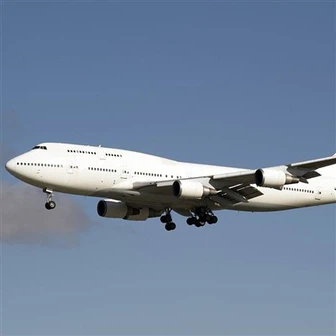
At 5:42 am on April 16, an A330 all-cargo plane loaded with 54.6 tons of cross-border e-commerce related goods departed from Wuxi Shuofang Airport in Jiangsu province and arrived in Mexico City 22 hours and 50 minutes later. This marks the smooth opening of Jiangsu's first direct cargo route to Latin America, which has also become a new member of the busy cargo route between China and Latin America.
In recent years, a number of Chinese cities have opened cargo air routes to Latin America. Not long ago, Hefei Xinqiao International Airport in Anhui Province opened the first direct cargo route to Latin America - "Hefei-Mexico City" route. In April 2023, Shenzhen opened the first South American cargo route - "Shenzhen-Sao Paulo" cargo charter route, and in December, the "Shenzhen-Mexico City" cargo route was opened. In 2022, Chengdu, Sichuan Province, has opened the first international cargo route from Southwest to South America "Chengdu-Madrid-Sao Paulo" and "Chengdu-Sao Paulo" freighter route within six months. As early as 2021, Wuhan, Hubei Province, opened the first cargo route from the Chinese mainland to Latin America, "Wuhan-Mexico City" route.
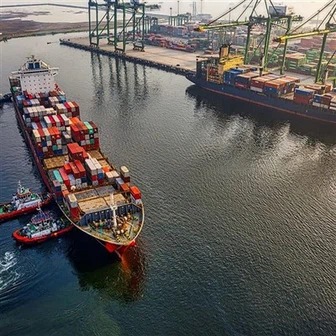
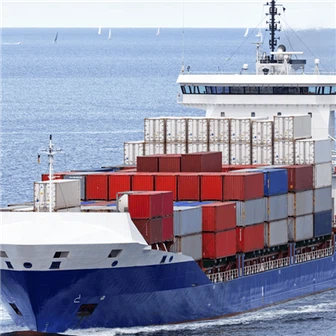
In addition to air freight networks, China and Latin America are also expanding sea express routes. According to Container Trade Statistics, a UK-based shipping data service, between 2019 and 2023, the share of Chinese products in container sea freight to Latin America rose from 75 per cent to 80 per cent.
In January this year, Tianjin Port's first "Cherry Express line" directly to the Chilean port of SAN Antonio was officially opened, and three ships with a total of more than 8,300 tons of Chilean cherries arrived at Tianjin Port. South American fruits spanning half the world have enriched the "New Year goods" gift packages of residents in the Beijing-Tianjin-Hebei region. In the same period, the newly opened "Dalian Port - South America West" container ocean route was officially put into operation, which passes through the main ports of Mexico, Panama, Colombia, Ecuador and other countries, from Dalian to Guayaquil port in Ecuador only 25 days, greatly improving logistics efficiency.
"At present, the development of China-Latin America shipping routes is relatively mature, and has covered most of the important ports in Latin America; Air routes have developed very rapidly in the last five years, mainly concentrated in Mexico City, Mexico, and Sao Paulo, Brazil, the two major Latin American cargo distribution centers." Tang Jie, the main person in charge of the Latin America and Caribbean Research Department of the American and Oceania Research Institute of the International Trade and Economic Cooperation Institute of the Ministry of Commerce, analyzed in an interview with this newspaper that at present, the development of China-Latin America freight has several characteristics: first, the development trend of multimodal transport is good. Sea and air routes between China and Latin America have been continuously improved, direct air routes have been opened in different cities, and multi-modal transport has been achieved in combination with local railways and highways, expanding the scope of logistics services, reducing transit costs and improving transport efficiency. Second, the freight routes closely follow the development strategies of China and Latin America and actively respond to the Belt and Road Initiative. At present, the more developed freight routes connect one end of the Latin American countries with close economic and trade relations with China, and the other end connects with the urban agglomeration of China's cross-border e-commerce industry and manufacturing industry, providing logistics support for the complementary economic and trade exchanges between the two sides.
The Belt and Road Initiative has greatly promoted our cooperation in various fields
According to the International Trade Outlook for Latin America and the Caribbean 2023, an annual report released by the United Nations Economic Commission for Latin America and the Caribbean, the total trade in goods between China and Latin America increased by 35 times between 2000 and 2022, while the total trade between the region and the rest of the world increased by only four times during the same period. In 2022, the trade volume of goods between China and Latin America reached a record high of nearly 500 billion US dollars. China is now the second largest trading partner of Latin America and the largest trading partner of Brazil, Chile, Peru and Uruguay.
Tang Jie analyzed that one of the advantages of the sustainable development of China-Latin America freight is the solid foundation of political mutual trust between China and Latin America. China has established comprehensive strategic partnerships with Brazil, Peru, Mexico, Argentina, Chile and other Latin American countries. China has signed memoranda of understanding with 22 Latin American and Caribbean countries on jointly building the Belt and Road. Latin America is a natural extension of the 21st Century Maritime Silk Road. The sound political relations between China and Latin America provide a stable political foundation and policy support for further expanding investment and trade between the two sides.
According to statistics, as of 2023, China has signed free trade agreements with five Latin American countries: Ecuador, Nicaragua, Chile, Peru and Costa Rica. China's FTA negotiations with Honduras and negotiations on upgrading the FTA with Peru have officially started.
Panama's "Star" reported that China's urbanization process has driven residents' demand for safe, diversified and high-quality food, and Latin America has great opportunities due to its rich natural and water resources, and it has the necessary comparative advantages to supply nutritious, safe and high-quality food to China. Trade between China and Latin America has a clear cross-industry structure: in 2022, 95 percent of exports from Latin America and the Caribbean were raw materials and manufactured goods based on natural resources, while 88 percent of goods from China were manufactured goods.
"In terms of economy and trade, the economies of China and Latin America are significantly complementary. China has a huge market demand, and Latin American countries have rich natural resources. In recent years, China-Latin America economic and trade exchanges have become closer, providing broad space for bilateral cooperation in the field of freight transportation and logistics." Tang Jie believes that the cooperation mechanism between China and Latin America is relatively perfect, and the China-Latin America Belt and Road Initiative promotes cooperation between the two sides in infrastructure construction, investment, financial services and other fields, improves logistics channels, supports Latin American countries to further upgrade logistics and warehousing and other infrastructure, and improves freight efficiency. In addition, the two sides have actively communicated and cooperated through the economic and trade cooperation Forum and high-level entrepreneurs Roundtable, which is conducive to properly addressing current and future challenges.
Promote the establishment of a more modern and efficient logistics system
The executive secretary of ECLAC, Salazar Cirinacis, said earlier that the main challenge facing Latin America, especially South America, is how to increase the diversity of exports and reduce over-dependence on raw materials. Therefore, regional countries should adopt policies to strengthen the development of industrial clusters.
"Strengthening regional integration is the common aspiration of Latin American countries. Latin America attaches great importance to enhancing its own economic autonomy and export trade resilience, which also has certain requirements for freight construction. Latin American countries generally have a strong willingness to strengthen cooperation with China, jointly promote the construction of freight logistics, and help the regional integration of Latin America." Tang Jie believes that in recent years, the growth and structural optimization of China-Latin America trade have promoted the development of freight related industries, and the improvement of freight capacity and freight services between China and Latin America have provided support for deepening trade cooperation between the two sides. The improvement of freight capacity between China and Latin America will help open up the links between Latin America and other international freight channels, and help the freight cooperation between Latin America and other countries.
Over the years, the Belt and Road Initiative has borne fruit in many Latin American countries, laying the foundation for expanding China-Latin America cooperation in freight logistics. The post-earthquake reconstruction of Ecuador's Manta International Airport has become an important channel for the country to connect with the world. The expansion of Antigua and Barbuda's St. John's deep water port will help the country become a regional shipping hub; After the Phoenix Industrial Park in Trinidad and Tobago is completed, it will become the logistics platform with the highest level of automation and intelligence in the Caribbean. Jamaica's North-South Expressway is called "the road to the future of development and prosperity"; The Taci section of Chilean Highway 5 is praised by the Chilean people as a "road to prosperity" built for it by Chinese friends...
Tang Jie believes that with the increase of China-Latin America cooperation in the construction of freight related infrastructure, transportation services such as ports, railways, roads and air transportation in Latin America will be improved, and the level of multimodal transportation services combining sea, air, railway and road transportation will be further improved to facilitate trade between the two sides. In addition, the construction of freight lines is conducive to attracting more Chinese investment into Latin American countries, especially investment cooperation in the fields of infrastructure, energy and agriculture will drive local industrial upgrading. At present, China-Latin America logistics services are developing in the direction of specialization, including cold chain containers, cross-border e-commerce direct transport, commodity truck transport, overseas warehouse and other specialized logistics services, which can better meet the transportation needs of different types of goods. With the deepening of cross-border e-commerce cooperation between China and Latin America, China's 5G, Internet of Things, big data and other technologies used in freight logistics may also enter the Latin American region, attracting small and medium-sized enterprises in Latin America to participate in China-Latin America international trade, promoting the construction of a more modern and efficient logistics system between China and Latin America, optimizing the layout of international logistics channels, and improving the international supply chain network.