International Freight Shipping: A Beginner’s Guide To Global Logistics
In the office of a foreign trade company in Shenzhen, salesman Xiao Li is worrying about the computer screen: he tried to export furniture to Europe for the first time, but was confused by the complicated customs declaration process and freight calculation. International freight novices like Xiao Li are not uncommon - with global trade exceeding 1.6 trillion US dollars today, international freight seems to have a high threshold, but in fact there are rules to follow. This article will create a practical guide for novices from eight dimensions, including basic concepts, operation steps, cost analysis, and risk avoidance, to help you easily cross the first hurdle of cross-border logistics.
Contents
1. What is international shipping?
2. Key terms you need to know
3. How to transport internationally: step-by-step instructions
4. The actual cost of international freight
5. Avoid these transportation nightmares
6. Air and sea: choose your opponent
7. FAQs and resources for further reading
8. What's in the freight guide?
What is international shipping?
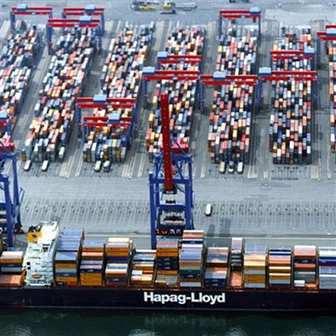
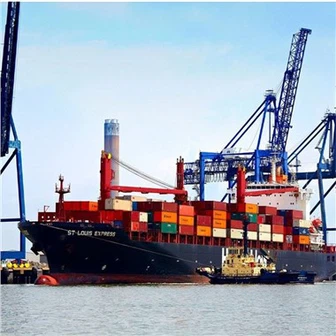
International shipping refers to the process of transporting goods across borders by sea, air, and land, and is the "vascular system" of global trade. Let's take a direct example:
Sea freight: A 40-foot container from Shanghai to Los Angeles can carry 200-400 mattresses, with a transportation time of 20-30 days and a basic freight rate of about US$3,000-8,000 in 2024;
Air freight: High-value electronic components sent from Germany to the United States have a freight rate of US$4.5-8 per kilogram and can be delivered in as fast as 5 days;
Land transportation: The China-Europe Express connects China and Europe and is suitable for cross-border transportation in areas accessible by rail.
The core value lies in breaking through geographical restrictions and allowing commodities such as "Made in China" toys, German precision machine tools, and Middle Eastern oil to circulate globally. However, novices are often tripped up by three major difficulties: customs compliance, cost accounting, and transportation mode selection, which will be disassembled one by one in subsequent chapters.

Freight Forwarder
Role: Equivalent to the "travel butler" of the goods, responsible for booking, customs declaration, and coordinating transportation. For example, the Freightos platform can integrate 200+ freight forwarding resources and compare prices with one click.
Advantages: Newcomers do not need to face complex processes directly, and freight forwarders can handle 90% of cross-border procedures.
Full container (FCL) vs. Less than container load (LCL)
FCL: Use 20-foot or 40-foot containers alone, suitable for cargo volume ≥ 15 cubic meters (such as 100 refrigerators), the advantage is fast and independent cargo;
LCL: Share containers with other shippers, suitable for small batches of goods (such as 20 boxes of clothing), charged by volume (US$100-150 per cubic meter), but the timeliness is 7-10 days slower.
Bill of Lading (BOL)
Function: Certificate of ownership of goods, equivalent to "goods ID card", the consignee and goods description must be filled in accurately, otherwise the destination port may not be able to pick up the goods.
International Trade Terms (Incoterms)
Core rules:
FOB (Free on Board): The seller is responsible for the cost before the goods are loaded on the ship, and the buyer bears the shipping cost;
DDP (Delivery Duty Paid): The seller is responsible for the entire process, including the customs duties at the destination port, which is suitable for novices to avoid complicated processes.
Customs Broker
Necessity: Handle HS code classification (such as "plastic toys" are classified as 9503.00, with a tariff of 5% vs. incorrect classification may result in a 20% tariff), license application, and avoid customs detention.
How to carry out international transportation: step-by-step instructions
1. Planning stage: clarify requirements and rules
Choose the right transportation method: choose sea transportation for cargo weighing more than 500kg (such as furniture), and choose air transportation for urgent cargo (such as exhibition samples);
Determine the trade term: DDP is recommended for novices, which is worry-free but slightly more expensive; FOB is suitable for experienced buyers to handle sea transportation by themselves.
2. Prepare documents: details determine success or failure
Required documents:
Commercial Invoice: indicate the value, quantity, and origin of the goods;
Packing List: detailed to the size and weight of each box;
Bill of Lading (BOL): generated by the freight forwarder, every letter needs to be checked.
3. Booking and execution: Make good use of digital tools
Online price comparison: Enter "Shanghai to Rotterdam, 20-foot container, furniture" on Freightos, get 10+ freight forwarder quotes in 30 seconds, and select the most cost-effective solution;
Confirm details: cut-off time (such as 48 hours before sailing), dangerous goods declaration (if there are lithium batteries, please state in advance).
4. Tracking and customs clearance: real-time progress monitoring
Real-time tracking: Check the ship location (such as Maersk ship real-time positioning) and customs status (such as "clearing customs" and "released") through the link provided by the freight forwarder;
Customs clearance assistance: Let the customs broker review the documents in advance to avoid 3-5 days of delays caused by HS code errors.
Actual cost of international freight
1. Basic freight: sea freight vs. air freight
Sea freight (Shanghai→Los Angeles):
20-foot container: 3,000-5,000 USD (off-season) vs. 8,000-12,000 USD (peak season, such as before Christmas);
Air freight (Frankfurt→New York):
4.5 USD per kilogram (economy class) vs. 8 USD (expedited service), suitable for high-value goods <500 kg.
2. Additional fees: hidden cost trap
Bunker surcharge (BAF): With the fluctuation of oil prices, the cost may increase by 20-30% (such as oil prices rise to 800 USD/ton, the BAF of a single container increases by 500 USD);
Terminal handling charge (THC): 200-300 USD/container is charged at the port of departure/destination;
Tariffs and value-added tax: The EU imposes a 10% tariff on Chinese furniture, and the United States imposes a 25% anti-dumping duty on electronic products. HS code inquiries must be made in advance.
3. Money-saving tips
Book in advance: Book 2-3 months in advance during peak season (such as around the Chinese New Year) to avoid a 3-fold increase in freight rates;
Consolidation: Small quantities of goods can be consolidated through LCL, which is 60% cheaper than air freight.
Avoid these transportation nightmares
Customs issues: HS coding errors
Case: A company mistakenly classified "stainless steel tableware" as "steel products", resulting in an overpayment of 15% in tariffs and a loss of 30,000 yuan;
Countermeasures: Use the customs official code query tool, or ask the customs broker to double-check.
Cost overruns: Ignore hidden costs
Common omissions: storage fees at the destination port (US$150/container per day), port change fees (US$800/container for temporary port change);
Solution: Ask the freight forwarder to provide an "all-inclusive price" that clearly includes all fees such as THC and BAF.
Packing error: volume weight exceeds the limit
Air freight is charged by "volume weight" (length × width × height / 6000). A company's box is too large and the freight is overpaid by 20%;
Suggestion: compress the volume when packing, and fix the sea freight with pallets to avoid damage (the damage rate can be reduced by 40%).
Insurance loss: no guarantee for cargo damage
Carrier liability: only 500 US dollars/container for sea freight, 20 US dollars/kg for air freight;
Correct operation: purchase freight insurance (premium is 0.3-0.5% of the value of the goods) to cover risks such as fire and shipwreck.
Air and sea: choose your opponent
Practical suggestions:
For furniture and clothing, choose sea freight to control costs;
For electronic products and medical equipment, choose air freight to ensure timeliness;
For medium-sized cargo (such as 50-150kg), railways can be considered (such as China-Europe Express, with a timeliness of 15-20 days and a cost between sea freight and air freight).
FAQs and resources for further reading
Q1: How long does international shipping take?
A: 20-45 days by sea (30 days from Asia to Europe, 20 days to the west coast of the United States), 1-7 days by air, 15-20 days by land (such as the China-Europe Express), depending on the port congestion (such as the 2024 Red Sea crisis resulting in an additional 10 days around the Cape of Good Hope).
Q2: What documents are required?
A: Basic documents: commercial invoice, packing list, bill of lading; special documents: certificate of origin (such as FORM E for ASEAN tariff reduction), dangerous goods certificate (such as lithium batteries require UN38.3 report).
Q3: How to reduce freight?
A: ① Compare quotes from more than 3 freight forwarders; ② Combine small orders into full containers; ③ Choose off-season shipments (such as March-April, September-October).
Printable checklist: From trade term selection to customs declaration document checklist, avoid missing key steps;
Successful case: Hagan Walker integrated sea and air freight through Freightos, reducing costs by 20% and improving time efficiency by 15%;
Packing strategy: Use wooden boxes to reinforce sea freight (breakage rate reduced from 10% to 2%), and use anti-static bags to pack electronic components for air freight;
Tracking tool: Freightos Terminal is recommended to monitor freight trends in real time and predict price fluctuations in advance.
Summary
International freight is not unfathomable. The key is to master the three magic weapons of "terms + processes + tools": use Incoterms to clarify the boundaries of responsibility, use freight forwarding to simplify operations, and control costs with digital tools. For novices, start with DDP terms, make good use of online platforms to compare prices, and plan documents and transportation methods in advance to avoid 80% of common traps. Remember: every standardized operation is to accumulate trust for global trade - when your goods arrive at the destination port smoothly, it is the best start for cross-border business.
For more details, please contact us.