Ningbo-Zhoushan Port Container Explosion: Impact On Global Shipping
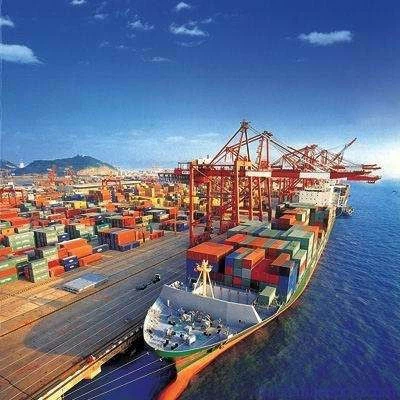
On August 9, 2024, a container explosion occurred in the Beilun Port area of Ningbo-Zhoushan Port. The Class 5.2 dangerous goods container loaded on the ship "YM Mobility" exploded due to high temperature, causing the port to be closed for three days, with direct losses estimated at US$1.5 million to US$9.5 million. As the world's third largest port, Ningbo-Zhoushan Port handles 19% of China's container throughput and 12% of foreign trade cargo transportation. This incident not only exposed the security loopholes in the transportation of dangerous goods, but also triggered a chain reaction in the global supply chain. This article will analyze the incident from the perspective of incident analysis, direct impact, long-term effects, response strategies and future trends, revealing the deep impact of port accidents on global shipping.
Table of Contents
1. Interpretation of the Ningbo-Zhoushan Port Incident
2. The direct impact of the explosion on global shipping
3. Long-term impact on the supply chain
4. Strategies to mitigate interference
5. The role of technology in crisis management
6. Looking to the future: preparing for future disruptions
1. Interpretation of the Ningbo-Zhoushan Port Incident
1.1 Accident Process and Causes
At 13:40 on August 9, 2024, when the "YM Mobility" ship under Yang Ming Marine Transport docked at the Beilun Second Container Terminal of Ningbo-Zhoushan Port, a Class 5.2 dangerous goods container loaded on board exploded. Preliminary investigations showed that the container was loaded with tert-butyl peroxybenzoate and lithium batteries. The owner declared that "the refrigerator was used instead of the dry cabinet, and no electricity was required", but no temperature control measures were actually taken, resulting in the decomposition and combustion of the cargo in a high temperature environment. The accident did not cause any casualties, but it caused the port to be closed for three days, affecting the operations of 160 berthed ships and 253 pre-arrived ships.
1.2 Response and handling of the parties involved
Yang Ming Marine: Initiate the claim settlement procedures for hull insurance and container insurance, plan to repair the damaged ship for 3 months, and adjust the subsequent routes.
HMM: Immediately suspend the acceptance of Class 5 dangerous goods on the Middle East line after the accident, and strengthen the space review.
Ningbo Port: Beilun Second Container Terminal Phase III resumed operations on August 12, and the port carried out a special inspection of dangerous goods transportation.
China Maritime Safety Administration: Issued a warning notice, requiring the strengthening of transportation management of Class 5.2 and other dangerous goods, and strictly implementing temperature control and declaration requirements.
1.3 Industry background and hidden risks
Ningbo-Zhoushan Port handles more than 100,000 TEU containers per day, and its dangerous goods throughput accounts for 15% of the country. This accident exposed three major problems:
Risk of concealment: The cargo owner may falsely report dangerous goods as ordinary goods to reduce transportation costs.
Lack of temperature control: Class 5.2 dangerous goods need to be transported at 15-25℃, but the container involved was not plugged in for temperature control.
Shared space risk: The accident ship involved multiple shipping companies such as Hapag-Lloyd sharing space, which increased the difficulty of liability tracing.
2. Direct impact of the explosion on global shipping
2.1 Port operations and shipping delays
Operation interruption: The port closure caused 160 ships to be stranded, the daily container throughput of Beilun Port area decreased by 60%, and the backlog of goods exceeded 50,000 TEUs.
Pressure on alternative ports: Shanghai Port and Shenzhen Port took over the diversion of goods, and the throughput in mid-August increased by 12% year-on-year, but local congestion caused the average berthing time to be extended by 8 hours.
Route adjustment: Shipping companies such as COSCO Shipping and Maersk temporarily cancelled the call at Ningbo Port, the transportation time of the Asia-Europe route increased by 2-3 days, and the cost per box increased by US$200.
2.2 Freight and supply chain costs
Freight rate fluctuations: After the accident, the container freight rate of Ningbo's exports to Europe rose from US$2,750/FEU to US$3,200, an increase of 16.3%, and some freight forwarders quoted prices exceeding US$3,500.
Insurance costs increased: The insurance premium for dangerous goods transportation increased from 0.3% to 0.5%, and the premium per container increased by US$50-80.
Inventory costs surged: Due to delivery delays, the emergency replenishment costs of European warehouses for companies such as Walmart and IKEA increased by 15%, and the out-of-stock rate of some products reached 20%.
2.3 Impact on regional trade pattern
China-Europe trains exploded: In August, the railway freight from Chongqing to Europe was US$4,500/FEU, which was 30% higher than sea freight, but 25% cheaper than bypassing the Cape of Good Hope, and the freight volume increased by 35% month-on-month.
Nearshore manufacturing accelerated: Mexico's exports to the United States increased by 28%, becoming the "second production base" for electronic products and auto parts, easing the pressure on the Asian supply chain.
3. Long-term impact on the supply chain
3.1 Upgrade of dangerous goods transportation supervision
Reconstruction of declaration process: The General Administration of Customs of China requires the submission of a "temperature control plan" for Class 5.2 dangerous goods, and the European Union launched the "Digital Customs 2030" plan to realize the onlineization of the entire cross-border declaration process.
Company compliance costs rise: Small and medium-sized logistics companies need to invest 100,000-200,000 yuan to upgrade temperature control equipment, and some companies exit the market because they cannot afford the cost.
3.2 Supply chain regionalization trend
Nearshore hub construction: Saudi Arabia invested 21 billion US dollars to build the Red Sea New City Green Port, and Zhengzhou Aviation Port Area built a cross-border e-commerce logistics center with the goal of processing 1 billion packages annually.
Inventory strategy adjustment: Apple increased the proportion of iPhone production capacity in India from 5% to 25%, and Walmart added bonded warehouses on the US-Mexico border to achieve "zero tariff" regional distribution.
3.3 Multimodal transport substitution effect
Railway and air transport supplement: In August, the China-Europe Express added a new Barcelona line in Spain, and the air transport volume from Vietnam to Europe increased by 62%, but the cost was 10-12 times that of sea transport, which is only suitable for high-value goods.
Inland waterway expansion: The container throughput of the Yangtze River Golden Waterway increased by 18%, and the freight rate from Nanjing to Shanghai decreased by 10%, easing the pressure on coastal ports.
4. Strategies to mitigate interference
4.1 Emergency measures for ports and shipping companies
Ningbo Port Recovery Plan: Beilun Port dispatched 6 additional tugboats to assist in escort and activated the drone inspection system to increase the efficiency of accident handling by 40%.
Shipping company response:
Maersk: Launched the "Cape of Good Hope Express" to compensate for capacity losses by increasing flight frequency.
Mediterranean Shipping: Enabled the AI prediction system to shorten the route adjustment response time from 2 hours to 10 minutes.
4.2 Policy and industry coordination
International escort operations: China cooperated with Saudi Arabia and Egypt to establish the Red Sea Escort Alliance, which has escorted 1,200 merchant ships through dangerous waters as of October 2024.
Supply chain financial innovation: Shulian Technology provides financing for small and medium-sized enterprises through blockchain technology, and the total credit amount in 2024 exceeded 20 billion yuan, alleviating financial pressure.
4.3 Enterprise Resilience Construction
Dynamic Inventory Management: Shulian Technology helps enterprises reduce safety inventory from 30 days to 15 days and increase inventory turnover by 25%.
Supplier Diversification: Nike has increased the proportion of production capacity of Vietnamese OEM factories from 35% to 45%, diversifying its dependence on the Chinese supply chain.
5. The role of technology in crisis management
5.1 Internet of Things (IoT) and real-time monitoring
Cargo status tracking: DHL's Fulfillment Network system uses sensors to monitor cargo temperature and humidity in real time, reducing the loss rate of fresh transportation from 8% to 3%.
Port Safety Warning: Ningbo Port deploys 5G smart cameras and AI analysis platforms to achieve an accuracy rate of 99% in identifying abnormal behavior of dangerous goods containers.
5.2 Blockchain and Supply Chain Transparency
Cross-border Settlement Optimization: The "Western Land-Sea Corridor" scenario of the Chongqing Branch of the State Administration of Foreign Exchange uses blockchain to realize the online process of freight foreign exchange payment, and the single payment time is shortened from 2-3 days to 10 minutes.
Cargo traceability: The GSBN platform integrates data from COSCO Shipping and Hapag-Lloyd to achieve real-time tracking of 2/3 of the world's shipping containers, and the interception rate of counterfeit drugs has increased by 30%.
5.3 AI and automation technology
Route optimization: NVIDIA's AI algorithm increases the speed of package routing by 120 times and reduces fuel costs by 15%-20%.
Automated terminal: The operating efficiency of Shanghai Yangshan Phase IV automated terminal has increased by 50%, and the labor demand has been reduced by 70%, becoming a global smart port benchmark.
6. Looking to the future: Prepare for future disruptions
6.1 Supply chain resilience construction
Regional hub network: China's "Belt and Road" initiative has added 20 overseas ports, and Saudi Arabia's NEOM New City has invested $130 billion to build a cross-continental logistics hub.
Flexible inventory strategy: Companies need to establish an inventory structure of "30% local + 50% regional + 20% global" to cope with geopolitical risks.
6.2 Green and sustainable development
New energy ships: Maersk plans to invest in 12 methanol-powered container ships in 2025 to reduce carbon emissions by 40%; the solid-state battery developed by CATL has a range of 1,000 nautical miles.
Response to carbon tariffs: The EU Carbon Border Adjustment Mechanism (CBAM) forces companies to optimize transportation routes, and the carbon emission cost per box on the China-Europe route is expected to increase by US$50.
6.3 Policy and international cooperation
Simplification of cross-border customs clearance: The General Administration of Customs of China has implemented a "single window", and 95% of import and export goods have achieved "second-level" customs clearance; the EU has launched the "Digital Customs 2030" plan to reduce corporate compliance costs.
Reconstruction of international rules: The WTO promotes the negotiation of the "Maritime Services Agreement" and intends to include port accidents in the force majeure clause to reduce corporate risks.
Summary
The Ningbo-Zhoushan Port explosion was a "stress test" for the global shipping industry, exposing security loopholes in the transportation of dangerous goods and the vulnerability of the supply chain. In the short term, measures such as the resumption of port operations and the adjustment of shipping routes by shipping companies have alleviated the shortage of shipping capacity, but high freight rates and delivery delays will continue for 3-6 months. In the long term, technological innovation (such as the Internet of Things and blockchain), regionalization of supply chains, and policy coordination will become the key to breaking the deadlock. Enterprises need to use digitalization as an engine to build a new type of competitiveness of "flexible supply chain + smart logistics network + green technology ecology"; the government should strengthen infrastructure investment and promote multimodal transport integration; the international community needs to deepen cooperation and establish a crisis warning and response mechanism. In the future, those participants who can quickly adapt to changes and deeply integrate resources will take the lead in this global supply chain reconstruction.
For more details, please contact us.