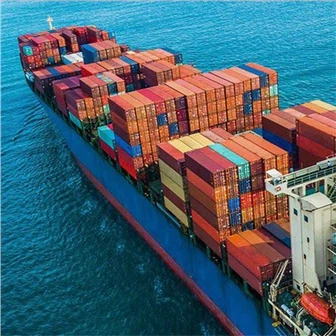
Ocean Freight Shipping
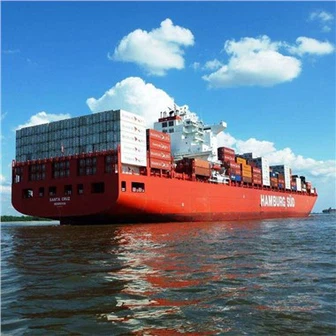
In global trade, 90% of goods are transported by sea, and this "maritime artery" carries a large number of goods from clothing, shoes and hats to automotive chips. At the beginning of 2025, trans-Pacific freight rates continued to fall - according to Freightos Baltic Index data, the price of sea freight from Asia to the West Coast of the United States fell 7% week-on-week, but the pre-tariff stocking led to a 12% year-on-year increase in freight volume. This article will analyze the core logic and practical points of sea freight from 12 dimensions, including freight composition, operation process, service model and industry trends, to help companies and practitioners quickly master this key mode of transportation.
Table of Contents
1. Latest sea freight news
2. Sea freight
3. Freightos - Digital freight platform: cost, price, rate, etc.
4. Our sea freight services
5. What is sea freight?
6. How does sea freight work?
7. What does sea freight mean?
8. Ocean Freight
9. Ocean Freight Services
10. Ocean Freight Rates per Kilogram
11. Common Ocean Freight Costs, Rates and Fees in Your Freight Quotes:
12. Freight Freight FAQs
After the Lunar New Year in 2025, the trans-Pacific route showed a contradictory trend of "increased volume and falling prices": freight rates from Asia to the West Coast of the United States fell 22% from the peak, and the current 20-foot container quotation was about US$2,800, but freight volume was expected to increase by 15% due to the US tariff policy in April. Freightos analysis pointed out that this contrast stems from the company's "tariff pre-positioning" strategy - stockpiling goods in advance to avoid potential tax increases, resulting in tight space but market resistance to high freight rates, forming a short-term price correction.
Regional differences:
Due to the aftermath of the Red Sea crisis, freight rates on Asia-Europe routes have increased by 18% compared to the same period in 2024, and congestion at the Port of Rotterdam has caused an average delay of 3.2 days;
Due to the RCEP tariff reduction, freight rates on routes within Southeast Asia (such as Shenzhen to Bangkok) have stabilized at US$800/40-foot container, and cargo volume has increased by 25%.
Ocean freight consists of a basic rate and surcharges. Take a 40-foot container from China to New York, USA as an example:
Basic freight: US$2,500-3,500, depending on the shipping company (such as Maersk, CMA CGM) and the peak and off-peak seasons;
Bunker surcharge (BAF): fluctuates with international oil prices, currently about US$500-800 (accounting for 20%);
Currency adjustment fee (CAF): to deal with exchange rate risks, about 3%-5% of the basic freight;
Terminal handling charge (THC): US$200-300 is charged at the port of departure and the port of destination, totaling US$400-600.
Money-saving tips:
Booking 30 days in advance can enjoy a 10%-15% discount;
Merge goods from multiple suppliers to fill a full container (FCL), saving 30% of the unit price compared to less than container load (LCL).
Freightos-- Digital freight platform: cost, price, rate, etc.
As the world's leading digital freight platform, Freightos integrates quotations from 200+ freight forwarders through AI algorithms to achieve:
Instant price comparison: Enter cargo information (weight, volume, port of departure) and get quotations from 10+ freight forwarders within 30 seconds, such as the lowest quotation for a 20-foot container from Shanghai to Los Angeles is US$2,750;
Transparent charges: Clearly mark surcharges such as BAF and CAF to avoid "hidden costs";
Smart recommendations: Recommend the best shipping date based on historical data, such as Evergreen Shipping (22 days) for the West Coast route and Maersk (28 days, strong stability) for the East Coast route.
Freightos provides full-chain ocean shipping services:
Full container load (FCL): suitable for cargoes ≥ 15 cubic meters (such as furniture and building materials), providing 20-foot containers (28 cubic meters), 40-foot containers (58 cubic meters), and high cabinets (68 cubic meters), supporting dangerous goods (such as lithium batteries) and temperature-controlled goods (need to be declared in advance).
Less than container load (LCL): suitable for small quantities of goods (<15 cubic meters), charged by volume (US$100-150 per cubic meter), the disadvantage is that the time is slow (7-10 days more than FCL) and it is easy to cause damage to the goods due to LCL errors.
Value-added services: including customs pre-declaration (reducing customs clearance delays), cargo insurance (rate 0.3%-0.5%), and GPS real-time tracking (positioning update interval 30 minutes).
Ocean shipping is a way of transporting goods on the sea by container ships, accounting for 90% of global trade. The core advantages are low cost (freight is only $2-4 per kilogram, 1/10 of air freight) and large volume (a single 40-foot container can hold 25 tons of cargo), but the delivery time is slow (it takes 18-25 days from China to the west coast of the United States). Common scenarios: bulk goods (such as iron ore, crude oil), low-value consumer goods (such as clothing, toys), large equipment (such as construction machinery).
How does sea transportation work?
Booking: Book space through a freight forwarder or platform, provide commercial invoice, packing list, HS code;
Domestic transportation: transport goods to the port (such as Shanghai Yangshan Port, Shenzhen Yantian Port) by truck/train;
Export customs clearance: submit customs declaration, commodity inspection certificate (such as food requires health certificate), about 1-3 days to complete;
Shipping transportation: goods are loaded into containers (FCL) or less than container load (LCL), and the ship schedule is fixed (such as sailing every Wednesday/Saturday);
Destination port customs clearance: pay tariffs, value-added tax (such as EU VAT), and pick up goods with bills of lading;
Local distribution: delivered to the final destination by truck or rail.
What does sea transportation mean?
"Sea transportation" means "ocean transportation", which is different from air transportation and land transportation, and specifically refers to the use of ships to transport goods internationally. Core terms:
FCL (Full Container Load): Full Container Load, the goods fill the entire container, suitable for the owner to use alone;
LCL (Less than Container Load): Less than Container Load, multiple owners share a container and share the cost according to volume;
TEU (Twenty-foot Equivalent Unit): Twenty-foot Equivalent Unit, with 20-foot container as the standard unit, 40-foot container = 2 TEU.
Ocean freight is divided into the following types of goods:
Dry goods: accounting for 70%, such as furniture and electronic products, transported in ordinary containers (dry goods containers);
Special goods:
Refrigerated goods (such as fresh food): Use refrigerated containers (Reefer Container), the temperature is controlled at -20℃ to +25℃;
Dangerous goods (such as lithium batteries): UN numbers need to be declared, and special containers for dangerous goods are used. The freight is 20%-30% higher than ordinary containers;
Oversized items: such as wind power equipment, use open top containers (Open Top) or frame containers (Flat Rack), and you need to apply for space in advance.
In addition to basic transportation, extended services include:
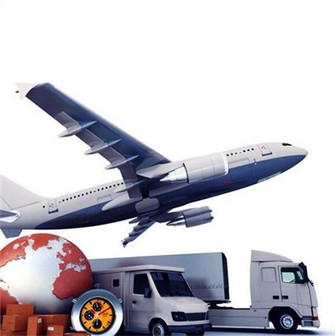
Door-to-Door: The freight forwarder includes all domestic transportation, customs clearance, and overseas delivery, which is suitable for novice sellers. The cost is 15%-20% higher than port-to-port;
Customs broker: A professional team handles HS code classification (such as "plastic storage box" is classified as 3923 tax number, 5% tariff, saving 12% cost compared to incorrect classification);
Warehousing service: Provide short-term warehousing near the port of destination (7 days free, overdue at US$50 per day/consignment fee), to alleviate the pressure of warehouse explosion during the peak season.
Ocean freight rate per kilogram
Ocean freight is charged by "volume weight" or "actual weight", whichever is higher:
Volume weight = length (cm) × width (cm) × height (cm)/6000, for example, the carton size is 50×40×30cm, the volume weight = 60kg;
Actual weight = net weight of the goods, such as 50kg, it is charged as 60kg (volume weight is higher).
Reference rate:
China to the West Coast of the United States: 2-3 US dollars/kg (FCL), 3-4 US dollars/kg (LCL);
China to Europe: 3-4 US dollars/kg (FCL), 4-5 US dollars/kg (LCL);
Within Southeast Asia: 1-2 US dollars/kg (FCL), 2-3 US dollars/kg (LCL).
Common ocean freight costs, rates and fees in your freight quote:
Mandatory fees:
Base Rate: 60%-70%;
THC: about 150-200 USD/20-foot container at the departure port, about 200-300 USD at the destination port;
Floating fees:
BAF: fluctuates with oil prices, averaging 800 USD/40-foot container in Q1 2025;
CAF: about 3% of the base freight due to fluctuations in the US dollar exchange rate;
Additional fees:
Peak Season Surcharge (PSS): 100-200 USD/container is added during the peak season from November to December;
Congestion Charge (CIC): Added when a port is congested, such as the congestion charge of 300 USD/container at the Port of Los Angeles in 2024.
Q: How to choose sea freight vs air freight?
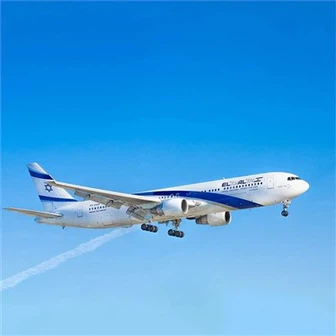
Choose sea freight: the weight of the goods is greater than 500kg (such as furniture and building materials), or the timeliness is not urgent (>15 days);
Choose air freight: the weight of the goods is less than 150kg (such as high-value electronic products), or the timeliness is urgent (<7 days).
Q: What should I do if the goods are damaged by sea freight?
Insure all risks (All Risks), covering accidents such as collision and rain. Claims require packing lists, damage photos, and maritime reports.
Q: What are the pitfalls of LCL?
It is easy to be seized due to inconsistent customs declaration documents. It is recommended that the freight forwarder organize the documents uniformly;
The LCL company may charge a devanning fee (US$50-100 per ticket). Confirm in advance whether the quotation includes this fee.
Summary
As the cornerstone of global trade, sea freight is undergoing a transformation from "extensive transportation" to "digital intelligence". Enterprises need to make good use of platforms such as Freightos to compare rates, choose FCL/LCL according to the volume of goods, and avoid surcharge traps in advance. For small and medium-sized sellers, door-to-door services simplify the process; for bulk goods, accurate calculation of volume weight and HS code classification is the key to saving money. In the future, with the popularization of blockchain bills of lading (reducing paper documents) and methanol-powered ships (reducing carbon emissions), ocean shipping will be more efficient and greener, and continue to support 90% of global trade flows.