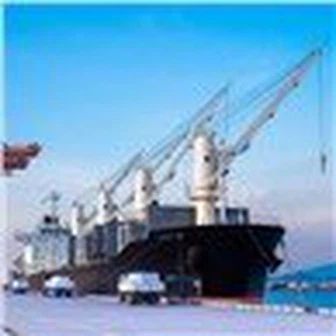
Shipping From Baoan, Guangdong,China To Albuquerque, NM: Air, Sea & Container Freight
Sea Freight from Baoan, Guangdong to Albuquerque, New Mexico
Shipping Routes and Port Selection
Goods departing from Baoan typically embark from Shenzhen's Yantian Port or Guangzhou's Huangpu Port, traveling via the Pacific Ocean route to West Coast ports like Los Angeles or Long Beach, before being transferred by rail or truck to Albuquerque. In 2025, the Ocean Alliance introduced a new Far East to Southwest U.S. route (e.g., AAC), which includes a call at Yangpu Port, optimizing transshipment efficiency for South China cargo. For example, the direct sea route from Yantian to Los Angeles takes approximately 13 days, with an additional 5–7 days for rail transport to Albuquerque, totaling 18–20 days.
Sea Freight Timeliness and Service Types
Full Container Load (FCL): 20-foot (20GP) and 40-foot high-cube (40HQ) containers are the standard choices for large shipments. A 20GP can carry ~28 cubic meters, while a 40HQ holds ~58 cubic meters.
Less than Container Load (LCL): Suitable for small batches, charged by volume or weight. LCL freight from Shenzhen to Los Angeles ranges from $80–150 per cubic meter, with additional inland transport costs to Albuquerque.
Special Cargo Transport: Dangerous goods or refrigerated cargo require specialized containers. Reefer containers, for example, maintain temperature control for fresh produce, with fees 20–30% higher than standard containers.
Cost Composition of Sea Freight
Base Freight: In 2025, FCL freight from Shenzhen to Los Angeles is $1,500–3,000 per 20GP; LCL is $80–150 per cubic meter.
Surcharges: Include Bunker Adjustment Factor (BAF, ~13%), Peak Season Surcharge (PSS, ~$50–100 per container), and port congestion fees (e.g., Los Angeles may charge $100–200 per container during delays).
Inland Transport: Rail transport from Los Angeles to Albuquerque costs $800–1,200 per container; truck transport is $1,000–1,500 per container.
Key Factors Influencing Sea Freight
Red Sea Situation: In 2025, 90% of Asia-Europe shipping routes were rerouted via the Cape of Good Hope due to Houthi attacks, adding 9–16 days to Europe-bound voyages. U.S.-China routes remained largely unaffected, relying on Pacific routes.
Port Congestion: Cargo backlogs at Los Angeles and Long Beach ports cause 3–5-day berthing delays, potentially extending total transit time.

Air Freight from Baoan, Guangdong to Albuquerque, New Mexico
Air Routes and Flight Options
Cargo from Baoan typically departs via Shenzhen Bao'an International Airport (SZX), with layovers at hub airports like Los Angeles (LAX) or Chicago (ORD), before connecting to Albuquerque International Sunport (ABQ). For example, United Airlines flight UA7618 operates a direct Shenzhen-Los Angeles route (13h 35m), connecting to Delta Air Lines DL4031 to Albuquerque (3h 1m), totaling 17h 46m.
Air Freight Timeliness and Service Types
Direct Services: 2–3 daily direct flights from Shenzhen to Los Angeles. After arriving at LAX, truck or rail transport to Albuquerque takes 1–2 days, with total timelines of 3–5 days.
Expedited Services: Carriers like DHL offer "Time-Definite" services, delivering in 2–3 days at 1.5x standard costs.
Special Cargo Transport: Temperature-controlled cargo holds (-20°C to +25°C) are available for precision instruments or perishables, with fees 15–20% higher than standard air freight.
Cost Composition of Air Freight
Base Freight: In 2025, air freight from Shenzhen to Los Angeles costs $0.82–1.24/kg (100kg minimum); Albuquerque transfer fees are $0.3–0.5/kg.
Surcharges: Include fuel surcharges (~15%), overweight fees ($50–100 for >70kg), and remote area surcharges (Albuquerque incurs an extra $20–30 per shipment).
Customs Clearance: U.S. customs brokerage fees are $50–100 per shipment; expedited clearance (within 12 hours) costs $200–300.
Advantages and Limitations of Air Freight
Advantages: Fast timelines (3–5 days), ideal for high-value or urgent goods like electronics and medical devices.
Limitations: Single-piece weight ≤300kg, volume ≤3 cubic meters; sensitive items (liquids, batteries) require special approval.
Freight Forwarding Services from Baoan, Guangdong to Albuquerque, New Mexico
Scope of Forwarding Services
Booking and Customs Declaration: Agents handle space booking, customs documentation (e.g., U.S. ISF filings), and certificate of origin submission.
Clearance and Delivery: Offer DDP (Delivered Duty Paid) or DDU (Delivered Duty Unpaid) services, including tariff/vat payment and last-mile delivery.
Insurance and Tracking: Provide cargo insurance (0.3–0.5% premium) and real-time tracking via GPS or blockchain.
Tips for Choosing a Forwarder
International Forwarders: Companies like DHL Global Forwarding or COSCO offer door-to-door services with global networks but higher costs.
Local Forwarders: E.g., Shenzhen Tuoxin International Freight, familiar with Baoan's local processes, can apply for regional logistics subsidies (e.g., Baoan Science & Industry Development Fund) to reduce costs.
E-Commerce Specialists: E.g., 3PE Express, focus on cross-border parcels, delivering in 4–6 days at 30% lower costs than traditional couriers.
Forwarding Fees and Qualifications
Agent Fees: Typically 5–10% of freight costs, with a minimum of $200–500 per shipment.
Licensing Requirements: Must hold NVOCC (Non-Vessel Operating Common Carrier) and CBP (U.S. Customs Broker) licenses.
Transportation Time from Baoan, Guangdong to Albuquerque, New Mexico
Sea Freight Timelines
Port-to-Port: Shenzhen to Los Angeles (13 days) + Los Angeles to Albuquerque (5–7 days by rail) = 18–20 days total.
Variables: Port delays (3–5 days at Los Angeles) and weather (e.g., Pacific storms) may add 2–5 days.
Air Freight Timelines
Airport-to-Airport: Shenzhen to Los Angeles (13h) + Los Angeles to Albuquerque (3h flight) = ~17 hours (excluding clearance/delivery).
Door-to-Door: Including customs (1–3 days) and delivery (1–2 days), total timelines are 4–7 days.
Alternative Transport Methods
Rail Freight: Shenzhen-Europe via China-Europe Railway, then transship to the U.S. (25–30 days, 10–15% cheaper than sea freight but requiring multiple transfers).
Express Services: E.g., FedEx IP delivers in 3–5 days for ≤20kg parcels but costs $30–50/kg.
Freight Costs from Baoan, Guangdong to Albuquerque, New Mexico
Sea Freight Cost Comparison
| Service Type | 2025 Rate (Shenzhen to Albuquerque) | Notes |
|---|---|---|
| FCL (20GP) | $2,500–3,500 | Includes base freight, BAF, THC |
| LCL (1 cubic meter) | $150–200 | Includes sea, inland, customs |
| Reefer (40HQ) | $4,000–5,000 | Includes temperature service |
Air Freight Cost Comparison
| Service Type | 2025 Rate (Shenzhen to Albuquerque) | Notes |
|---|---|---|
| Standard Air (100kg) | $1.2–1.5/kg | Includes base freight, fuel surcharge |
| Expedited Air (50kg) | $2.0–2.5/kg | Includes priority handling |
| DDP (20kg) | $35–45/kg | Includes tariffs, VAT, delivery |
Additional Costs
Insurance: ~0.3% of cargo value for sea freight; ~0.5% for air freight.
Tariffs: After the May 2025 China-U.S. tariff reduction, general goods face a combined tax rate of ~30% (e.g., $300 tariff on a $1,000 electronics shipment).
Cost Optimization Strategies
LCL Consolidation: Sharing containers with other shippers can reduce costs by 30% (e.g., $150/m³ vs. FCL).
Air Freight Consolidation: Combining multiple small parcels for bulk discounts (10–15% savings for 100kg+).
Tariff Planning: Use the U.S. T11 exemption ($800+ threshold) to split orders and reduce liabilities.
Comprehensive Recommendations and Latest Trends
Time-Critical Shipments: Choose air freight (4–7 days), e.g., DHL Priority at $2.0–2.5/kg.
Cost-Effective Bulk Orders: Opt for FCL sea freight ($2,500–3,500/20GP); LCL for small batches ($150–200/m³).
Forwarder Selection: International agents for complex cargo (e.g., dangerous goods); local agents for subsidy access.
2025 Trends: Reduced China-U.S. tariffs lower costs, but monitor Red Sea developments for potential sea freight disruptions.
Conclusion
Transport from Baoan to Albuquerque requires balancing cargo type, urgency, and budget. Sea freight suits bulk shipments, air freight serves urgent/high-value goods, and forwarders streamline processes. The 2025 tariff adjustments and Red Sea dynamics present both opportunities and challenges, urging businesses to adapt strategies for market volatility.