Shipping From Beijing, China To Brisbane, Queensland: Air Freight, Ocean Freight And Container Freight
At a time when the global economy is deeply integrated, trade between China and Australia is becoming increasingly close. Beijing, as China's political, economic and cultural center, has rich industrial resources; and Brisbane, Queensland, as an important commercial and transportation hub in Australia, the two sides have been deepening their cooperation in trade, investment, tourism and other fields, which has led to a continuous increase in the demand for cargo transportation from Beijing to Brisbane. Among the many modes of transportation, air transport, sea transport and container transport each play a unique role and become an important link connecting the economic exchanges between the two places.
Table of contents
1. Current status of transportation demand from Beijing to Brisbane
2. Air transport: efficient and fast transportation option
3. Ocean transport: the main force of bulk cargo transportation
4. Container transport: flexible and efficient logistics solutions
5. Comprehensive comparison and development trends of the three modes of transportation
1. Current status of transportation demand from Beijing to Brisbane
As China's manufacturing industry continues to upgrade and Australia's demand for diverse commodities expands, the array of goods transported from Beijing to Brisbane is growing more diverse. Electronic products, mechanical equipment, textiles, clothing, and specialty agricultural products stand as the primary categories for transportation. In recent years, the flourishing cross - border e - commerce between China and Australia has led to a surging demand for small - commodity transportation. For instance, a prominent Beijing - based electronics manufacturer dispatches a large quantity of smart devices to Brisbane each month to satiate the local market's requirements. Simultaneously, the booming tourism in Australia has spurred Beijing's travel agencies to send a substantial amount of tourist supplies to Brisbane, such as promotional brochures and souvenirs. Based on relevant statistics, over the past five years, the volume of freight shipped from Beijing to Brisbane has experienced an average annual growth of around 15%. This growth momentum is anticipated to persist in the foreseeable future.
2. Air transport: efficient and fast transportation option

1. Routes and flight layout
Currently, many airlines have opened direct or transit flights from Beijing to Brisbane. Domestic airlines such as Air China and China Eastern Airlines, as well as international airlines such as Qantas, have provided a variety of options for cargo transportation by rationally planning routes. Direct flights can usually deliver goods to Brisbane within 10-12 hours, greatly shortening the transportation time. Transit flights further expand the route coverage and meet the needs of different customers by transferring goods at aviation hubs such as Hong Kong and Singapore.
2. Advantages and applicable scenarios
The biggest advantage of air transportation is its efficient and fast transportation speed, which can quickly respond to market demand. For some high-value and time-sensitive goods, such as high-end electronic products and new fashion clothing, air transportation is the preferred mode of transportation. In addition, air transportation is safer and the risk of damage to goods during transportation is relatively low. During the COVID-19 pandemic, the urgent transportation demand for medical supplies highlighted the importance of air transportation. Beijing companies transported a large number of medical supplies such as masks, protective clothing, and testing reagents to Brisbane by air, providing strong support for local anti-epidemic work. However, the cost of air transport is relatively high, which also limits its application in some low-value, large-volume cargo transportation.
3. Challenges and countermeasures
The main challenges facing air transport include fluctuations in aviation fuel prices, airport congestion, and strict security requirements. The rise in aviation fuel prices directly increases transportation costs, and airlines need to reduce costs by optimizing route planning and improving aircraft fuel efficiency. Airport congestion may cause flight delays and affect the timeliness of goods. To this end, airlines and airport management departments have strengthened cooperation and used technical means such as big data to optimize flight scheduling and improve airport operating efficiency. At the same time, in the face of strict security requirements, companies need to do a good job of packaging and declaring goods in advance to ensure that the goods can pass security inspections smoothly.
3. Ocean transport: the main force of bulk cargo transportation

1. Port and route network
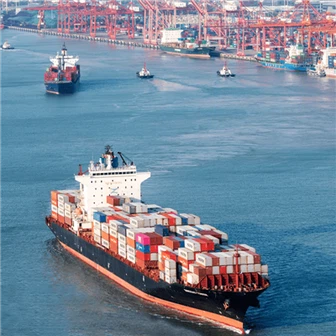
Goods departing from Beijing are usually transported to Brisbane by sea through China's coastal ports, such as Tianjin Port and Qingdao Port. The Port of Brisbane in Australia is one of the country's important ports, with advanced loading and unloading equipment and complete logistics supporting facilities. Shipping routes mainly include traditional trans-Pacific routes, as well as new routes developed in recent years with the "Belt and Road" initiative. These routes connect multiple ports in China and Australia, forming a dense route network. For example, a container ship departing from Tianjin Port can reach Brisbane Port after about 20-25 days of sea voyage, providing a stable logistics channel for the transportation of bulk goods between the two places.
2. Advantages and applicable scenarios
The advantage of sea transportation is that it has a large transportation volume and relatively low cost, which is suitable for transporting large quantities of low-value goods, such as coal, ore, building materials, etc. In addition, sea transportation has relatively low requirements for the packaging of goods, which can reduce the packaging costs of enterprises. In China-Australia trade, Australia's resource products such as iron ore and coal are shipped to China in large quantities, while China's textiles, furniture and other products are shipped to Australia by sea. Ocean shipping can also transport some oversized and overweight goods, which is difficult to achieve with other modes of transportation. For example, a construction company in Beijing imported large machinery and equipment from Australia and safely transported the equipment to China by sea, effectively reducing transportation costs.
3. Challenges and countermeasures faced
The challenges faced by ocean shipping mainly include long transportation time, maritime risks and port congestion. In order to shorten transportation time, shipping companies continue to optimize route planning, adopt advanced ship technology, and increase ship speed. At the same time, through cooperation with ports, port loading and unloading efficiency is improved and the ship's stay time in the port is reduced. In response to maritime risks, shipping companies strengthen the maintenance and management of ships, purchase sufficient insurance, and ensure the safety of goods during transportation. In the face of port congestion, port management departments strengthen information construction, optimize port dispatching systems, and improve port operation capabilities.
4. Container transport: flexible and efficient logistics solutions

1. Operation mode of container transportation
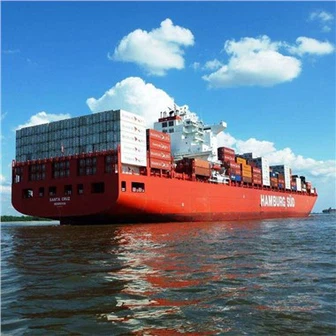
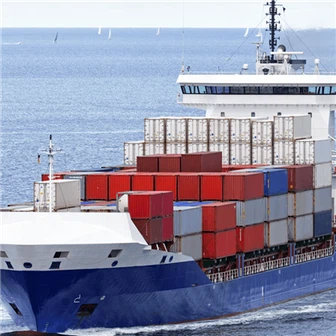
Container transportation is a modern mode of transportation. Goods are loaded into standardized containers and transported through multiple means of transportation. Container transportation from Beijing to Brisbane usually adopts the mode of land-sea transport. Goods are transported to coastal ports by road or rail in Beijing, and then loaded onto container ships and transported to Brisbane. After arriving in Brisbane, the goods are transported to the final destination by road or rail. This intermodal mode gives full play to the advantages of different modes of transportation and realizes the "door-to-door" transportation of goods. For example, a furniture company in Beijing transports its products to Brisbane by container. The container is first transported to Tianjin Port by truck, then transported to Brisbane by container ship, and finally delivered to the customer by local logistics company. The whole transportation process is efficient and convenient.
2. Advantages and applicable scenarios
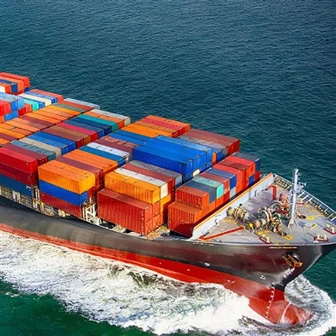
Container transportation has the advantages of high flexibility, good cargo protection, and easy mechanized loading and unloading. The standardized design of containers enables goods to be quickly transferred between different means of transportation, improving transportation efficiency. At the same time, containers can effectively protect goods from the influence of the external environment and reduce the risk of damage to goods. For some goods that need to be transferred multiple times, the advantages of container transportation are more obvious. For example, an e-commerce company in Beijing transports a large number of small items to Brisbane by container. By using the flexibility of container transportation, it can easily distribute the goods to different customers. In addition, container transportation is also suitable for some goods that require special transportation conditions, such as refrigerated goods, dangerous goods, etc. By adopting special container types, the transportation requirements of goods can be met.
3. Challenges and countermeasures faced
Challenges faced by container transportation include container shortages, fluctuations in transportation costs, and untimely tracking of logistics information. In the case of global trade imbalances, there may be a shortage of containers in some regions, which will affect the transportation of goods. In order to solve this problem, shipping companies and logistics companies strengthen the allocation and management of containers and improve the turnover efficiency of containers. The fluctuation of transportation costs is mainly affected by factors such as fuel prices and port fees. Enterprises need to reduce costs by signing long-term contracts with suppliers and optimizing logistics solutions. In response to the problem of untimely tracking of logistics information, enterprises use technologies such as the Internet of Things and big data to achieve real-time monitoring of the entire process of container transportation and improve the transparency of logistics information. For example, some logistics companies have installed smart sensors on containers, which can collect real-time information such as the location, temperature, and humidity of the containers, and transmit this information to customers via the Internet, allowing customers to understand the transportation status of the goods at any time.
5. Comprehensive comparison and development trends of the three modes of transportation
1. Comprehensive comparison
Air transport, sea transport and container transport have their own advantages and disadvantages in terms of transport speed, transport cost, transport volume, cargo adaptability, etc. Air transport has the fastest speed but the highest cost, and is suitable for transporting small quantities of high-value and time-sensitive goods; sea transport has the largest transport volume and relatively low cost, but the transport time is longer, and is suitable for transporting large quantities of low-value goods; container transport has high flexibility and good cargo protection, and is suitable for the intermodal transport of multiple goods. When choosing a mode of transport, enterprises need to comprehensively consider factors such as the nature of the goods, transport time requirements, and transport costs, and choose the most suitable transport solution. For example, for electronic products with urgent orders, enterprises usually choose air transport; while for large quantities of building materials, sea transport is a more economical and affordable choice.
2. Development trend
With the continuous advancement of science and technology and the continuous development of global trade, the transportation industry from Beijing to Brisbane will show the following development trends. First of all, intelligence will become an important development direction of the transportation industry. Through the application of technologies such as the Internet of Things, big data, and artificial intelligence, intelligent management of the transportation process can be realized, and transportation efficiency and service quality can be improved. For example, the construction of smart ships and smart ports will greatly improve the operational efficiency of sea transportation; technologies such as drone delivery and automated warehousing will bring new changes to air and container transportation. Secondly, green environmental protection will receive more attention. Transport companies will adopt more environmentally friendly transportation tools and technologies to reduce pollution to the environment. For example, new energy ships, electric trucks, etc. will gradually be used in the transportation field. Finally, multimodal transport will develop further. By strengthening the connection and coordination between different modes of transportation, seamless transportation of goods can be achieved, logistics efficiency can be improved, and logistics costs can be reduced. For example, more comprehensive logistics hubs will be built to achieve efficient conversion of transportation modes such as road, rail, sea, and air.
In short, air, sea, and container transportation from Beijing to Brisbane play an important role in China-Australia trade. With the continuous growth of transportation demand and the continuous advancement of technology, these three modes of transportation will continue to optimize and develop, providing more efficient, convenient, and safe logistics services for economic exchanges between the two places.
At a time when the global economy is deeply integrated, China's core city Beijing is rich in industrial resources, and Australia's important commercial and transportation hub Brisbane in Queensland has continued to deepen cooperation in trade, investment, tourism and other fields, resulting in a sustained increase in demand for cargo transportation from Beijing to Brisbane. Among them, air, sea and container transportation play a unique and important role as a link in the economic exchanges between the two places.
Our address
3A06, Metropolitan Center, Asia-Europe Road, Nanhu District, Jiaxing City, Zhejiang Province 314001
Phone Number
+86-573-82602305
sales@jxheyuan.com