The Impact Of The Red Sea Crisis On Global Shipping And Trade
Since the outbreak of the Red Sea crisis in November 2023, it has become a "new pain point" for the global supply chain. The Houthi armed forces' continued attacks on merchant ships in the Red Sea have forced 80% of the world's container ships to reroute the Cape of Good Hope in Africa, resulting in an increase of 10-14 days in shipping time on the Asia-Europe route and a surge in freight rates of more than 300%. This crisis not only exposed the vulnerability of international shipping, but also triggered a profound change in the regionalization of supply chains and the diversification of transportation modes. This article will analyze the root causes of the crisis, shipping disruptions, response strategies and future trends to reveal the reshaping effect of the Red Sea crisis on the global trade pattern.
Contents
1. Analysis of the Red Sea Crisis
2. Red Sea Shipping Disruptions
3. Mitigating the Impact of the Red Sea Crisis
4. Future Outlook and Long-term Solutions
5. Planning Routes in an Uncertain Environment
1.Analysis of the Red Sea Crisis
1. Origin and Escalation of the Crisis
After the outbreak of the Palestinian-Israeli conflict in October 2023, the Houthi armed forces in Yemen launched an attack on ships "related to Israel" in the Red Sea on the grounds of "supporting Palestine." As of January 2024, the Houthis have seized 16 merchant ships, causing a 67% drop in the average daily traffic volume of the Suez Canal and a complete suspension of liquefied natural gas transportation. The core contradiction of this crisis lies in the conflict between geopolitics and international trade - the Houthis put pressure on Israel by blocking the Red Sea waterway, and the global trade system relies on the Suez Canal as a "choke point".
2. The domino effect of the shipping network
The Suez Canal carries 12%-15% of the world's maritime trade, of which 20% is container transportation. Going around the Cape of Good Hope extends the Asia-Europe route by 6,000 kilometers, consumes 40% more fuel per ship, and increases the transportation time by 10-14 days. Taking Maersk as an example, the cost per box on its Asia-Europe route increased by US$1,500 and its capacity decreased by 20%. What's more serious is that the Red Sea crisis and the drought in the Panama Canal have caused the global shipping capacity gap to expand to 25%.
3. Economic and social impact
Inflation risk: UNCTAD data shows that container freight from Shanghai to Europe has soared from US$2,750 in December 2023 to US$3,800 in January 2024. If it continues for a year, the global inflation rate may rise by 0.7 percentage points.
Energy and food security: The Red Sea carries 10% of the world's oil transportation, and 30% of Europe's liquefied natural gas relies on this route. The crisis has caused a 25% increase in European natural gas prices and increased volatility in wheat prices.

2. Red Sea shipping disruptions
1. The survival dilemma of shipping companies
Cost surge: Going around the Cape of Good Hope increases the one-way cost of each container ship by US$500,000, and insurance costs increase by 100%. CMA CGM was forced to raise freight rates from Asia to the Mediterranean from US$3,000/FEU to US$6,000.
Capacity shortage: More than 500 container ships around the world go around the Cape of Good Hope, accounting for 17% of the total capacity, resulting in a capacity gap of 300,000 TEUs on the Asia-Europe route in the second quarter of 2024.
2. Chain reaction of the supply chain
Delivery delays: IKEA, Walmart and other companies reported that the delivery cycle of European orders has been extended from 30 days to 45 days, and some goods are out of stock.
Inventory strategy adjustment: US retailers stock up in advance, and the port container throughput in April 2024 increased by 10% year-on-year, but the inventory turnover rate dropped to 5.2 times/year.
3. Reshaping of regional trade pattern
The rise of near-shore manufacturing: Mexico's exports to the United States increased by 28%, becoming the "second production base" for auto parts and electronic products.
China-Europe Express Explosion: In January 2024, the freight volume of China-Europe Express doubled, and the railway freight from Chongqing to Europe was US$4,000-5,000/FEU, which was 20% higher than sea freight, but 30% cheaper than going around the Cape of Good Hope.
3.Alleviating the impact of the Red Sea crisis
1. Emergency measures of shipping companies
Route optimization: Maersk launched the "Cape of Good Hope Express" to compensate for capacity losses by increasing flight frequency; Mediterranean Shipping Company used drone escort to reduce the risk of attacks.
Technology empowerment: Huawei and Maersk jointly developed the "Intelligent Shipping System", which used AI to predict the situation in the Red Sea and increase the efficiency of route adjustment by 40%.
2. Alternative solutions for multimodal transport
China-Europe Express capacity expansion: In 2024, China-Europe Express will add routes such as Barcelona, Spain. The price of a 40-foot box from Chongqing to Duisburg is US$4,900, which saves US$1,500 compared to detouring the Cape of Good Hope.
Air transport supplement: The air transport volume from Vietnam to Europe increased by 62%, but the cost is 10-12 times that of sea transport, which is only suitable for high-value goods.
3. Policy and industry coordination
International escort operations: The United States took the lead in forming the "Prosperity Defenders" escort alliance, which has escorted 200 merchant ships through the Red Sea as of January 2024, but attacks have not been eliminated.
Supply chain financial innovation: Shulian Technology provides financing for small and medium-sized enterprises through blockchain technology, and the total credit amount in 2024 will exceed 20 billion yuan, alleviating financial pressure.
4.Future prospects and long-term solutions
1. Acceleration of supply chain regionalization
Nearshore production network: Tesla plans to transfer battery production from China to Mexico, and Walmart has added bonded warehouses on the US-Mexico border to achieve "zero tariff" regional distribution.
Regional hub construction: Zhengzhou Airport Economic Zone has built a cross-border e-commerce logistics center, with a target of handling more than 1 billion packages in 2025; Saudi Arabia's Red Sea New City project has invested 21 billion US dollars to build a green port.
2. Technology-driven shipping revolution
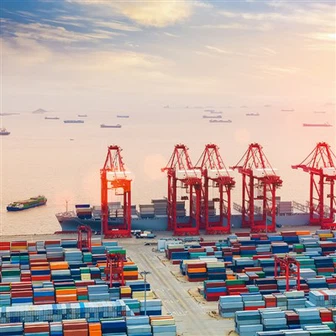
Automated terminal: Shanghai Yangshan Phase IV automated terminal has increased operating efficiency by 50% and reduced labor demand by 70%, becoming a global smart port benchmark.
Green fuel transformation: Maersk plans to invest in 12 methanol-powered container ships by 2025 to reduce carbon emissions by 40%; the solid-state battery developed by CATL has a range of 1,000 nautical miles.
3. Dual regulation of policies and markets
Cross-border customs clearance optimization: China's General Administration of Customs has implemented a "single window", and 95% of import and export goods have achieved "second-level" customs clearance; the European Union has launched the "Digital Customs 2030" plan to reduce corporate compliance costs.
Freight futures hedging: COSCO Shipping has locked in 30% of freight costs through futures contracts to avoid drastic price fluctuations.
5.Planning routes in an environment full of uncertainty
1. Corporate response strategies
Dynamic inventory management: Shulian Technology uses blockchain technology to monitor the status of goods in real time, helping companies reduce safety inventory from 30 days to 15 days.
Supplier diversification: Apple increased the proportion of iPhone production capacity in India from 5% to 25%, diversifying its dependence on the Chinese supply chain.
2. The role of the government and international organizations
Infrastructure investment: China's "Belt and Road" initiative has added 20 overseas ports, and Saudi Arabia has invested $130 billion to build the NEOM new city to create a cross-continental logistics hub.
Reconstruction of international rules: The WTO promotes the negotiation of the "Maritime Services Agreement" and intends to include the Red Sea crisis in the force majeure clause to reduce corporate risks.
3. Long-term impact of consumer behavior
Changes in demand structure: Fresh food e-commerce freight volume increased by 25%, and electronic product transportation volume decreased by 8%, reflecting the shift of consumption from "durable goods" to "immediacy".
Increased price sensitivity: IKEA adheres to the price reduction strategy, digests cost pressure through supply chain optimization, and seizes the mid- and low-end market share.
Summary
The Red Sea crisis is reshaping the underlying logic of global shipping and trade. In the short term, measures such as detouring the Cape of Good Hope and expanding the capacity of China-Europe trains have alleviated the shortage of transportation capacity, but high freight rates and delivery delays will continue. In the long run, supply chain regionalization, technological innovation and policy coordination will be the key to breaking the deadlock. Enterprises need to use digitalization as an engine to build a resilient supply chain; the government should strengthen infrastructure investment and promote multimodal transport integration; the international community needs to deepen cooperation and establish a crisis warning and response mechanism. In the future, those participants who can quickly adapt to changes and deeply integrate resources will have the upper hand in this global supply chain reconstruction.