What Are The Different Modes Of Transportation Used By Freight Forwarders?
Table of contents
2. Overview of the current situation of the freight forwarding industry
3. Ocean transport: the main force of global trade
4. Air transport: an efficient and fast transportation option
5. Land transport: an important link connecting the inland
6. Other modes of transportation
7. How freight forwarders choose the right mode of transportation
8. Development trend of transportation modes in the freight forwarding industry
Under the background of global economic integration, trade exchanges are becoming more and more frequent. As the key link between shippers and transportation companies, the importance of the freight forwarding industry has become increasingly prominent. Freight forwarding provides customers with efficient and convenient logistics solutions by integrating various resources, and the choice of transportation mode is the core link. Different transportation modes have their own advantages and disadvantages and are suitable for different types of goods, transportation distances and customer needs. This article will explore in depth the various transportation modes involved in freight forwarding, analyze their characteristics, application scenarios and development trends in the current market environment.
2. Overview of the current situation of the freight forwarding industry
The freight forwarding industry has developed rapidly in recent years, and the market size continues to expand. With the rise of the e-commerce industry, the globalization of the manufacturing industry, and the growing consumer demand for diversified goods, freight forwarding companies are facing unprecedented opportunities and challenges. On the one hand, customers have higher requirements for the timeliness, accuracy, and cost-effectiveness of logistics services; on the other hand, with increasingly fierce competition in the industry, freight forwarding companies need to continuously improve their service quality and innovation capabilities to stand out in the market. In this context, in-depth understanding and reasonable use of different modes of transportation have become the key to improving the competitiveness of freight forwarding companies.
3. Ocean transport: the main force of global trade

●Characteristics and advantages of sea transportation
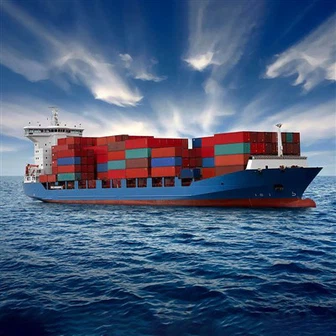
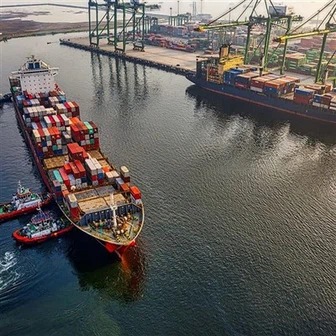
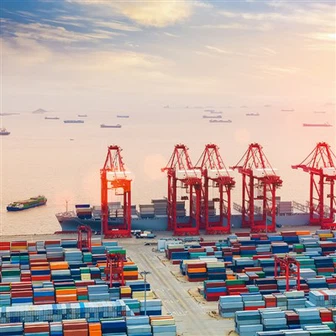
Sea transportation is one of the most commonly used modes of transportation in freight forwarding, with significant advantages of large volume and low cost. A large container ship can carry tens of thousands of standard containers, which can meet the transportation needs of large quantities of goods. In addition, the unit transportation cost of sea transportation is relatively low, which is especially suitable for long-distance and large-volume transportation. For example, sea transportation is the preferred mode of transportation for a large number of industrial products and raw materials shipped from China to Europe.
●Main types of sea transportation
1. Container transportation: Container transportation has become the mainstream mode of modern sea transportation with its high efficiency, convenience and safety. The standardized design of containers makes the loading, unloading, transportation and storage of goods more convenient, and can effectively reduce the risk of damage and loss of goods. At the same time, container transportation can realize door-to-door transportation services, greatly improving logistics efficiency.
2. Bulk cargo transportation: Bulk cargo transportation is mainly used to transport bulk cargo such as coal, ore, and grain. Such goods are usually transported in bulk, and are loaded and unloaded and transported by special bulk carriers. The advantage of bulk cargo transportation is that it can flexibly adjust the ship's loading capacity and transportation plan according to the characteristics and needs of the goods.
● Application scenarios and challenges of sea transportation
Sea transportation is suitable for long-distance and large-volume transportation, especially in international trade. However, sea transportation also faces some challenges, such as long transportation cycle and greater impact from weather and marine environment. In addition, factors such as port congestion and route adjustments may also lead to delays in cargo transportation, bringing certain risks to freight forwarding companies and customers.
4. Air transport: an efficient and fast transportation option

● Characteristics and advantages of air transport
Air transport, with its fast speed and strong timeliness, has become the preferred mode of transportation for goods with high time requirements. Compared with sea transport, the transportation cycle of air transport is greatly shortened, which can meet customers' needs for rapid transportation of urgent goods. For example, time-sensitive goods such as electronic products, fresh food, and high-end consumer goods are usually transported by air.
● Main types of air transport
1. Belly cargo transport: Belly cargo transport uses the belly space of passenger aircraft to transport goods. This mode of transportation has the advantages of high flight density and wide route coverage, and can quickly transport goods to major cities around the world. However, the cargo capacity of the belly of a passenger aircraft is relatively limited, which is suitable for transporting small and high-value goods.
2. All-cargo aircraft transportation: All-cargo aircraft are aircraft specially used to transport goods. They have a large cargo capacity and can meet the air transportation needs of large quantities of goods. All-cargo aircraft are usually used to operate regular cargo routes to provide customers with stable air transportation services.
● Application scenarios and challenges of air transport
Air transport is suitable for the transportation of urgent goods, high-value goods, and goods with high timeliness requirements. However, the cost of air transport is relatively high, and it is greatly restricted by aircraft cargo capacity and routes. In addition, air transport is also affected by factors such as weather and aviation control, which may cause flight delays or cancellations, bringing certain uncertainties to cargo transportation.
5. Land transport: an important link connecting the inland

●Characteristics and advantages of land transportation
Land transportation includes road transportation and rail transportation, and is an important mode of transportation connecting inland areas. Road transportation has the advantages of strong flexibility and convenient door-to-door service, and can transport goods quickly within a short distance. Railway transportation has the characteristics of large transportation volume, low cost and high safety, and is suitable for long-distance and large-volume transportation.
● Main types and application scenarios of road transportation
1. Full truckload transportation: Full truckload transportation refers to a truck that transports goods for one customer, which is suitable for situations where the goods are large in batches and the transportation distance is long. Full truckload transportation can ensure the integrity and transportation efficiency of the goods and reduce the number of transit times of the goods.
2. Less-than-load transportation: Less-than-load transportation refers to transporting the goods of multiple customers on a truck, which is suitable for situations where the goods are small in batches and the transportation distance is short. Less-than-load transportation can make full use of the loading space of the truck and reduce transportation costs.
● Main types and application scenarios of railway transportation
1. Ordinary railway transportation: Ordinary railway transportation is the most common railway transportation method, which is suitable for the transportation of various types of goods. Ordinary railway transportation has a large volume and low cost, but the transportation speed is relatively slow, which is suitable for transporting bulk goods that are not time-sensitive.
2. High-speed railway transportation: With the development of high-speed railways, high-speed railway express has gradually become a new mode of railway transportation. High-speed railway express has the advantages of fast speed and strong timeliness, and is suitable for transporting small batches of time-sensitive goods, such as express delivery, fresh food, etc.
●Challenges and countermeasures of land transportation
Land transportation faces challenges such as traffic congestion, rising transportation costs, and environmental pressure. To meet these challenges, freight forwarding companies need to reasonably plan transportation routes, optimize transportation plans, adopt advanced transportation technologies and equipment, improve transportation efficiency, and reduce transportation costs. At the same time, strengthening cooperation with transportation management departments and actively promoting the development of green logistics are also the key to the sustainable development of the land transportation industry.
6. Other modes of transportation
1. Inland waterway transport
Inland waterway transport is a way of transporting goods using inland waters such as rivers and lakes. Inland waterway transport has the advantages of low cost and low pollution, and is suitable for transporting large quantities of low-value goods such as coal and building materials in areas with abundant water resources. The development of inland waterway transport is restricted by factors such as waterway conditions and port facilities, but it still plays an important role in regional logistics.
2. Pipeline transport
Pipeline transport is mainly used to transport liquid and gaseous goods such as oil and natural gas. Pipeline transport has the advantages of large transport volume, low cost, high safety, and strong continuity, and can realize all-weather transportation of goods. The construction cost of pipeline transport is high, but its operating cost is relatively low, which is suitable for long-distance and large-volume transportation of goods.
7. How freight forwarders choose the right mode of transportation
1. Consider the characteristics of goods
Different goods have different characteristics, such as weight, volume, value, timeliness, etc. Freight forwarding companies need to choose the appropriate mode of transportation according to the characteristics of the goods. For example, for goods with large weight and volume, sea or rail transportation may be more suitable; for goods with high value and strong timeliness, air transportation may be the best choice.
2. Transportation distance and cost
Transportation distance and cost are important factors to consider when choosing a mode of transportation. Generally speaking, long-distance transportation is suitable for sea or rail transportation, and short-distance transportation is suitable for road transportation. At the same time, freight forwarding companies need to comprehensively consider factors such as transportation cost, cargo value, and transportation time to choose the most cost-effective mode of transportation.
3. Customer demand and service quality
Customer demand and service quality are also key factors in choosing a mode of transportation. Freight forwarding companies need to provide personalized logistics solutions based on the specific needs of customers to ensure that the goods can be delivered to the destination on time and safely. When choosing a mode of transportation, factors such as the service quality and credibility of the transportation company need to be considered to improve customer satisfaction.
8. Development trend of transportation modes in the freight forwarding industry
1. The rise of multimodal transport
Multimodal transport is the organic combination of multiple modes of transport to achieve seamless transportation of goods. With the development of global logistics integration, multimodal transport is increasingly favored by freight forwarding companies and customers. Multimodal transport can give full play to the advantages of various modes of transport, improve transportation efficiency, reduce transportation costs, and provide customers with more convenient and efficient logistics services.
2. Application of intelligent transportation technology
With the continuous development of technologies such as the Internet of Things, big data, and artificial intelligence, the application of intelligent transportation technology in the freight forwarding industry is becoming more and more extensive. Through intelligent transportation technology, freight forwarding companies can achieve real-time monitoring and management of the entire process of cargo transportation, improve transportation efficiency, reduce transportation risks, and improve service quality.
3. Development of green transportation
Against the background of increasing environmental awareness, green transportation has become a development trend in the freight forwarding industry. Freight forwarding companies need to actively adopt environmentally friendly transportation equipment and technologies, optimize transportation routes, reduce energy consumption and pollutant emissions, and achieve sustainable development.
There are many different modes of transportation in the freight forwarding industry, and each mode of transportation has its own unique characteristics and advantages. As the main force of global trade, sea transportation has the advantages of large volume and low cost; air transportation, with its fast speed and strong timeliness, meets the transportation needs of time-sensitive goods; land transportation is an important link connecting inland areas, with strong flexibility in road transportation and large volume and low cost in railway transportation. In addition, inland waterway transportation and pipeline transportation also play an important role in specific areas. When choosing a mode of transportation, freight forwarding companies need to comprehensively consider factors such as cargo characteristics, transportation distance, cost-effectiveness, and customer needs to provide customers with the best logistics solutions. With the development of the industry, multimodal transport, intelligent transportation technology and green transportation will become the development direction of transportation methods in the freight forwarding industry in the future. Freight forwarding companies should actively adapt to market changes and continuously improve their service levels to cope with increasingly fierce market competition.