What Cargo Sea Freight Logistics Includes
The following knowledge is shared by Heyuan Supply Chain (Jiaxing) Co., LTD
1. Transport mode selection and booking
Mode of transport:
FCL Full Container Load (FCL Full Container Load) : It is suitable for large quantities of goods, which can fill one or more containers. For example, a large electronics manufacturer wants to ship a large number of electronic products abroad, and these goods can be filled with multiple 40-foot containers, which can be shipped by full container. Its advantage is that the safety of the goods is high, it will not be mixed with the goods of other cargo owners during transportation, and the transportation time is relatively more guaranteed.
LCL Less than Container Load (LCL Less than Container Load) : for small batches of goods with less than one container. For example, some small trading companies have a variety of small batches of goods, the number of each commodity is not large, and the goods of these different cargo owners are assembled in a container for transportation. This method can reduce the transportation cost, but may extend the transportation time due to the assembly and unpacking process.

Booking process:
The customer first to the freight forwarder (freight forwarder) company or shipping company booking demand. You need to provide the detailed information of the goods, including the name of the goods, weight, volume, packaging form, port of departure and port of destination, estimated delivery time, etc. For example, if the customer wants to transport a batch of clothing, it needs to inform the freight forwarder of the total weight (such as 5 tons), the total volume (such as 30 cubic meters), the packaging is carton, the port of departure is Shanghai, the port of destination is Los Angeles, and it is expected to be shipped next week.
The freight forwarder or shipping company shall book the space according to the information provided by the customer and the shipping space of the ship. If a suitable space is available, a booking confirmation will be sent to the customer with key information such as ship name, voyage, bill of lading number and estimated sailing date.
2. Packing and storage of goods
Packing requirements:
Protection function: The packaging should be able to prevent the goods in the process of transportation by collision, extrusion, moisture, damage and so on. For example, for fragile products, such as glass products, it is necessary to use foam, air cushion film and other buffer materials for packaging, and indicate the words "fragile products" on the outside of the package; For goods that are susceptible to moisture, such as food, moisture-proof packaging should be used, such as vacuum packaging or adding desiccant.
Easy handling and stacking: Packages should be shaped and sized to facilitate handling and stacking in containers by dockworkers and handling equipment. For example, the packaging is best to be a regular cuboid or cube shape, and to have a suitable handle, hooks, and other convenient handling design.
Storage link:
Storage at the port of departure: While the goods are waiting for loading, they need to be stored in a warehouse near the port. Warehouse to do a good job of keeping the goods, such as regular inventory of goods, check the status of goods. For some goods with special requirements, such as refrigerated goods, they need to be stored in warehouses with refrigerated conditions to ensure the quality of the goods during storage.

Port storage: After the goods arrive at the port of destination, if the consignee can not pick up the goods in time, it needs to be stored in the port of destination warehouse. The warehouse of the port of destination is also responsible for the safe custody of the goods, and according to the requirements of the consignee, to provide goods sorting, distribution and other services.
3. Customs declaration and clearance
Customs declaration process (Port of departure) :
Customs declaration refers to the detailed information of goods declared to the customs and export procedures when the goods are exported. The forwarder or customs broker needs to prepare a series of customs documents, such as commercial invoices, packing lists, customs declarations, export licenses (if required), etc. For example, for the export of certain controlled chemicals, the relevant export licence is required. The customs officer submits these documents to customs, who will review the documents and possibly inspect the goods. If the documents are complete and accurate, and the goods meet the export requirements, the customs will release them.
Customs Clearance Process (destination port) :
At the port of destination, the imported goods need to go through customs clearance. The consignee or its agent is required to submit import declaration documents to the customs of the port of destination, including bills of lading, commercial invoices, packing lists, certificates of origin, etc. Customs will inspect the goods to verify the value, quantity, origin and other information of the goods to determine whether duties, VAT and other taxes need to be levied. The goods can only be legally picked up and delivered after customs clearance has been completed.
4. Loading and transportation
Shipment process:
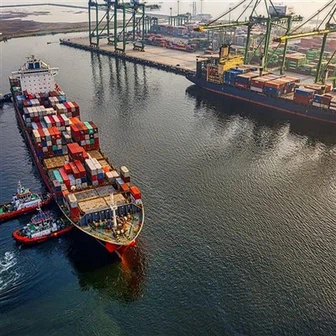
The cargo is lifted onto the ship by cranes and other equipment at the port terminal. For full container cargo, the container is lifted directly to the designated location of the ship; For LCL goods, the containers need to be transported to the dock yard first, and then shipped after the completion of assembly at the yard. In the process of loading, to ensure the safety of the goods, to avoid collision, falling and other accidents.

Sea transport stage:
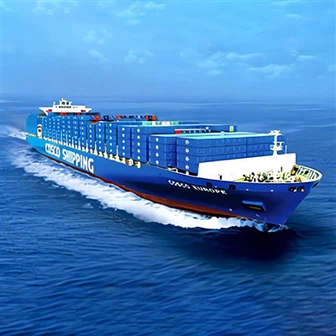
The ship sailed according to its scheduled course. In the process of transportation, the shipping company will track the ship through satellite positioning system and other technical means to grasp the position of the ship, speed, estimated arrival time and other information. At the same time, pay attention to the weather conditions at sea, in the event of bad weather, the ship needs to take corresponding safety measures, such as adjusting speed and changing routes.
5. Unloading and delivery
Unloading operation:
After the ship arrives at the port of destination, the containers are removed from the ship by cranes and other equipment. For the whole container of goods, the consignee can directly pick up the container; For LCL goods, the container needs to be transported to the unpacking warehouse first, and the unpacking operation is carried out to sort out the goods of different cargo owners.
Delivery of goods:
After the completion of customs clearance procedures, the consignee shall pick up the goods at the designated place by virtue of the bill of lading and other delivery documents. The delivery method can be collected by the consignee, or it can be arranged by the freight forwarder or the shipping company to deliver to the door. During delivery, ensure that the quantity and quality of the goods are in accordance with that specified in the bill of lading.
In the entire international trade transport chain between China and the rest of the world, every link is crucial, and choosing a professional, reliable and experienced supply chain service company is a key factor to ensure the smooth flow of goods. Heyuan Supply Chain (Jiaxing) Co., Ltd. stands out in this field by providing customers with comprehensive, high-quality one-stop logistics solutions, especially in the service related to the above transportation processes, showing outstanding capabilities and advantages.