What Is The Difference Between A Freight Forwarder And A Logistics Company?
In the global trade chain, "freight forwarders" and "logistics companies" are often confused, but there are significant differences between the two in terms of service boundaries, scope of responsibility and business model. As the complexity of the supply chain increases, companies are increasingly demanding on transportation efficiency, cost control and risk management, and accurate selection of partners has become the key to success. This article will analyze the core differences between freight forwarders and logistics companies from three dimensions: industry definition, functional division, and service scenarios, and explain how Jiaxing Heyuan Supply Chain Co., Ltd. breaks traditional boundaries as a "full-link logistics service provider" to enable the company's global layout.
Table of Contents
1. Is a freight forwarder a logistics company?
2. From "transportation intermediary" to "supply chain manager"
3. Single link VS global optimization
4. Risk-bearing capacity determines the depth of cooperation
5. Digital tools reshape industry competitiveness
7. Choose a freight forwarder or a logistics company?
1. Is a freight forwarder a logistics company?
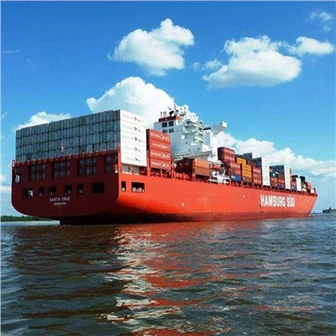
The essence of a freight forwarder is a "transportation middleman". Its core function is to complete cross-border transportation links such as booking, customs declaration, and document processing on behalf of customers, and earn commissions or price differences by integrating resources such as shipping companies, airlines, and truck companies. According to statistics from the International Federation of Freight Forwarders Associations (FIATA), about 70% of the world's cross-border goods rely on freight forwarding companies for operation.
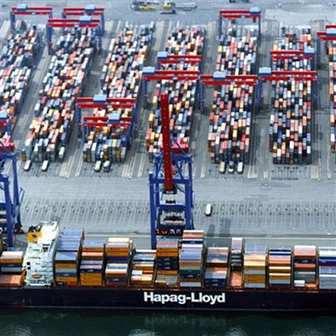
Logistics companies focus on the management of the entire supply chain process, covering warehousing, transportation, inventory control, order processing, reverse logistics and other links, with the goal of optimizing overall costs and timeliness. For example, leading companies such as DHL and Jiaxing Heyuan not only provide transportation services, but also design customized supply chain solutions for customers through self-built warehousing networks and digital systems.
Key difference: Freight forwarders are subdivided participants in the logistics industry, while logistics companies are service ecosystem builders that integrate multiple links.
2. From "transportation intermediary" to "supply chain manager"
Core functions of freight forwarding companies
Resource matching: booking agent (such as MSC, Maersk and other shipping companies), coordinating air transportation (such as China Eastern Airlines, Emirates Airlines and other airlines).
Document processing: preparing cross-border documents such as bills of lading, packing lists, certificates of origin, etc.
Customs clearance agent: entrusting a third-party customs broker to complete customs declaration.
Local optimization: providing price comparison services for a certain transportation segment (such as China to the United States by sea).
Core functions of logistics companies
End-to-end management: full-link monitoring from factory pickup to overseas warehouse distribution.
Warehousing and distribution: self-operated or cooperative warehouses realize dynamic inventory allocation.
Cost modeling: formulate the optimal total cost plan by analyzing transportation, warehousing, tariffs and other data.
Risk guarantee: bear direct responsibility for cargo damage, delays, and customs clearance disputes.
Case comparison: A cross-border e-commerce customer shipped goods from China to Germany, and the freight forwarder was only responsible for the sea freight booking from Shenzhen Port to Hamburg Port; while Jiaxing Heyuan provided a one-stop service of "factory pickup + domestic customs declaration + sea freight + temporary storage in European bonded warehouse + last mile delivery", and shortened the logistics time by 15%.


3. Single link VS global optimization
Limitations of freight forwarders
Passive response to demand: The customer specifies the mode of transportation and route before executing the operation.
Information gap: It is difficult to obtain upstream and downstream data such as factory production rhythm and overseas warehouse water level.
Sensitive to price fluctuations: Changes in sea freight rates and fuel surcharges directly affect profits.
Competitive advantages of logistics companies
Active link design: Plan routes based on cargo characteristics (such as chips need to be transported at constant temperature) and destination policies (such as Australian quarantine requirements).
Data-driven decision-making: Access the customer's ERP system to predict the replenishment cycle and avoid shortages of space during peak seasons.
Bargaining power of scale: Due to long-term cooperation in chartering and boarding, better rates can be obtained from shipping companies (such as COSCO Shipping) and airlines (such as Air China).
Data support: According to the "2024 Global Logistics White Paper", companies that adopt full-link logistics services have reduced their transportation costs as a percentage of total revenue by an average of 3.8%, and increased their inventory turnover rate by 22%.
4. Risk-bearing capacity determines the depth of cooperation
Freight forwarder's responsibility boundary: Usually agreed in the "agency contract", it is only responsible for operational errors (such as document errors) and does not bear risks such as loss of goods and customs fines.
Liability coverage of logistics companies: Based on the "full-process carriage contract", they are responsible for the risks of the entire transportation chain, including purchasing comprehensive insurance, advance payment of tariff dispute fines, etc.
Jiaxing Heyuan's protection system:
Insurance Alliance: Cooperate with PICC, AIG and others to launch "door-to-door all-risks", covering special risks such as war and strikes.
Legal team: Establish branches in Europe, the United States and the Middle East to handle customs clearance disputes locally.
Compensation commitment: If the delay is caused by operational errors, the customer's losses will be compensated according to the proportion agreed in the contract.
5. Digital tools reshape industry competitiveness
Typical technical applications of freight forwarders
Booking price comparison platform (such as Freightos)
Electronic bill of lading system (such as ESS Docs)
Digital ecology of logistics companies
Intelligent scheduling system: Jiaxing Heyuan's self-developed TMS (transportation management system) can be synchronously connected to the API of shipping companies such as COSCO and CMA CGM to lock low-priced space in real time.
Visual tracking: Customers can check the real-time status of goods in sea transportation, air transportation, and warehousing through the official website www.jxhy-cargo.com.
AI risk control engine: Predict the probability of port congestion based on historical data (such as Los Angeles Port peak season delay warning) and dynamically adjust the transit port.
Industry trend: Gartner predicts that by 2026, 70% of logistics companies will rely on AI algorithms to achieve dynamic route planning, while freight forwarding companies will invest less than 15% in this field.
6. Jiaxing Heyuan
As a supply chain logistics company rooted in the Yangtze River Delta and serving the world, Jiaxing Heyuan Supply Chain Co., Ltd. (official website: www.jxhy-cargo.com) redefines the value of logistics companies through the triple barriers of "resources + technology + service":
(1) Resource network: global multimodal transport hub
Sea freight advantage: Signed annual contracts with the top ten shipping companies (including MSC, OOCL, HPL, etc.) to guarantee peak season space on China-US and China-Europe routes. For specific services, please refer to the sea freight page.
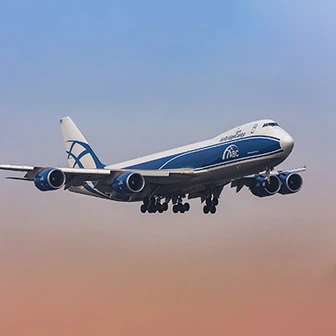
Air freight time efficiency: Priority is given to using wide-body cargo aircraft such as CA (Air China) and EK (Emirates Airlines), and urgent goods between China and the United States can be delivered within 36 hours.
Overseas nodes: Operate self-operated warehouses in Los Angeles, Hamburg, and Dubai, and support "first-leg sea freight + overseas warehouse one-piece delivery".
(2) Technology empowerment: from informatization to intelligence
Customs declaration automation: Directly connected with China Electronic Port, the single window declaration efficiency is increased by 50%.
Carbon emission management: Generate carbon footprint reports for sea and air transport for customers to meet the requirements of EU CBAM regulations.
(3) Industry solutions
Cross-border e-commerce: Provide a closed-loop service of "first-leg collection + VAT payment in the destination country + return refurbishment".
Automotive parts: Design a "circular pickup + bonded VMI warehouse" model for JIT (just-in-time) production needs.
7.Choose a freight forwarder or a logistics company? The key lies in these three points
Business complexity: Freight forwarders can be considered for transporting standard products in a single country; logistics companies should be selected for multi-country layout and high timeliness requirements.
Risk tolerance: If the company lacks cross-border experience, the responsibility guarantee ability of the logistics company is more critical.
Cost structure: Logistics companies can reduce hidden costs (such as port demurrage and inventory backlogs) through global optimization, rather than just pursuing low freight prices.
For small and medium-sized enterprises, service providers such as Jiaxing Heyuan Supply Chain Co.,Ltd., which have both the granularity of freight forwarding operations and the resource integration capabilities of logistics companies, are becoming the optimal solution for balancing cost and efficiency. Visit www.jxhy-cargo.com now to get a tailored supply chain diagnostic report.