What Is The Fastest Shipping From China To Australia?
As the scale of China-Australia trade continues to expand, efficient logistics and transportation has become a core issue in corporate supply chain management. According to data, China accounts for more than 25% of Australia's total imports of manufactured goods, and transportation time directly affects the company's inventory turnover and market responsiveness. At present, the main modes of transportation from China to Australia are air and sea transportation, among which air transportation has become the first choice for urgent goods due to its speed advantage. This article will systematically analyze the timeliness, cost differences and applicable scenarios of different transportation methods, and combine industry cases and technology trends to provide scientific reference for cross-border logistics decision-making.
Table of Contents
1. Core Classification and Time Comparison of China-Australia Logistics Transportation Modes
2. Air Transport: King of Speed and Cost Trade-off
3. Ocean Shipping Express: The Balance between Time and Economy
4. Restrictions and Solutions for Special Cargo Transportation
5. How Technological Innovation Can Improve Transportation Efficiency
6. Analysis of Service Models of Leading Logistics Enterprises
7. Future Trends: Intelligent and Green Logistics
1. Core Classification and Time Comparison of China-Australia Logistics Transportation Modes
The transportation modes from China to Australia are mainly divided into air transport, ocean transport and multimodal transport, and their timeliness and economy vary significantly:
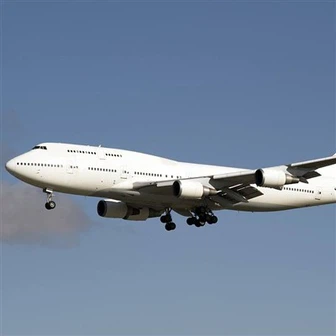
Air transport: Door-to-door delivery can be completed within 3-4 days at the fastest, suitable for high-value and urgent goods. International express companies such as DHL and FedEx provide express services with a stable timeliness of about 3 days.
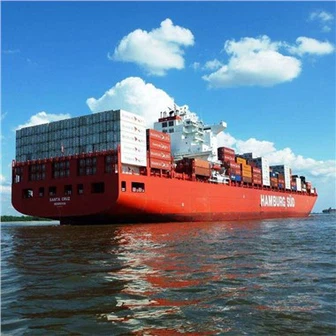
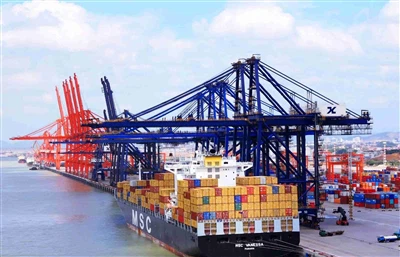
Ocean transport: Conventional ocean transport takes 25-40 days, but express ship routes (such as direct flights from Shenzhen to Sydney) can be shortened to 15-18 days, suitable for bulk goods.
Intermodal transport: Combining air and land transport, the timeliness is between the two, usually used for delivery in inland areas of Australia.
2. Air transport: King of speed and cost trade-off
The core advantage of air transport is its unparalleled timeliness, but the high cost and cargo restrictions need to be carefully weighed:
International express: DHL and FedEx provide "door-to-door" service, which can reach major cities in Australia within 3 days, suitable for documents, samples and high value-added electronic products. For example, DHL's freight for 50kg of goods from Shanghai to Sydney is about 1,323 yuan.
Standard air transport: Through air freight forwarders, it can be delivered in 8-10 days, and the cost is 30%-40% lower than express delivery, which is suitable for small and medium-sized ordinary goods.
Limitations and challenges: Special goods such as lithium batteries and liquids require additional declaration and processing, and some airlines refuse to accept dangerous goods, resulting in longer transportation cycles.
3. Ocean freight: the balance between timeliness and economy
For non-urgent bulk cargo, ocean freight is the preferred choice with "30% increase in speed + 50% cost savings":
Express ship routes: For example, direct express ships from Shenzhen to Sydney can arrive at the port in 15-18 days, which is 40% faster than conventional routes. Leading companies such as Jingchuan International Logistics optimize routes through "first-hand dealer resources" to reduce transit time.
LCL and FCL: LCL is suitable for small and medium-sized cargo volumes, but it takes longer to assemble and unpack; FCL goes directly to the destination, suitable for cargo over 2,000 kg, and has lower costs.
Cost control: Taking a 20-foot container as an example, the express ship freight is about 7,500 yuan, which saves more than 80% compared to air transportation.
4. Restrictions and solutions for special cargo transportation
Special cargo (such as dangerous goods and temperature-controlled goods) requires customized logistics solutions:
Dangerous goods transportation: lithium batteries and chemicals need to be forwarded by IATA-certified freight forwarders and provide MSDS (Material Safety Data Sheet). DHL and other companies can undertake some categories.
Temperature-controlled logistics: Frozen foods require constant temperature containers. Some express ships provide refrigerated space, but air transportation is still the first choice to ensure timeliness.
Difficulties in customs clearance: Australia implements strict quarantine on animal and plant products and medicines. Import licenses must be obtained in advance. It is recommended to choose a logistics provider that provides customs clearance services.
5. How technological innovation improves transportation efficiency
Intelligent and green technologies are reshaping the China-Australia logistics chain:
Internet of Things (IoT) tracking: real-time monitoring of cargo location and temperature and humidity. Leading companies such as delivery logistics use sensors to warn of delay risks.
Blockchain documents: electronic bills of lading and smart contracts shorten customs clearance time and reduce manual errors. A pilot project has compressed the customs clearance cycle from 5 days to 2 days.
Green ships: LNG-powered express ships reduce carbon emissions, and Maersk and other companies plan to achieve zero-carbon routes by 2030.
6. Analysis of service models of leading logistics companies
Jingchuan International Logistics: Focusing on the Australian dedicated line, providing an integrated service of "express ship + customs clearance + distribution", the Shenzhen-Sydney route is stable at 16 days, with a market share of over 15%.
Delivery logistics: Optimize costs through bulk cargo LCL dedicated lines, with a total efficiency of 22 days for Brisbane routes and 32 days for Perth routes, suitable for small and medium-sized enterprises.
DHL/FedEx: With global networks and aviation resources, 3-day express delivery covers the entire Australian territory, and the market share of high-value goods exceeds 40%.
7. Future trends: intelligent and green logistics
Drone delivery: Drone delivery is piloted in remote areas of Australia, shortening the terminal delivery time by more than 50%.
3D printing warehousing: Localized production reduces cross-border transportation demand, and it is expected that 30% of spare parts can be printed on demand by 2030.
Carbon neutrality certification: EU carbon tariffs force logistics companies to adopt green energy, and leading companies have begun to purchase carbon credits to offset emissions.
Summary
The fastest way to transport from China to Australia is undoubtedly international express air transport. Companies such as DHL and FedEx can achieve door-to-door delivery within 3 days, but its cost is about 5-8 times that of sea transport. For bulk goods with low timeliness requirements, sea freight express ships are an ideal choice with a timeliness of 15-20 days and significant cost advantages. In the future, with the popularization of intelligent technology and green energy, logistics timeliness and sustainability will be improved simultaneously, promoting the evolution of the China-Australia supply chain towards high efficiency and low carbon. When choosing a mode of transportation, companies need to comprehensively weigh the characteristics of the goods, budget and market strategy, and give priority to leading logistics providers with customs clearance capabilities and customized services.