


Ocean Cargo Services
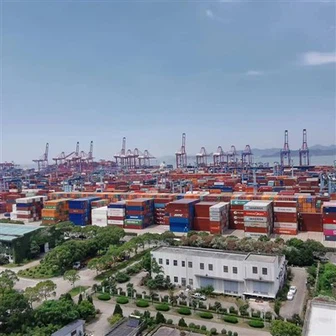
A method of transporting large quantities of goods, usually packed in shipping containers, by sea. Ocean freight service is generally more cost-effective than air freight service, but it is also slower and more prone to longer delays.
Product Introduction
Why Choose Us
Experienced in the Industry
The company has many years of experience in the supply chain field, and is able to provide customers with professional and efficient supply chain solutions. We have in-depth understanding and control of all aspects of supply chain management, and can ensure the smooth operation of the supply chain.
High Service Quality
The company focuses on customer service and is committed to providing customers with personalized service solutions. The company has a professional customer service team, able to respond to customer needs and problems at any time, to provide timely and effective solutions.
Strong Technical Strength
The company is constantly innovating in the application of technology and introducing advanced supply chain management software and systems. Through technical means, we improve the transparency and efficiency of the supply chain, reduce operating costs and enhance customer satisfaction.
Wide Range of Partners
The company has established long-term and stable cooperative relationships with many high-quality suppliers and partners. This extensive partner network can provide customers with more diversified choices of products and services, while ensuring the reliability and stability of the supply chain.
What Is Ocean Cargo Services
A method of transporting large quantities of goods, usually packed in shipping containers, by sea. Ocean freight service is generally more cost-effective than air freight service, but it is also slower and more prone to longer delays.


Cargo preparation
• The journey of an ocean freight shipment begins with the shipper or exporter preparing the cargo for transport.
• Effective packaging is vital for safeguarding goods during transportation, guaranteeing they arrive at their destination in prime condition.
• Labelling is crucial to identify the cargo and its destination accurately.
• Documentation must comply with international regulations and requirements, including bills of lading, invoices, certificates of origin, and other necessary paperwork.
Cargo transportation to the port of origin
• Once the cargo is ready for shipment, it is transported to the designated port of origin.
• This involves coordinating the logistics of moving the cargo from the shipper's location to the port, which can include various modes of inland transportation such as trucks or trains.
Customs clearance at the port of origin
• At the port of origin, the cargo undergoes customs clearance procedures.
• Customs officials review the paperwork and examine the cargo to ensure that it adheres to export regulations and that the provided information is accurate.
Cargo loading onto ocean vessel
• After customs clearance, the cargo is loaded onto the selected ocean vessel.
• This process requires careful handling and organization to optimize space within the vessel and secure the cargo for the journey.
The ocean voyage
• Once on board the ocean vessel, the cargo embarks on its voyage across the ocean.
• The vessel follows a predetermined route, navigating through various international waters and making stops at different ports of call along the way.
Arrival at destination port
• Upon reaching the destination port, the cargo undergoes customs procedures once more.
• Customs officials at the destination review the documentation, inspect the cargo, and ensure that all import regulations are met.
Customs clearance at destination port
• The cargo's clearance at the destination port is critical for entry into the destination country.
• Any necessary duties, taxes, or tariffs must be paid, and import documentation must be completed accurately.
Delivery to the consignee or importer
• Once customs clearance is obtained at the destination port, the cargo is released for delivery.
• The consignee or importer receives the goods and takes possession of the cargo.
Cost efficiency
Ocean freight offers cost-efficiency for shipping large volumes over extended distances. While air freight is more expensive, and suitable for time-sensitive shipments.
Transit time
Ocean freight involves longer transit times and is ideal for flexible schedules. Air Freight entails rapid delivery, perfect for urgent or perishable goods.
Cargo type and volume
Ocean freight handles large volumes, suited for bulk cargo and oversized items. Air freight is suitable for high-value or time-sensitive cargo.

What Types of Goods Are Usually Transported by Ocean Cargo Services?
Consumer goods
Consumer goods, ranging from clothing and household items to electronics and appliances, frequently make their way across the oceans in vast quantities. These goods serve markets worldwide, and ocean freight offers a cost-effective means of transporting them in bulk.
Machinery and equipment
Heavy machinery, industrial equipment, and manufacturing machinery are often shipped via ocean freight. The robustness of cargo vessels allows for the transport of oversized and heavy equipment efficiently.
Electronics
The electronics sector heavily depends on ocean freight for transporting components, devices, and appliances. This includes everything from smartphones and laptops to large-scale electronics used in various sectors.
Raw materials and commodities
Ocean freight holds a crucial position in the global supply chain for essential raw materials and commodities, including minerals, ores, steel, and agricultural products. These essential resources move in significant volumes to meet the demands of industries worldwide.
Automotive
The automotive industry relies on ocean freight to transport vehicles, auto parts, and components. This encompasses a wide range of items, from automobiles and trucks to motorcycles and spare parts required by assembly plants across the globe.
Energy resources
Ocean vessels transport energy resources like oil, natural gas, and coal across vast distances. These resources are critical for powering industries and generating energy in different parts of the world.
Chemicals and pharmaceuticals
The chemical and pharmaceutical sectors depend on ocean freight for transporting various chemicals, pharmaceutical products, and raw materials needed for manufacturing drugs and chemical products.
Agricultural products
Agricultural commodities, including grains, cereals, fruits, and vegetables, are shipped via ocean freight to access global markets and meet consumer demands.
Construction materials
Construction materials like cement, steel, timber, and building components are transported by sea to support construction projects in different regions.
Specialized cargo
Ocean freight is also equipped to handle specialized cargo, including refrigerated and temperature-controlled containers for perishable goods, hazardous materials, and oversized cargo like heavy machinery and industrial components.
When Is It a Good Idea to Choose Ocean Cargo Services?
Cost-efficiency: Ocean freight frequently proves to be a more cost-effective option when compared to alternative transportation modes like air freight. In ocean freight, the cost per unit of goods tends to decrease as shipment volumes increase. This makes it economical for businesses shipping large quantities of goods.
Large and non-urgent shipments: If you have bulky or heavy cargo that is not time-sensitive, ocean freight is a suitable choice. Containers can accommodate a significant volume of goods, making it ideal for large shipments.
Long-distance and international shipments: Ocean freight is the preferred choice for international shipping, especially for destinations across oceans. It's a reliable and efficient way to transport goods globally.
Eco-friendly shipping: Ocean freight is generally regarded as a more environmentally sustainable choice in comparison to air freight, as it results in lower greenhouse gas emissions per unit of cargo transported.
Bulk commodities: Ocean freight is commonly used for transporting bulk commodities like raw materials, grains, minerals, and vehicles. These shipments do not demand swift delivery times and take advantage of the cost efficiencies provided by sea transportation through economies of scale.
Types of Ocean Cargo Services
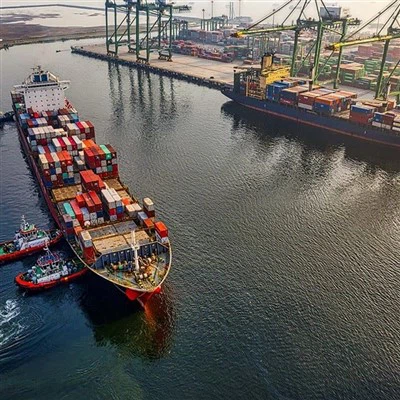

Full container load (FCL)
In this type of service, a single shipper's goods occupy entire shipping containers. It is typically used for shipping large quantities of goods by one company or individual.
• FCL is ideal for shipping large quantities of goods, as it allows maximum container space utilization.
• It also benefits businesses that need to ship their goods with minimal handling and potential damage.
• This service provides more control over shipping, as the entire container is allocated to one shipper.
FCL would be useful for a furniture company shipping a large order of couches to a retailer in another country. The company can fill an entire container with the couches, ensuring they are safely and efficiently shipped without needing to share space with other goods. This also allows for easier tracking and handling of the shipment.
Less than container load (LCL)
This service is used when a shipper's goods do not fill an entire container. The remaining space in the container may be filled with goods from other shippers, resulting in cost savings for each individual.
• LCL is a cost-effective option for businesses that do not have enough goods to fill an entire container.
• It also allows shippers to split shipping costs with other companies, resulting in savings for all parties involved.
LCL would be useful for a small business owner who wants to ship their handmade crafts to customers overseas. The business may not have enough goods to fill an entire container, but with LCL, they can share the space and costs with other shippers. This allows them to expand their business internationally without breaking the bank on shipping expenses.
Roll-On/Roll-Off (Ro-Ro)
In this type of service, vehicles and heavy equipment are loaded onto a specialized ship that allows them to be driven on and off the vessel. This is commonly used for transporting cars, trucks, tractors, and other large vehicles.
• Ro-Ro is a quick and efficient method for shipping vehicles and heavy equipment.
• It eliminates the need to dismantle and reassemble the items, saving time and potential damage.
Ro-Ro would be useful for a car manufacturer sending their cars to dealerships in other countries. They can simply drive the cars onto the vessel, eliminating the need for costly disassembly and reassembly. This also reduces the risk of damage during transit.
Break bulk
Break bulk shipping involves loading individual pieces of cargo onto a ship rather than using containers. It is typically used for oversized or irregularly shaped items that cannot fit into standard containers.
• Break bulk allows for transporting large or awkwardly shaped items that cannot fit into containers.
• It also provides flexibility in terms of loading and unloading, as each item can be handled individually.
Break bulk would be useful for a construction company sending heavy machinery and equipment overseas. These items are often too large to fit into containers, but with break bulk shipping, they can still be transported safely and efficiently. This also allows the company to easily access its equipment upon arrival at the destination port.
Customs documentation: Every nation has its specific customs documentation and paperwork prerequisites. These usually encompass items like the commercial invoice, packing list, bill of lading, certificate of origin, and any obligatory permits or licenses.
Tariffs and duties: Import duties and tariffs vary widely from one country to another. Shippers need to understand the specific duties applicable to their goods in the destination country and plan for these costs.
Restricted and prohibited goods: Different countries have restrictions or prohibitions on the import or export of certain goods. Shippers should check the destination country's regulations to ensure their cargo is compliant.
Product standards and labelling: Some countries have specific product standards and labelling requirements that must be met for imports. These may relate to safety, quality, and product labelling in the local language.
Documentation language: Some countries may require that all shipping and customs documents be in their official language or translated accordingly.
Sanitary and phytosanitary requirements: For agricultural and food products, there may be strict sanitary and phytosanitary (SPS) requirements that must be met to prevent the introduction of pests and diseases.
Licensing and certification: Certain goods may require special licenses or certifications for importation, such as pharmaceuticals, chemicals, or hazardous materials.
Import quotas and restrictions: Certain nations implement import quotas or restrictions on particular products, constraining the allowable quantity for importation during a designated timeframe.
Compliance with international Trade Agreements: Countries that are party to international trade agreements may have specific requirements for goods originating from member countries, such as preferential tariff rates.
Inspection and examination: Some countries may conduct random inspections or examinations of imported goods, which can add time and costs to the shipping process.
Customs brokerage: Utilising the services of a licensed customs broker who is familiar with the destination country's regulations can help ensure compliance and expedite customs clearance.
Our Factory
Heyuan Supply Chain (Jiaxing) Co., Ltd. is a freight forwarding enterprise registered with the State Administration for Industry and Commerce and approved by the Ministry of Commerce. It has the first level agency qualification for international freight transport, and is committed to providing international import and export transport services for customers and providing all-round high-quality services for customers. With its high-level comprehensive service capability and comprehensive regional service network, the Company has won extensive support and trust from customers. At present, the company has established long-term and stable cooperative relationships with many well-known shipping companies at home and abroad.
Our company is mainly engaged in shipping, air transportation, bulk carrier, warehousing, logistics and distribution of international and domestic goods, including cargo collection, charter, space booking, customs declaration and inspection, assembly, unpacking, transit, cargo insurance, inland transportation and consulting services. It has such advantageous services as basic port/partial port LCL import and export booking, and various special cases on international routes, which fully ensures the cost saving control of import and export logistics links and the high-quality guarantee of the whole process tracking service.
All employees of Heyuan Supply Chain (Jiaxing) Co., Ltd. have rich experience and excellent services. Our company has strong competitiveness in bulk groceries and container stowage with high-quality services and low freight rates. Heyuan Supply Chain (Jiaxing) Co., Ltd. is willing to become the backup force for the majority of trade customers, and is willing to escort the products of trade customers!

Cooperating Partner


FAQ
Hot Tags: ocean cargo services, China ocean cargo services, Air Freight And Sea Freight, Ocean Freight Service, sea transport service, sea freight shipping service, International Sea Freight Shipping, Air Freight Service
You Might Also Like


Send Inquiry
