


Sea Transport Logistics
Sea transport logistics refers to the use of ships to transport goods between ports in different countries and regions through sea lanes.
Product Introduction
Why Choose Us
Experienced in the Industry
The company has many years of experience in the supply chain field, and is able to provide customers with professional and efficient supply chain solutions. We have in-depth understanding and control of all aspects of supply chain management, and can ensure the smooth operation of the supply chain.
High Service Quality
The company focuses on customer service and is committed to providing customers with personalized service solutions. The company has a professional customer service team, able to respond to customer needs and problems at any time, to provide timely and effective solutions.
Strong Technical Strength
The company is constantly innovating in the application of technology and introducing advanced supply chain management software and systems. Through technical means, we improve the transparency and efficiency of the supply chain, reduce operating costs and enhance customer satisfaction.
Wide Range of Partners
The company has established long-term and stable cooperative relationships with many high-quality suppliers and partners. This extensive partner network can provide customers with more diversified choices of products and services, while ensuring the reliability and stability of the supply chain.
Sea transport logistics refers to the use of ships to transport goods between ports in different countries and regions through sea lanes. It is the most important mode of transport in international trade, with more than two thirds of the total volume of international trade and 90 per cent of the total volume of China's import and export cargo transport being carried by sea.


Cost-effective
Sea freight is more economical for transporting large volumes due to lower fuel costs per tonne compared to air or road transport. Additionally, shipping by sea generally incurs lower duties, taxes, and VAT compared to air freight.
Well-suited for heavy cargo
Ocean freight is ideal for moving heavy and oversized loads such as vehicles, large machinery, industrial parts, and construction materials which cannot be loaded onto a place.
Safe & low-risk
Sea freight can safely transport hazardous materials. This is because the shipping crews are highly trained, containers are securely sealed, and regular inspections ensure the safety of the cargo and the environment during transit.
Environment friendly
According to the International Chamber of Shipping, shipping by sea is recognised as the most efficient form of commercial transport. This is because it produces the least CO2 emissions per tonne of cargo transported one mile compared to land and air freight.
Sea Transport Logistics Process and Operation
Consignment: Give the goods to the logistics company for consignment.
Packing: The goods are properly packed to protect their safety during transport.
Booking: The logistics company books the space to ensure that the goods can be transported smoothly.
Pick-up: Waiting for the goods to arrive at the destination and arranging for pick-up.
Customs declaration: Completing the customs declaration procedures to ensure that the goods are legally cleared through customs.
Exchange of documents: If necessary, to carry out the replacement of documents to ensure the smooth progress of cargo transport.
The Operation Mode and Type of Sea Transport Logistics
Mode of operation
Liner transport: Also known as regular ship transport, the service object is non-specific, dispersed many owners, liner companies have the nature of the common carrier.
Chartered ship transport: Also known as non-scheduled ship transport, usually applicable to bulk cargo transport. The rights and obligations between the charterer and the lessor are determined by the charter party signed by both parties.
Types of transport
Dry bulk shipping: Mainly transport bulk cargoes such as iron ore, coal and grain.
Oil shipping: Focusing on the transport of liquid cargoes such as crude oil and refined oil products.
Container shipping: Oriented to light manufacturing industry, mass consumer goods, etc., and achieving fast turnover of goods through liner shipping.
Features of Sea Transport Logistics
High passage capacity
Sea transport allows transporting a large amount of goods by large ships.

Large transport volume
The volume of goods transported at one time is much larger than that of other modes of transport.
Low freight cost
Due to the large transport volume, the transport cost per unit of cargo is relatively low.
High adaptability to cargoes
Various types of cargoes can be transported, including dangerous goods, large equipment and bulk cargoes.
Lower speed
Sea transport is slower and not suitable for the transport of urgently needed goods.
Higher risk
Sea transport is affected by weather and marine environment, and there are certain risks.
Operational Guidelines for Sea Transport Logistics
Consignment
Consignment is the starting step of sea transport, shipper needs to provide information such as box type, box quantity, destination port, shipping time and cargo name. After the customer receives the sea freight price, if it is necessary to entrust the crating, the freight company will confirm the crating method with the cargo owner and provide the customs declaration information.
Booking
The freight company will provide the cargo situation to the shipping company, determine the price and book the shipping space to the shipping company. After receiving the booking, the shipping company will inform the name of the ship, the ship's schedule and the bill of lading number.
Packing
Packing can be carried out in the warehouse or factory, and the freight company will provide the necessary pick-up and packing services. After loading, the freight company will inform the shipping company that the container is ready.
Customs loading
After the container has been assembled at the port, it is declared for customs clearance and then loaded onto the vessel. It is necessary to ensure that all documents are in order and comply with customs requirements.
Unloading
The vessel arrives at the port of destination and is unloaded. The containers are sent to the terminal for further processing.
Notification of pick-up
The shipping company notifies the consignor that the container is ready for pickup, and the consignor needs to clear the container with Customs and exchange it for a bill of lading.
Customs clearance
The consignor clears the container with the customs and completes all necessary customs formalities.
Exchange of bill of lading and delivery
The consignor takes the bill of lading to pick up the goods and completes the whole sea transport logistics process.
Types Of Transport In Sea Transport Logistics
Bulk carriers
Unlike cargo ships, you will not find many cargo containers on bulk carriers. Bulk carriers transport items such as coal, wood chips, grains, and metal ore. Instead of loading these items into a container, businesses usually pour them right into the hold itself.
Container ships
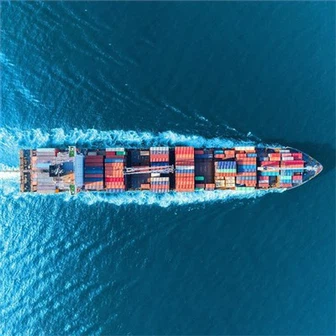
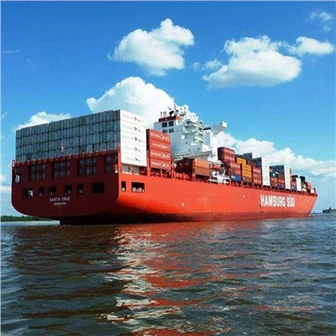
Popular since the 1960s, these vessels are the most widely used for the transport of goods by sea. They are large, modern, state-of-the-art vessels, with some achieving zero emissions.
General cargo ships
These vessels do not carry containers, rather they are suited for transporting dry cargo and are equipped with their own cranes for loading and unloading goods.
Reefer vessels
Due to their refrigeration capacity and higher sailing speed, reefer vessels are an ideal solution for the transport of perishable goods, such as foodstuffs.
Heavy lift cargo vessels
Essential for large industrial projects due to their capacity to transport extremely heavy cargo loads.
Roll on – roll off (ro-ro) vessels
The first of the five common types of sea transport for your cargo is a roll-on/roll-off ship, which is commonly referred to as a "RoRo." These ships mainly transport vehicles, so to load the cargo, all you need to do is drive the vehicle to its place on the ship. After the ship reaches its destination, you simply drive the vehicle off the ship. This type of ship is very efficient and easy to use if you need to transport vehicles overseas.
Barges
Businesses usually tow barges behind ships to provide more space for freight. These barges come in many sizes, so people can choose the size that works best for their specific type of cargo. Cargo ships use barges on a daily basis, so if you see an extra boat behind a cargo ship, it's most likely a barge.
Tankers
If you need to haul liquids or gases, you'll probably use a tanker ship. Businesses in the oil industry often use these ships to transport liquid securely. These boats tend to vary in size, and some of the larger tankers are almost a quarter mile long! To carry liquids and gases internationally, you need to use a secure tanker.
What Is the Duration of Sea Transport Logistics?
There are multiple factors to consider when measuring the transit time of sea freight:
• The time spent on water and the time shipments take from door-to-door are different. When shipping sea freight worldwide, there are a lot of steps the goods go through before they reach the vessel and when they leave the vessel - for example, shipping documentation, customs clearance processes, or loading and unloading goods.
• Transit times for sea freight also depend on the origin and destination of the cargo because the geography of your freight affects the transit times.
Overall, sea freight shipping can range from 20-45 days. In peak seasons, this process can take longer than initially expected.
Our Factory
Heyuan Supply Chain (Jiaxing) Co., Ltd. is a freight forwarding enterprise registered with the State Administration for Industry and Commerce and approved by the Ministry of Commerce. It has the first level agency qualification for international freight transport, and is committed to providing international import and export transport services for customers and providing all-round high-quality services for customers. With its high-level comprehensive service capability and comprehensive regional service network, the Company has won extensive support and trust from customers. At present, the company has established long-term and stable cooperative relationships with many well-known shipping companies at home and abroad.
Our company is mainly engaged in shipping, air transportation, bulk carrier, warehousing, logistics and distribution of international and domestic goods, including cargo collection, charter, space booking, customs declaration and inspection, assembly, unpacking, transit, cargo insurance, inland transportation and consulting services. It has such advantageous services as basic port/partial port LCL import and export booking, and various special cases on international routes, which fully ensures the cost saving control of import and export logistics links and the high-quality guarantee of the whole process tracking service.
All employees of Heyuan Supply Chain (Jiaxing) Co., Ltd. have rich experience and excellent services. Our company has strong competitiveness in bulk groceries and container stowage with high-quality services and low freight rates. Heyuan Supply Chain (Jiaxing) Co., Ltd. is willing to become the backup force for the majority of trade customers, and is willing to escort the products of trade customers!

Cooperating Partner


FAQ
Hot Tags: sea transport logistics, China sea transport logistics, sea freight service, Ocean Freight Forwarding Company, International Ocean Transportation, International Sea Freight Shipping, air and sea freight, global cargo airlines
You Might Also Like



Send Inquiry
