

Do air freight and sea freight have different customs clearance procedures?
Hey there! As a provider of Air Freight And Sea Freight services, I get asked a lot about whether air freight and sea freight have different customs clearance procedures. Well, the short answer is yes, they do. But let's dive deeper into the details.
Customs Clearance Basics
First off, let's understand what customs clearance is. It's the process of getting your goods through the customs authority of a country. This involves submitting the right documents, paying any applicable duties and taxes, and making sure your goods comply with the country's regulations. Whether you're shipping by air or sea, these basic requirements are the same. However, the way you meet these requirements can vary quite a bit.
Air Freight Customs Clearance
When it comes to air freight, speed is the name of the game. Airlines want to get their planes in and out of airports as quickly as possible, so the customs clearance process for air freight is generally faster compared to sea freight.
One of the key differences is the documentation. For air freight, you'll typically need an air waybill (AWB). This is like a contract between you, the shipper, and the airline. It contains all the essential information about your shipment, such as the origin, destination, description of the goods, and the consignee's details.
Another important document is the commercial invoice. This shows the value of the goods, which is crucial for calculating duties and taxes. You might also need a packing list, which details what's inside each package.
The customs clearance for air freight often happens at the airport. The goods are usually cleared within a few hours to a couple of days, depending on various factors like the complexity of the shipment and the efficiency of the customs department.
Since air freight is more expensive, it's often used for high - value, time - sensitive goods. This means that customs authorities might give these shipments a bit more scrutiny to ensure that the declared value is accurate.
Sea Freight Customs Clearance
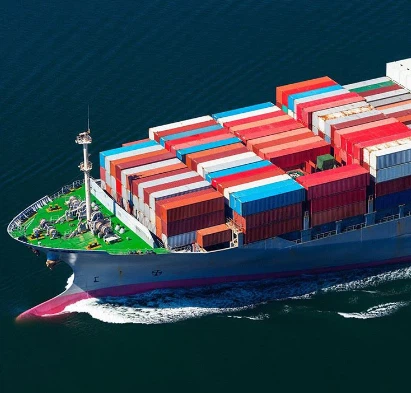
Sea freight is a different ballgame. It's the go - to option for large - volume, less time - sensitive shipments. But because of the large volume and longer transit times, the customs clearance process for sea freight is more complex.
Instead of an air waybill, you'll use a bill of lading (B/L) for sea freight. There are different types of bills of lading, such as straight B/L and order B/L. The bill of lading serves as a receipt for the goods, a contract of carriage, and a document of title.
The documentation requirements for sea freight are similar to air freight in terms of the commercial invoice and packing list. However, you might also need additional documents depending on the nature of the goods. For example, if you're shipping food products, you'll need certificates of origin and health certificates.
Sea freight customs clearance usually takes place at the port. Since ships carry a huge amount of cargo, the customs authorities need more time to inspect and clear the goods. It can take anywhere from a few days to several weeks.
There's also the issue of demurrage and detention. Demurrage is the charge for keeping the container at the port beyond the free time allowed by the shipping line. Detention is the charge for keeping the container on your premises for longer than the allotted time. These charges can add up quickly, so it's important to get your customs clearance done as efficiently as possible.
Regulatory Differences
Apart from the documentation and process differences, there are also regulatory differences between air and sea freight customs clearance.
Some countries have different regulations for goods arriving by air and sea. For example, certain restricted or prohibited items might be more strictly enforced for sea freight because of the large volume of cargo.
Also, the way duties and taxes are calculated can vary. In some cases, the method of valuation might be different for air and sea shipments. This is something you need to be aware of when planning your shipment.
The Role of a Freight Forwarder
As an Air Freight And Sea Freight provider, we play a crucial role in the customs clearance process. We have the expertise and experience to handle all the paperwork and ensure that your goods are cleared smoothly.
We can help you prepare the right documents, calculate the duties and taxes accurately, and communicate with the customs authorities on your behalf. Whether it's an air shipment or a sea shipment, we know the ins and outs of the customs clearance process and can save you a lot of time and hassle.
Why Choose Us?
We offer a comprehensive range of services, including Sea Freight & Logistics Solution. Our team is dedicated to providing the best solutions for your shipping needs. We have a vast network of partners around the world, which means we can handle your shipments to almost any destination.
If you're looking for Sea Cargo services, we've got you covered. Our sea freight services are reliable and cost - effective. We can help you navigate the complex customs clearance process and ensure that your goods arrive at their destination safely and on time.
And of course, our Air Freight And Sea Freight options give you the flexibility to choose the best mode of transportation for your goods. Whether you need to get something to its destination quickly or you're shipping large volumes, we can provide the right solution.

Contact Us for Procurement
If you're in the market for air or sea freight services, we'd love to hear from you. We can provide you with a detailed quote based on your specific requirements. Whether you're a small business looking to expand your international reach or a large corporation with complex shipping needs, we have the expertise and resources to handle your shipments.
Don't hesitate to reach out to us. We're here to make your shipping experience as smooth and stress - free as possible.
References
- International Chamber of Commerce (ICC) - Incoterms 2020
- World Customs Organization (WCO) guidelines
- Shipping and logistics industry reports