Air Freight To Portugal
Table of contents
2. Current status of Portugal's air transport market
3. Major routes and airline layout
4. Factors affecting Portugal's air transport costs
5. Challenges facing Portugal's air transport
6. Opportunities and development prospects for Portugal's air transport
In the context of closely connected global trade, Portugal, with its unique geographical location, occupies a pivotal position in the field of air transport. As an important air hub connecting Europe, Africa and South America, Portugal's air transport network not only promotes the vigorous development of domestic trade, but also builds an efficient bridge for economic exchanges between regions. For many companies engaged in international trade, in-depth understanding of the dynamics of Portugal's air transport industry is the key to seizing market opportunities and optimizing logistics strategies.
2. Current status of Portugal's air transport market
1. Cargo volume continues to grow
In recent years, Portugal's air cargo volume has shown a steady upward trend. According to statistics from the Portuguese Airports Administration (ANA), the average annual growth rate of cargo throughput at Portugal's major airports has reached 5% over the past five years. In 2024, the total air cargo throughput of Portugal's national airports exceeded 1.5 million tons, an increase of 6% over the previous year. This growth is due to the gradual recovery of Portugal's economy and the rapid development of global e-commerce. Portugal's specialty products, such as agricultural products such as wine and olive oil, as well as industrial products such as electronics and auto parts, are exported to all parts of the world in large quantities by air. At the same time, consumers' strong demand for imported goods has also prompted more goods to enter the Portuguese market by air.
2. Airport facilities are constantly improving
In order to meet the growing demand for air transport, Portugal has stepped up its efforts to build and upgrade airport infrastructure. As Portugal's largest aviation hub, Lisbon Airport has implemented a series of expansion projects in recent years, including the construction of a new terminal building, the addition of parking spaces, and the modernization of the runway. These measures have significantly improved the airport's operational capacity, enabling it to handle more than 30 million passengers per year, and its cargo handling capacity has also been greatly improved. In addition, major regional airports such as Porto Airport and Faro Airport are also actively improving their facilities, optimizing operational processes and improving service quality. For example, Porto Airport has introduced an advanced cargo handling system, which enables rapid loading and unloading of cargo and efficient transshipment, effectively shortening the cargo turnover time.
3. Major routes and airline layout
1. Domestic route network
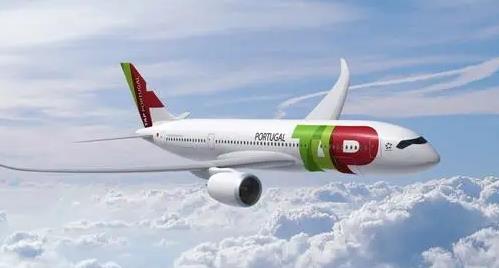
Portugal has a dense domestic air transport route network, connecting major cities such as Lisbon, Porto, and Faro. TAP Air Portugal occupies a dominant position in the domestic route market, operating multiple flights to and from major cities every day, providing convenient services for business travelers and cargo transportation. At the same time, some low-cost airlines, such as Ryanair and easyJet, are also active in the domestic route market, attracting a large number of price-sensitive passengers and small and medium-sized cargo shippers with their low fares, further enriching the market competition pattern.
2. International route layout
In terms of international routes, Portugal has established extensive connections with Europe, Africa, America and other regions. As an important gateway from Europe to Africa, Lisbon Airport has many direct flights to major African cities, such as Casablanca, Johannesburg, Luanda, etc. These routes have played an important role in promoting trade, personnel exchanges and investment cooperation between Portugal and African countries. In addition, Portugal's route network with other European countries is also very developed, with direct flights to almost all major European cities. As Portugal's economic ties with the Americas become increasingly close, Lisbon Airport has also opened a number of direct flights to the United States, Brazil and other American countries, providing strong transportation support for transatlantic trade.
3. Airline competition pattern
The Portuguese air transport market is highly competitive. In addition to the local Portuguese airline, many international airlines are also competing for the Portuguese market. Traditional European airlines such as Lufthansa, Air France, and British Airways have a certain share in Portugal's international route market with their extensive route networks and high-quality services. Some emerging airlines, such as Emirates and Qatar Airways, have gradually emerged in the Portuguese market by providing competitive fares and comfortable flight experiences. In addition, low-cost airlines have continued to expand their market share in Portugal. With their flexible operating models and low fares, they have attracted a large number of price-sensitive passengers and small and medium-sized cargo shippers, which has posed a certain competitive pressure on traditional airlines.
4. Factors affecting Portugal's air transport costs
1. Fluctuation of fuel prices
Fuel costs are an important part of Portugal's air transport costs, accounting for about 30% - 40% of the total cost. The fluctuation of international fuel prices has a direct impact on the operating costs of Portugal's airlines. When fuel prices rise, the airline's fuel procurement costs increase significantly. In order to maintain profitability, it has to pass on part of the costs to freight rates, resulting in an increase in air freight rates. For example, in the first half of 2024, international fuel prices rose by 20%, Portugal's fuel costs increased by 30% year-on-year, and freight rates on some routes rose by 15% - 20%. Conversely, when fuel prices fall, airlines' operating costs decrease, and they may appropriately reduce freight rates to attract more customers.
2. Transportation distance and route busyness
Transportation distance is one of the key factors in determining air freight rates. Generally speaking, the longer the transportation distance, the more flight time and fuel consumption the aircraft has, and the higher the transportation cost. For example, flights from Portugal to Asia, due to the longer distance, usually have freight rates 50% - 100% higher than flights to other European countries. In addition, the busyness of the route will also affect the freight rate. Popular routes tend to increase freight rates due to high demand and tight capacity of airlines; while some unpopular routes have relatively low freight rates due to relatively low demand. For example, the route from Lisbon to London has multiple flights a day, fierce competition, and relatively stable and competitive freight rates; while the route from Lisbon to some niche cities in Africa has relatively high freight rates due to the low frequency of flights.
3. Cargo weight and volume
When calculating freight rates, airlines usually use a combination of weight billing and volume billing, taking the larger of the two. For heavier goods, such as machinery and equipment, metal products, etc., airlines calculate freight rates based on the price per kilogram; for larger but lighter goods, such as large furniture, foam packaging products, etc., airlines will charge based on the volume weight of the goods. The calculation formula for volume weight is generally: Volume weight (kg) = length (cm) × width (cm) × height (cm) ÷ 6000 (may vary slightly from airline to airline). Therefore, the greater the weight and volume of the goods, the higher the transportation cost. When packing goods, shippers should try to optimize the packaging and reduce the volume and weight of the goods to reduce transportation costs.
5. Challenges facing Portugal's air transport
1. Infrastructure bottleneck
Although Portugal has made some progress in airport infrastructure construction, with the rapid growth of air transport demand, some airports are still facing infrastructure bottlenecks. For example, during peak hours, the use of runways and parking spaces at Lisbon Airport is relatively tight, and flight delays often occur. This not only affects the travel experience of passengers, but also has an adverse impact on the transportation timeliness of goods. In addition, the facilities of some regional airports are relatively backward, and the cargo handling capacity is limited, which cannot meet the growing demand for cargo. In order to alleviate the infrastructure bottleneck, Portugal needs to further increase investment in airport construction and improve the operational efficiency and service quality of airports.
2. Environmental pressure and sustainable development
As the world's attention to environmental protection continues to increase, the aviation transportation industry is facing increasing environmental pressure. Portuguese airlines are no exception and need to take measures to reduce carbon emissions and achieve sustainable development. On the one hand, airlines need to invest a lot of money in the research and development and adoption of environmental protection technologies, such as new energy-saving aircraft and biofuels; on the other hand, the government may introduce more stringent environmental regulations and policies to restrict and regulate the operations of airlines. This will increase the operating costs of airlines and pose a challenge to their profitability. How to achieve sustainable development of air transport while meeting environmental protection requirements is an important issue facing the Portuguese air transport industry.
3. Intensified market competition
The Portuguese air transport market is highly competitive, with domestic and foreign airlines vying for market share. In addition to the competition between traditional airlines, the rise of low-cost airlines has also brought new challenges to the market. Low-cost airlines have attracted a large number of price-sensitive passengers and small and medium-sized cargo shippers with their low fares and flexible operating models, causing a certain impact on the market share of traditional airlines. In addition, with the further opening of the European aviation market, more and more airlines are entering the Portuguese market, and market competition will become more intense. In this case, Portuguese airlines need to continuously improve their competitiveness, optimize service quality, and reduce operating costs to meet the challenges of market competition.
6. Opportunities and development prospects for Portugal's air transport
1. Opportunities brought by the Belt and Road Initiative
As an important node country of the Belt and Road Initiative in Europe, Portugal actively participates in the construction of the Belt and Road Initiative, which has brought new development opportunities to its air transport industry. With the in-depth promotion of the Belt and Road Initiative, Portugal's trade with China and other countries along the route will become more frequent, and the demand for air cargo will further increase. For example, China's electronic products, clothing and other commodities are shipped to Portugal by air and then transferred to other European countries; at the same time, Portugal's specialty products such as wine and olive oil also enter the Chinese market by air. In addition, the Belt and Road Initiative has also promoted personnel exchanges and tourism cooperation between countries along the route, driven the development of the air passenger market, and provided more development space for airlines.
2. The rapid development of e-commerce
The rapid development of global e-commerce has brought huge opportunities to Portugal's air transport industry. With the popularization of Internet technology and the change of consumer shopping habits, more and more consumers choose to buy goods online. Portugal's e-commerce market is also showing a booming trend. In 2024, Portugal's e-commerce sales increased by 20% year-on-year. The development of e-commerce has led to a significant increase in the demand for small-volume, high-frequency cargo transportation, and air transportation has become the preferred mode of e-commerce cargo transportation due to its high efficiency and speed. In order to improve customer satisfaction and shorten delivery time, many e-commerce companies have chosen to transport goods by air. This has provided a broad market space for Portuguese airlines and logistics companies and promoted the growth of air transportation business.
3. Aviation technology innovation and digital transformation
The continuous innovation and digital transformation of aviation technology have injected new impetus into the development of Portugal's air transportation industry. The research and development and application of new energy-saving aircraft will reduce airlines' fuel consumption and operating costs and improve transportation efficiency. For example, some airlines are gradually introducing new aircraft, whose fuel efficiency is 20% - 30% higher than that of traditional aircraft. In addition, the application of digital technology in the field of air transportation is becoming more and more extensive, such as electronic tickets, electronic waybills, intelligent logistics systems, etc. The application of these technologies not only improves the operating efficiency of airlines, but also provides more convenient and efficient services for passengers and cargo consignors. Through digital transformation, Portuguese airlines and logistics companies can better meet customer needs, enhance market competitiveness, and achieve sustainable development.
Portugal's air transport industry has achieved remarkable development in the past few years, with steady growth in cargo volume, continuous improvement of airport infrastructure and increasingly developed route network. However, the industry is also facing many challenges such as infrastructure bottlenecks, environmental pressure and intensified market competition. At the same time, the promotion of the "Belt and Road" initiative, the rapid development of e-commerce, and aviation technology innovation and digital transformation have brought unprecedented opportunities to Portugal's air transport industry. In the future development, Portugal's airlines, airports and related enterprises should actively respond to challenges, seize opportunities, increase investment in infrastructure construction, improve service quality, reduce operating costs, strengthen technological innovation and digital transformation, so as to achieve sustainable development of Portugal's air transport industry and occupy a more important position in the global air transport market.