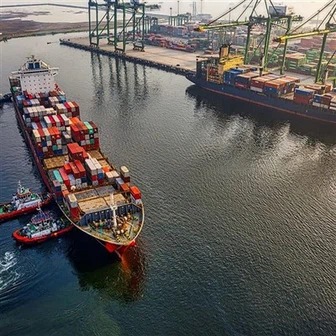
China-Europe Basic Port
1. What is a basic port?
The concept of "basic port" in maritime transportation is somewhat similar to the national or regional hub stations in railway transportation, such as Guangzhou Station, Wuchang Station, Zhengzhou Station, Beijing West Station, Shenyang Station, etc. Trains usually stop at major stations and there are many trains. If there is no direct train to a remote station, you have to transfer at a large station.
Non-Base Port means: all ports other than base ports are called non-base ports. Non-basic ports generally need to add a transshipment surcharge in addition to the basic port charges. When the cargo volume reaches a certain level, a direct shipping surcharge will be charged instead.
Ships generally call at all the basic ports on their route, and usually have direct or non-stop services, and then transfer from the basic ports to more remote or smaller non-basic ports.
2. European Basic Port
It is a common name in the world shipping industry for the most important ports in Europe. European basic ports refer to the major ports that shipping companies call most frequently after arriving in Europe. Their location is extremely important. All shipping companies to Europe call at European basic ports and then transfer to corresponding other ports or European inland points.
There are six main basic ports in Europe: Rotterdam in the Netherlands; Hamburg in Germany; Antwerp in Belgium; Le Havre in France; and Felixstowe and Southampton in the United Kingdom.
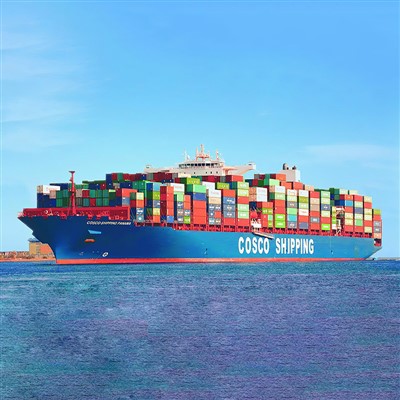
A basic port in Europe, the main shipping companies include: MSC, CMA CGM, Maersk MSK, COSCO, CSCL, PIL, ZIM, WANHAI, MISC, NCL, K-LINE, APL, HANJIN (recently bankrupt ), HMM, MOSK, etc.



1) Rotterdam Port Rotterdam Port
The Port of Rotterdam is located at the mouth of the Rhine and Maas rivers, with the North Sea to the west, the Rhine and Danube to the east, and access to the Caspian Sea. It is known as the "Gateway to Europe" and is the basic port of the Netherlands. The port area is about 100 square kilometers, the total length of the wharf is 42 kilometers, the deepest draft is 22 meters, and it can berth super large oil tankers of 545,000 tons. The port infrastructure is owned by the Rotterdam Municipal Government, the daily port management is the responsibility of the Rotterdam Port Authority, and various companies lease the port infrastructure development business.
Rotterdam is the second largest city in the Netherlands. The Port of Rotterdam has long been the largest seaport in Europe. In terms of container volume, it was the largest port in the world in the 1880s. In 2015, the top ten ports in the world in terms of cargo throughput were ranked as follows: Ningbo-Zhoushan Port, Shanghai Port, Singapore Port, Tianjin Port, Suzhou Port, Guangzhou Port, Tangshan Port, Qingdao Port, Rotterdam Port, and Hedland Port . The Port of Rotterdam ranks ninth, ranking first among European and American countries. Rotterdam is the western bridgehead of the Eurasian Continental Bridge (the eastern bridgehead is Lianyungang City, China).
The biggest feature of Rotterdam Port's services is its one-stop service of storage, transportation and sales. Storage, transportation and reprocessing are carried out through some bonded warehouses and cargo distribution centers to increase the added value of the goods, and then the goods are sent to destinations in the Netherlands and Europe through various transportation routes such as roads, railways, rivers, air transport, and sea transport.
2) Hamburg Port
The Port of Hamburg is located on the right bank of the lower reaches of the Elbe River in northern Germany, about 76 nautical miles away from the estuary and adjacent to the Heligoland Bay. It is the largest port and basic port in Germany and the second largest container port in Europe. Founded in 1189 and with a history of more than 800 years, it has developed into the world's largest free port. In the center of the free port is the world's largest warehouse city, covering an area of 500,000 square meters. It is different from other seaports, that is It is located at the center of the European market of the European Community, European Free Trade Association and Economic Cooperation, making it the most important transit seaport in Europe.
Hamburg is an important railway and aviation hub in Germany. With developed industry and commerce, it is the center of Germany's shipbuilding industry. The Port of Hamburg has a temperate maritime climate. The Port of Hamburg has a total area of 91 square kilometers, including 44 square kilometers of land, 31 square kilometers of water, and the other 16 square kilometers of the free port zone.
3) Antwerp Port
The Port of Antwerp is located on the right bank of the lower reaches of the Belgian River. It is connected by two river tunnels. It is about 50 nautical miles away from the North Sea in the west and has the Albert Canal directly leading to the Maas River in the east. It is the largest seaport and basic port in Belgium. Founded in the 13th century, it became Europe's first commercial city in 1460 and the commercial and transportation center of northern Europe.
Antwerp is the second largest industrial center in Belgium. Its main industries include oil refining, chemicals, automobiles, steel, non-ferrous smelting, machinery, shipbuilding, etc. It is also an important trading place for international diamonds.
The port has a temperate maritime climate with prevailing northwest winds. The Hong Kong pier is divided into two parts: the riverside and the dock. There are six locks connected to the river. The main terminal berths in the port area include Bulk Cargo (bulk cargo); General Cargo (grocery cargo); Container (container); Oil Quay (oil terminal), etc.


4) Le Havre Port
Le Havre is a famous port city in the Seine-Maritime department of the Normandy region in northwest France. It is the basic port of France. Located on the north bank of the Seine estuary on the northwest coast of France, on the east side of the Seine Bay, it is the import and export gateway for the industrial zones in the middle and lower reaches of the Seine River.
The Port of Le Havre is responsible for the transshipment of goods between France and South and North America, and is an ideal transit port to and from Spain, Portugal, Ireland and Scotland, which can save three or four days compared to Northern European ports. There are also motorways and railways to Paris, which only take 2 hours, and are connected to the entire France and Western Europe. The main industries include shipbuilding, machinery, petrochemicals, wood processing, electrical equipment and food.
The port has a temperate maritime climate, with prevailing west and southwest winds, warm temperatures in the east and cool summers, and rain all year round.
5) Felixstowe Port
The Port of Felixstowe is located at the confluence of the Orwell and Stour rivers on the southeast coast of the United Kingdom (The United Kingdom of Great Britain and Northern Ireland). It is the largest container port and basic port in the UK. one. As early as July 1967, it became the first professional container port in the UK. In 1972, it launched container water-rail combined transport and established a network with major industrial cities in the UK.
The Port of Felixstowe is the loading and unloading terminal for container ships on the UK-Atlantic route. Every day, there are container branch lines with Hull, Glasgow, Liverpool, Manchester, Cardiff and Nan'an. Traveling to and from Southampton, London and other ports.
The port has a temperate maritime climate, which is mild and humid, with foggy weather in autumn and winter.
6) Southampton Port Southampton Port
Southampton is a city and large port on the south coast of England and one of the basic ports in the UK. It is located in the center of the south coast of England, with a wide harbor and deep water, with the Isle of Wight as a barrier. It was an important port in the Middle Ages. It is an important ocean-going trading port in the UK; it is also the main passenger port in the UK. There are railways and roads leading directly to London, functioning as London's outer port.
There are ferries from Southampton Port to the Channel Islands, the Isle of Wight and France. It is one of the largest shipbuilding and ship repair centers in the country and has a huge dry dock. There are oil refineries, as well as industries such as aircraft manufacturing, electrical machinery, cables, automobiles, plastics and synthetic rubber.