China To Poland Logistics Line
Table of contents
2. Current status of the China-Poland logistics line
3. Service features and advantages of the logistics line
4. Challenges faced by the China-Poland logistics line
5. Development prospects and trends of the logistics line
Against the backdrop of deepening global trade, the economic and trade exchanges between China and Poland have become increasingly close. From China's inexpensive and high-quality electronic products and textiles to Poland's unique mechanical products and agricultural products, a large amount of goods are frequently circulated between the two countries. Logistics is the blood of trade, and the logistics line from China to Poland plays a vital role. Its development directly affects the efficiency and scale of bilateral trade, and has also become the focus of many import and export companies.
2. Current status of the China-Poland logistics line

1. Diverse modes of transportation
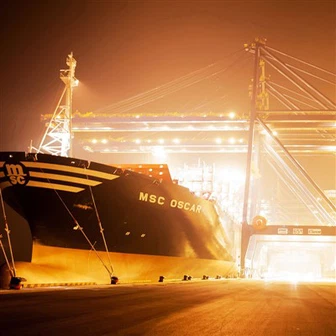
Special shipping line: With its advantages of large volume and low cost, sea transportation is one of the main modes of logistics from China to Poland. It usually departs from major ports such as Shanghai Port and Ningbo Port in China, passes through the Strait of Malacca and the Indian Ocean, and then enters the Mediterranean through the Suez Canal, and finally arrives at the Port of Gdansk and Szczecin Port in Poland. The entire voyage generally takes 25-35 days, and the specific duration will fluctuate due to factors such as ship speed and port congestion. For example, an ordinary container ship takes about 30 days to sail from Shanghai to Gdansk under normal circumstances, but during the peak season of the port, the overall transportation time may increase by 5-7 days due to the extended waiting time for loading and unloading.
Special railway line: The opening of the China-Europe Express has injected new vitality into the logistics from China to Poland. From many cities in China, such as Chongqing, Chengdu, Zhengzhou, etc., you can take the China-Europe Express to Poland. Taking the China-Europe Express departing from Chongqing as an example, it passes through Kazakhstan, Russia, Belarus and other countries, and finally arrives in Lodz, Poland. Railway transportation is highly time-efficient, with a total journey time of about 12 to 16 days. Compared with sea transportation, it greatly shortens the transportation time and has the characteristics of high stability and is less affected by natural factors such as weather.
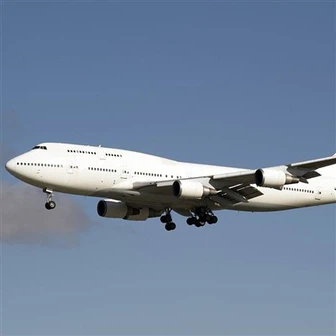
Air freight line: For high-value goods with extremely high timeliness requirements, air freight lines are the first choice. Direct flights from major aviation hubs such as Beijing, Shanghai, and Guangzhou in China to Warsaw Chopin Airport in Poland usually take 10 to 12 hours. In addition to cargo loading and unloading, customs clearance and other processes, delivery can generally be completed in 2 to 3 days, which can greatly meet the transportation needs of urgent goods.
2. Wide coverage of dedicated line services
At present, the logistics dedicated line service from China to Poland has covered many cities in both countries. In China, not only the developed cities in the eastern coastal areas, such as Shenzhen and Qingdao, have a complete collection network, but also cities in the central and western regions, such as Xi'an and Wuhan, are gradually integrating into the dedicated line service system. In Poland, in addition to the capital Warsaw and major port cities, inland cities such as Krakow and Poznan can also enjoy efficient logistics and distribution services. Whether it is bulk cargo transportation for large enterprises, small batch orders for small and medium-sized enterprises, or scattered packages for cross-border e-commerce, the logistics line can provide corresponding solutions.
3. Service features and advantages of the logistics line

1. Customized service
The logistics line provides customized services for different customers. For large manufacturing companies, a scheduled and quantitative transportation plan can be formulated according to their production plans and inventory management needs to ensure timely supply of raw materials and fast transportation of finished products to the Polish market. Cross-border e-commerce sellers can choose "door-to-door" service. Logistics companies are responsible for picking up, transporting, and clearing customs from the seller's warehouse until the goods are delivered to Polish buyers, simplifying the seller's operating procedures and reducing logistics management costs.
2. Professional customs clearance service
Polish customs policies are relatively complex, involving certification, inspection and quarantine requirements for various products. Logistics line companies are equipped with professional customs clearance teams, familiar with Polish customs regulations and procedures, and can assist customers in preparing complete customs clearance documents, such as certificates of origin, commercial invoices, packing lists, etc., to ensure that the goods pass customs inspection smoothly, reduce the detention time of goods, and improve customs clearance efficiency. For example, in the export of electronic products, the customs clearance team can help companies cope with Poland's strict electronic product safety certification requirements and avoid cargo delays due to certification issues.
3. Real-time tracking of logistics information
With the help of advanced information technology, the logistics line realizes real-time tracking of the entire cargo transportation process. Customers can check the location, transportation status and other information of the cargo at any time through the online platform or mobile phone APP provided by the logistics company. From the collection of goods in China, to the transit during transportation, and then to the distribution in Poland, the information of each link can be fed back to the customer in a timely manner, so that the customer can know the cargo transportation situation clearly and enhance the customer's trust in logistics services.
4. Challenges faced by the China-Poland logistics line

1. Fluctuation of transportation costs
The fluctuation of international fuel prices, exchange rate changes and the adjustment of supply and demand in the transportation market will lead to the instability of logistics dedicated line transportation costs. For example, rising fuel prices will directly increase the cost of sea and air transportation, which will then be transmitted to freight. Exchange rate fluctuations affect cross-border settlements. If the exchange rate of RMB to Polish zloty changes significantly, logistics companies may face exchange losses during settlement, affecting profit margins. At the same time, during the peak season of the transportation market, the space is tight and the supply is insufficient to meet the demand, and the freight will also rise accordingly.
2. Infrastructure differences and connection issues
There are certain differences between China and Poland in terms of logistics infrastructure. China's infrastructure construction such as ports, railways, and roads is relatively complete, and the transportation efficiency is high, but problems may arise in the process of connecting with Poland. For example, after the China-Europe Express arrives in Poland, the goods need to be transferred to the Polish railway system or road transport vehicles. Due to the different railway gauges of the two countries (the standard gauge in China is 1435 mm, and the gauge of some railways in Poland is 1520 mm), the transfer process may take time and labor costs, affecting the efficiency of cargo transportation. In addition, the logistics infrastructure in some inland areas of Poland is relatively weak, and the road conditions and storage facilities need to be further improved, which also brings certain challenges to logistics distribution.
3. Changes in trade policies and regulations
Poland's trade policies and regulations will be adjusted according to domestic economic development and international situation. In recent years, Poland has strengthened quality supervision and import restrictions on some products, such as stricter safety standards for food, cosmetics and other products. Logistics dedicated line companies need to understand and adapt to these policy and regulatory changes in a timely manner, otherwise the goods may be blocked in the customs clearance link or even returned. At the same time, the rise of international trade protectionism may cause trade frictions and have an adverse impact on logistics business from China to Poland.
5. Development prospects and trends of the logistics line

1. Deep integration of multimodal transport
In the future, the logistics line from China to Poland will pay more attention to the deep integration of multimodal transport. By integrating multiple modes of transport such as sea, rail, and road, the seamless connection of goods between different transportation links can be achieved. For example, by adopting the "sea + rail" intermodal transport mode, the goods first arrive at the Polish port by sea, and then quickly transfer to inland cities by rail. It can not only give play to the low-cost advantage of sea transportation, but also take advantage of the high efficiency of rail transportation, improve the overall logistics efficiency, and reduce transportation costs. At the same time, multimodal transport helps to reduce the loss of goods during the transit process and improve the quality of logistics services.
2. Digitalization and intelligent upgrade
With the development of technologies such as the Internet of Things, big data, and artificial intelligence, the logistics line will accelerate the digitalization and intelligent upgrade. During the transportation process, the Internet of Things technology can monitor the temperature, humidity, location and other information of the goods in real time to ensure that the goods are transported in a suitable environment and avoid damage to the goods. Big data analysis can help logistics companies optimize transportation routes, reasonably arrange transportation capacity, and improve the utilization rate of transportation resources. Artificial intelligence technology can be applied to predictive maintenance, detect potential failures of transportation equipment in advance, reduce equipment failure rates, and ensure the continuity of transportation. In addition, intelligent warehouse management systems, automated sorting equipment, etc. will also be more widely used in logistics lines to improve warehousing and sorting efficiency.
3. Development of green logistics
Against the backdrop of growing global environmental awareness, green logistics will become the development trend of the China-Poland logistics line. Logistics companies will increase investment in environmentally friendly transportation equipment, such as using electric trucks for short-distance distribution and promoting the use of clean energy ships for sea transportation, to reduce carbon emissions. At the same time, in the packaging process, more degradable and recyclable environmentally friendly packaging materials will be used to reduce the impact of packaging waste on the environment. In addition, by optimizing transportation routes and increasing the loading rate of vehicles and ships, the goal of energy conservation and emission reduction can also be achieved, promoting the sustainable development of the logistics industry.
The dedicated logistics line from China to Poland plays a key role in promoting the development of bilateral trade. At present, it has formed a pattern of coexistence of multiple modes of transportation and wide coverage of services, and has advantages such as customization, professional customs clearance, and information tracking. However, the development of dedicated lines also faces challenges such as fluctuations in transportation costs, poor infrastructure connections, and changes in trade policies and regulations. Looking to the future, multimodal transport integration, digital and intelligent upgrades, and green logistics development will bring new opportunities and changes to logistics dedicated lines. Logistics companies need to actively respond to challenges, grasp development trends, and continuously improve service quality and competitiveness to provide more efficient, stable, and sustainable logistics support for economic and trade cooperation between China and Poland.