How Long Does It Take To Ship From China To Sweden?
The shipping time of sea freight is affected by many factors. Generally speaking, the shipping time from major ports in China (such as Shanghai, Shenzhen, Ningbo, etc.) to major ports in Sweden (such as Gothenburg, Stockholm, etc.) is usually between 25 and 40 days. However, this time is not fixed and is affected by many factors.
Table of contents
2. Major shipping routes and shipping time
3. Key factors affecting shipping time
4. Industry response strategies and development trends
In the context of closely interwoven global trade, economic and trade exchanges between China and Sweden are becoming increasingly frequent. From China's electronic products and textiles to Sweden's machinery and auto parts, a large amount of goods flow between the two countries, and sea transportation, as a cost-effective mode of transportation, plays an important role. For many import and export companies, a clear understanding of the length of sea transportation from China to Sweden is the key to rationally planning the supply chain and controlling the delivery time of goods, which is directly related to the company's operating costs and market competitiveness.
2. Major shipping routes and shipping time
1. Traditional ocean routes
The route via the Strait of Malacca - Indian Ocean - Suez Canal: This is one of the most common shipping routes from China to Sweden. Starting from ports on the eastern coast of China, such as Shanghai and Ningbo, ships travel south through the Strait of Malacca, enter the Indian Ocean, and then through the Suez Canal, and finally arrive at major ports such as Gothenburg and Stockholm in Sweden. This route has a long voyage, and generally, the entire transportation time is about 30-40 days. Its advantages are that the route is mature, the port facilities along the way are complete, and ships can be replenished and transferred at multiple ports. For example, in the Port of Singapore, ships can efficiently complete operations such as fuel replenishment and cargo loading and unloading to ensure smooth sailing.
Route around the Cape of Good Hope in Africa: When the Suez Canal cannot be normally passed due to special circumstances (such as blockage, maintenance, etc.), some ships will choose to bypass the Cape of Good Hope in Africa. This route departs from a Chinese port, goes south along the east coast of Africa, bypasses the Cape of Good Hope, and then heads north to Sweden. Due to the significant increase in the voyage, the transportation time is usually 45-60 days. However, this route can avoid the traffic restrictions of the Suez Canal, which is of great significance for some urgent cargo transportation that cannot wait for the canal to resume normal operation.
2. Emerging Arctic routes
With global warming, the navigation conditions of the Arctic route are gradually improving, and its position in China-Sweden shipping is becoming increasingly prominent. Starting from China's northeastern ports, such as Dalian and Yingkou, entering the Arctic Ocean through the Bering Strait, sailing along the northern coastline of Russia, and finally arriving in Sweden. In theory, the Arctic route can shorten the transportation time by about 10-15 days compared with the traditional route, greatly improving transportation efficiency. However, the Arctic route still faces many challenges, such as long ice-covered period, weak infrastructure, and difficulty in ensuring navigation safety. At present, the annual suitable navigation time is limited, ships need to be equipped with special icebreaking equipment, and the transportation cost is high. It has not yet become a mainstream transportation mode, but it has great potential for future development.
3. Key factors affecting shipping time
1. Ship type and speed
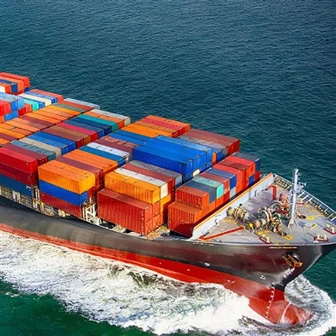
Different types of ships have different speeds, which in turn affects the transportation time. Container ships are the main type of ships for sea transportation from China to Sweden, and their general speed is 20-25 knots (1 knot = 1 nautical mile/hour). Bulk carriers and tankers are relatively slow, about 15-20 knots. Taking a container ship with a speed of 20 knots as an example, the sailing time from Shanghai to Gothenburg is about 35 days. If it is replaced with a bulk carrier with a speed of 15 knots, the transportation time may be extended to about 45 days. In addition, some new energy-saving ships have improved their speed by optimizing the hull design and adopting efficient power systems, which can appropriately shorten the transportation time.
2. Port congestion
Sea transportation between China and Sweden needs to pass through multiple important ports, and port congestion has a significant impact on the transportation time. As important hubs for China's cargo exports, Shanghai Port and Ningbo Port have huge annual cargo throughput. During the peak season, ships often queue up to load and unload cargo. If the waiting time at these ports is too long, it will directly lead to an extension of the overall transportation time. Similarly, the ports of Gothenburg and Stockholm in Sweden may also be congested during the peak import season or when encountering special circumstances such as bad weather. For example, in 2024, due to extreme weather, a port in Sweden could not operate normally due to loading and unloading equipment, resulting in a backlog of ships and a delay of 7-10 days in cargo transportation.
3. Seasonal and weather factors
Seasonal and weather changes have a great impact on the length of sea transportation. In winter, severe weather such as strong winds, heavy rains, and blizzards may occur in the North Indian Ocean and the Nordic waters. To ensure safe navigation, ships may reduce speed or choose to dock and wait in sheltered anchorages. In the Nordic winter, some ports may be affected by ice and affect the berthing and loading and unloading operations of ships. According to statistics, during the frequent severe weather periods in winter, the sea transportation time from China to Sweden may increase by 5-10 days. In summer, the weather is relatively stable, the ships sail smoothly, and the transportation time is closer to normal levels.
4. Industry response strategies and development trends
1. Optimization measures for transport enterprises
Route optimization and scheduling: Shipping enterprises use big data analysis technology to monitor the ship operation data, port congestion and weather changes of each route in real time, and rationally plan routes and ship scheduling. For example, according to the traffic conditions of the Suez Canal, adjust the ship's navigation plan in advance to avoid long waiting and improve transportation efficiency. At the same time, by optimizing the order of ships calling at ports, reduce transit time and reduce transportation costs.
Improve ship operation efficiency: Increase investment in the renewal and transformation of ship equipment, adopt energy-saving technologies, and improve ship speed and fuel efficiency. For example, install new propellers, energy-saving main engines and other equipment to reduce energy consumption while shortening transportation time. In addition, strengthen crew training, improve crew operating skills and emergency handling capabilities, and ensure that ships can sail safely and efficiently in complex weather and sea conditions.
2. Port facility upgrade and coordination
Infrastructure construction: Ports in China and Sweden continue to increase infrastructure construction efforts to improve port throughput capacity. For example, Shanghai Port has built multiple deep-water berths to improve the berthing capacity of large ships; Gothenburg Port has upgraded loading and unloading equipment and adopted an automated operation system to shorten cargo loading and unloading time. Through these measures, the time that ships stay at ports can be reduced and cargo turnover can be accelerated.
Inter-port collaboration: Strengthen information sharing and cooperation between Chinese and Swedish ports and establish a joint dispatching mechanism. By communicating information such as ship arrival time and cargo loading and unloading requirements in advance, the rational allocation of port resources can be achieved and the overall transportation efficiency can be improved. At the same time, the coordinated development of ports and inland logistics hubs can be promoted, the multimodal transport system can be improved, and the seamless transportation of goods can be achieved.
3. Trends in the application of emerging technologies
Smart shipping technology: With the development of technologies such as the Internet of Things and artificial intelligence, smart shipping has gradually emerged in the shipping industry. By installing sensors on ships, cargo and port facilities, real-time monitoring and data collection of the transportation process can be achieved. Using artificial intelligence algorithms, the navigation status of ships and cargo transportation conditions can be analyzed and predicted, potential risks can be discovered in advance, and transportation decisions can be optimized. For example, the smart shipping system can automatically adjust the ship's speed and route according to real-time weather and sea conditions to ensure safe and efficient navigation.
Application of blockchain technology: The application of blockchain technology in the field of shipping can help improve the transparency and security of transportation information. Through the blockchain platform, cargo transportation information can be shared and cannot be tampered with, making it convenient for cargo owners, freight forwarders, shipping companies and other parties to grasp the dynamics of cargo in real time. At the same time, it simplifies the document circulation process, improves settlement efficiency, reduces transaction costs, and promotes the digital development of the shipping industry.
The shipping time from China to Sweden is affected by many factors. The shipping time of traditional routes ranges from 30 to 60 days. The emerging Arctic routes have potential but face challenges. Transport companies and ports are continuously improving transportation efficiency by optimizing routes, upgrading facilities, and applying new technologies. For import and export companies, they need to pay close attention to changes in shipping time, and choose appropriate transportation solutions based on the characteristics and needs of their own goods to adapt to changes in industry development and ensure the stability of the supply chain. With the continuous innovation and development of the industry, shipping from China to Sweden is expected to achieve greater breakthroughs in efficiency and cost in the future.