How Can Australian Overseas Warehouses Cleverly Avoid Tariff Risks?
Table of contents
2. Analysis of Australia's tariff policy
3. Strategies to cleverly avoid tariff risks
In the booming global cross-border e-commerce market, Australia has become a hot spot in the eyes of many cross-border sellers with its huge consumer market and stable economic environment. As a key link in improving logistics timeliness and optimizing customer experience, the layout of overseas warehouses in the Australian market is becoming increasingly important. However, the complex and ever-changing tariff policy is like a sword of Damocles hanging high, which constantly affects the cost and profit of overseas warehouse operations. How to cleverly avoid tariff risks has become a core issue that Australian overseas warehouse operators need to solve urgently.
2. Analysis of Australia's tariff policy
1. Multiple factors affecting tariff rates
Australia's tariff policy is complex, and the tax rate is not "one size fits all", but changes flexibly based on many factors such as the type of goods and the place of origin. From the perspective of commodity categories, daily consumer goods such as clothing and household goods are subject to very different tax rates from industrial products and electronic products. Taking clothing as an example, clothing of different materials and styles has different customs codes and corresponding tax rates. At the same time, the place of origin plays a key role in tariff calculations. If the goods come from a country or region that has signed a free trade agreement (FTA) with Australia, there is a high probability that they will enjoy preferential tariffs or even zero tariffs.
2. Dynamic adjustment of tariff policies
On July 1, 2024, the Australian government implemented a far-reaching tariff reform, abolishing tariffs on nearly 500 commodities in one fell swoop, covering multiple categories such as washing machines, refrigerators, clothing, and sanitary products. It is estimated that the value of the tariffs abolished this time accounts for about 14% of Australia's total tariffs. This reform aims to simplify trade processes and reduce corporate compliance burdens, and is expected to save companies more than AUD 30 million in tax compliance costs each year. However, this does not mean that tariffs on all goods will be reduced. Some goods will still maintain high tax rates, and there is uncertainty about the future policy direction, which may be adjusted at any time due to economic conditions, trade relations and other factors.
3. Strategies to cleverly avoid tariff risks
1. Accurately classify goods and avoid misuse of tax rates.
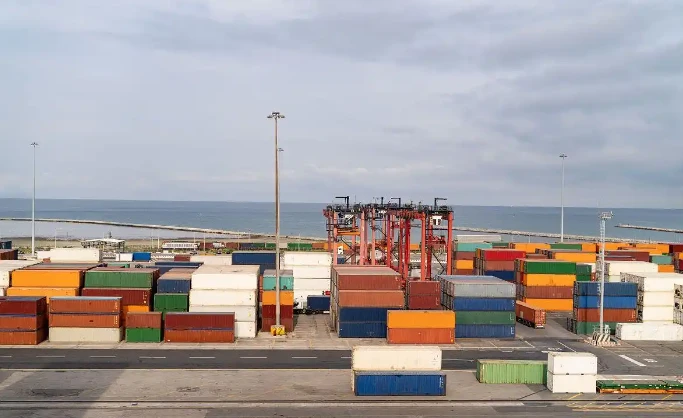
The key position of goods classification: Accurate classification of goods is the cornerstone of correctly calculating tariffs. Australian Customs follows the internationally accepted commodity coding system to classify imported goods, and the accuracy of the coding directly determines the applicable tax rate. Taking clothing exports as an example, it is necessary to finely classify according to weaving methods, types, materials, categories, and ingredient content. A company was traced back by customs three years later due to incorrect classification of clothing, and suffered a huge fine. The lesson was profound. Classification strategy and professional support: Overseas warehouse operators should conduct in-depth research on commodity classification rules, establish a detailed commodity information database, and accurately classify each batch of goods. At the same time, professional customs brokers or tax consultants can be hired to use their rich experience and expertise to ensure that goods are accurately classified, avoid applying high tax rates due to incorrect classification, and increase tariff costs.
2. Make good use of free trade agreements and enjoy tariff preferences
Tariff dividends of free trade agreements: Australia has signed FTAs with many countries and regions, such as the Australia-New Zealand Closer Economic Relations Agreement and the Australia-China Free Trade Agreement. Goods that meet the FTA rules of origin can enjoy substantial tariff reductions or even zero tariffs. Taking the China-Australia Free Trade Agreement as an example, if some Chinese-made goods are shipped to Australian overseas warehouses and meet the origin standards, the tariff costs can be significantly reduced.
Key points to meet the rules of origin: Enterprises should have a deep understanding of the rules of origin of each FTA, and control the entire process from raw material procurement, production and processing to finished product transportation to ensure that the goods are eligible to enjoy preferential tariffs. For example, in the raw material procurement link, raw materials from the agreement countries are preferred; in the production and processing process, the value-added ratio is guaranteed to meet the regulations. At the same time, prepare relevant documents such as the certificate of origin so that you can enjoy preferential treatment during customs inspection.
3.Optimize the declared value and reasonably define the cost

The impact and definition principle of declared value: Australian Customs calculates tariffs based on the declared value. If the declared value is too low, it may be considered as deliberate tax evasion and face punitive tariffs; if the declared value is too high, the tariff expenditure will be increased unreasonably. Overseas warehouse operators should reasonably determine the declared value based on factors such as the real cost of the goods and the market value. The real cost includes the purchase price, transportation costs, insurance premiums, etc. The market value can refer to the market price of similar products in Australia.
Retention of vouchers and risk response: Operators need to keep relevant transaction vouchers, such as purchase invoices, transportation documents, etc., for customs inspection. If the customs has doubts about the declared value, they can provide voucher explanations in time to avoid unnecessary disputes and tariff losses.
4. Apply for tariff reductions and exemptions to reduce operating costs
Comprehensive review of tariff reduction projects: Australia has some tariff reduction projects that provide preferential treatment for specific goods. For example, imported and exported advertising products and imported samples for testing, as well as samples purchased and given away free of charge by state agencies and enterprises to foreign countries, are exempt from tariffs. In addition, there may also be corresponding exemption policies for temporarily imported goods and goods for charitable purposes.
Application process and precautions: If overseas warehouses involve goods that meet the exemption conditions, they should promptly understand and apply for tariff exemptions in accordance with the prescribed procedures. When applying, be sure to prepare all relevant supporting materials, such as advertising plans and sample usage instructions for advertising products, to ensure that the application is successfully approved and effectively reduce operating costs.
●The road to classification correction for clothing companies
A Chinese cross-border e-commerce company has been shipping clothing to overseas warehouses in Australia for a long time. At first, due to a lack of understanding of the classification rules for clothing customs codes, some knitted tops were misclassified, resulting in an additional 20% in tariffs. As the business scale expanded, the pressure of tariff costs increased dramatically. The company immediately hired a professional customs declaration consultant to re-sort the goods. The consultant accurately classified each garment based on factors such as material and weaving technology, and established a detailed coding file. After the adjustment, the company saved more than US$100,000 in tariff expenditures each year, and its profit margin increased significantly.
●Electronic equipment manufacturers who make good use of the free trade agreement
A Chinese electronic equipment manufacturer shipped to an overseas warehouse in Australia. After the company conducted in-depth research on the China-Australia Free Trade Agreement, it gave priority to domestic suppliers in China that met the agreement's origin qualifications in the procurement of raw materials to ensure compliance with the source of raw materials. During the production process, the value-added ratio was strictly controlled to meet the requirements of the agreement. At the same time, the certificate of origin was applied for and obtained in a timely manner. Thanks to these measures, companies enjoy zero tariffs on electronic equipment exported to Australia, their product prices are more competitive than those of their counterparts that have not taken advantage of the free trade agreement, and their market share is gradually expanding.
A senior cross-border logistics expert pointed out: "Australian overseas warehouse operators must always pay attention to the dynamics of tariff policies and integrate tariff risk avoidance into all aspects of daily operations. In terms of cargo classification and declared value determination, they must be accurate and compliant, and at the same time fully tap the potential of free trade agreements and tariff reduction projects. In addition, establishing long-term cooperative relationships with professional customs brokers and tax consultants is an effective way to deal with complex tariff policies." A cross-border e-commerce industry analyst also said: "With the intensification of competition in the Australian market, cleverly avoiding tariff risks has become the key to improving the competitiveness of overseas warehouse operators. Those companies that can flexibly apply policies and reasonably plan supply chains will occupy an advantageous position in the market."
Looking ahead, Australia's tariff policy will continue to adjust under the influence of factors such as the global economic situation and the evolution of the trade pattern. Overseas warehouse operators need to maintain keen policy insight, plan ahead, and flexibly adjust their operating strategies. On the one hand, continue to optimize the classification and declaration process of goods to ensure compliance operations; on the other hand, deeply tap the potential of free trade agreements, actively expand international cooperation in raw material procurement and production and processing, and enhance the advantages of goods origin qualifications. At the same time, pay attention to the application of emerging technologies in customs supervision and tariff calculations, such as blockchain technology to help goods traceability and information transparency, and provide a new path to avoid tariff risks. Only in this way can Australian overseas warehouse operators move forward steadily in a complex and changing tariff environment and achieve sustainable development.
In the blue ocean of cross-border e-commerce, which is full of opportunities and challenges, Australian overseas warehouse operators can only travel light and sail to the other side of success by cleverly avoiding tariff risks.