How Long Does It Take To Send From China To Malaysia?
China and Malaysia have close trade relations, and logistics timeliness directly affects the efficiency of cross-border e-commerce and manufacturing supply chains. This article starts from mainstream transportation methods such as sea, air, and land transportation, combines port operation data, customs clearance procedures, and industry cases, analyzes the timeliness of cargo transportation from China to Malaysia, and provides companies and individuals with a feasible timeliness management solution.
Table of Contents
1. Time efficiency benchmarks for mainstream transportation modes
2. Analysis of core variables affecting time efficiency
3. Time efficiency comparison and cost balance strategy
4. Key points for operational procedures and document compliance
5. Industry trends and technology-enabled time efficiency improvement
6. Summary and practical suggestions
1. Time efficiency benchmarks for mainstream transportation modes
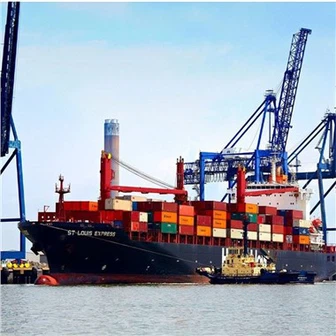
Cargo transportation from China to Malaysia is mainly carried out by sea (accounting for 70%), supplemented by air transportation (20%) and land transportation (10%), forming a multi-dimensional time efficiency system:
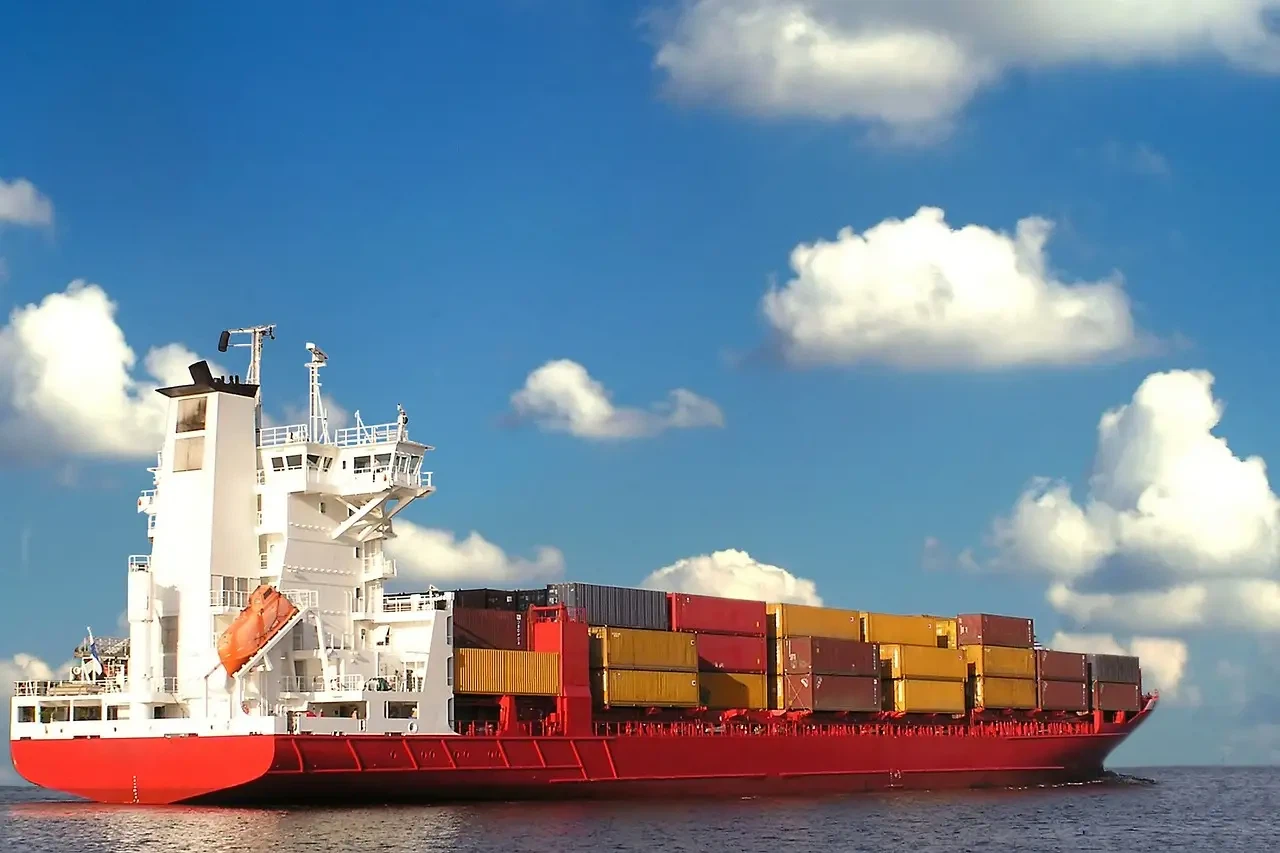
1.1 Sea transportation: the king of cost-effectiveness Time efficiency stratification
(1) South China Sea route: the golden channel of South China ports
Direct ship time efficiency:
Shenzhen Yantian/Guangzhou Nansha→Port Klang: 12-15 days (COSCO Shipping's "ASEAN Express" has an on-time rate of 92%, and the voyage takes 12 days);
Hong Kong→Port Klang: 14-16 days (due to the 1-2 days of barge transshipment).
Transshipment plan:
Shanghai/Ningbo→Port Klang: Transshipment via Singapore, time limit 18-22 days, 5-7 days slower than direct ship, but 15% lower freight (suitable for low-time bulk cargo).
East Malaysia route:
Shenzhen→Kuching Port: Direct ship 20-25 days, due to the low operating efficiency of East Malaysian ports, the time limit fluctuates by ±3 days.
(2) Differences in cargo types:
Full container load (FCL): 12 days from Shenzhen to Port Klang, suitable for furniture and building materials (freight for a single container is about US$1,500-2,000);
Less than container load (LCL): requires cargo collection at the port, time limit 15-20 days, suitable for small quantities of cargo (freight cost US$200-300 per cubic meter).
Industry case: In March 2024, a small commodity company in Yiwu transported 500 boxes of toys via a direct ship from Yantian to Port Klang. It took only 13 days for the ship to arrive at the port. After customs clearance, it was delivered to Kuala Lumpur through local logistics in Malaysia. The whole journey took 16 days, which was 8 days shorter than the transit plan.
1.2 Air transport: Breakthrough in the timeliness of urgent items
Main airports and timeliness:
Guangzhou/Shenzhen→Kuala Lumpur International Airport (KLIA): direct flight 4-5 hours, delivery 1-2 days after customs clearance, and a total of 3-5 days;
Shanghai/Beijing→KLIA: transit flight (such as via Singapore and Bangkok), flight time 6-8 hours, and a total of 4-6 days.
Cargo restrictions:
If a single piece exceeds 300kg, it is necessary to apply for special space in advance. Dangerous goods such as lithium batteries need to provide UN38.3 certification, and the timeliness may be extended by 1-2 days.
1.3 Land transportation: an emerging option for China-Malaysia railway
Cross-border railway transportation:
Pingxiang, China → Dong Dang, Vietnam → Port Klang, Malaysia: through the railway section of the "China-Singapore Connectivity Project", the whole journey takes 10-12 days (3-5 days faster than sea transportation), suitable for "light and bulky goods" such as electronic products and auto parts.
Road transportation:
Mohan, Yunnan → Port Klang, Malaysia: The whole journey takes 15-18 days, limited by the efficiency of border clearance (single clearance takes 4-6 hours), and is only suitable for the Myanmar border trade radiation area.
2. Analysis of core variables affecting timeliness
Transportation timeliness is affected by multiple factors and needs to be evaluated dynamically:
2.1 Port operation efficiency: the "throat" of shipping timeliness
Port Klang: the efficiency benchmark in Southeast Asia
As the largest port in Malaysia (with a throughput of 14.8 million TEUs in 2023), the single-box loading and unloading time at the automated terminal of Northport, Port Klang is 2.8 minutes, the average time for ships to stay in port is 36 hours, and the port congestion time during the peak season (November-December) is 5-7 days, resulting in a 10%-15% extension of timeliness.
East Malaysian ports: large differences in operating efficiency
Due to weak infrastructure, the single-box loading and unloading time of Kuching Port and Kota Kinabalu Port is 5 minutes, and the waiting time for ships often exceeds 48 hours, with a timeliness fluctuation of ±5 days.
2.2 Customs clearance process: Document compliance determines the minimum time limit
General cargo customs clearance:
Sea transportation: Pre-declaration in the Malaysian Customs "Single Window" system (MyDIGITAL CUSTOMS), with complete documents, can be released within 24 hours (inspection rate is about 8%);
Air transportation: Priority customs clearance channel, completed within 12 hours (dangerous goods inspection rate is 30%, and the time is extended by 24 hours).
Special cargo requirements:
Food requires Halal certification (application cycle 15-20 days);
Electronic products require SIRIM certification (Malaysian Standards and Industrial Research Institute certification, testing cycle 10 days);
Plant products require phytosanitary certificate (plant quarantine certificate, processing takes 3-5 days).
2.3 Season and weather: external variables that cannot be ignored
Monsoon impact:
From November to March of the following year (northeast monsoon), the average wave height in the South China Sea is 2-3 meters, and the shipping time increases by 2-3 days;
From June to August (southwest monsoon), there are occasional thunderstorms in the Strait of Malacca, and air flights may be delayed by 1-2 hours.
High temperature and high humidity challenges:
The average humidity in Malaysia is 80% throughout the year. Electronic products and textiles need to be treated with moisture-proof treatment, otherwise the customs clearance will be inspected due to moisture in the packaging, and the time limit will be extended by 3-5 days.
2.4 Transportation mode matching degree: time efficiency lever of cargo attributes
| Cargo type | Ocean freight (FCL) | Ocean freight (LCL) | Air freight | Land freight (railway) |
|---|---|---|---|---|
| Large low-value cargo | 12-15 days | 15-20 days | 3-5 days | 10-12 days |
| E-commerce small package (<2kg) | - | 20-25 days | 5-7 days | 12-15 days |
| Precision instruments (high time efficiency) | 15-18 days | - | 3-4 days | 10-12 days |
3. Time efficiency comparison and cost balance strategy
3.1 Cost-time efficiency matrix of all transportation modes
| Transportation mode | Time efficiency (days) | Cost (US dollars/100kg) | Suitable scenario | On-time rate |
|---|---|---|---|---|
| Ocean freight (full container) | 12-25 | 80-120 | Bulk cargo over 500kg | 85%-92% |
| Ocean freight (LCL) | 15-30 | 150-200 | 100-500kg Small and medium-sized batches of goods | 75%-85% |
| Air transport (direct flight) | 3-5 | 800-1200 | High-value urgent items (such as chips) | 95% 以上 |
| Land transport (railway) | 10-12 | 200-300 | 100-1000kg Time-sensitive goods | 80%-85% |
3.2 Practical skills for time optimization
Sea freight booking strategy:
Book 3 weeks in advance during the peak season (November-December, March-April), and choose a shipping company with an on-time rate of more than 90% (such as Evergreen Marine, OOCL);
Use "shipping tracking tools" (such as MarineTraffic) to monitor the location of the ship in real time and avoid shipping companies with an on-time rate of less than 70%
Pre-processing of customs clearance documents:
Apply for SIRIM, Halal and other certifications in advance, and conduct online review through the Malaysian Customs "e-Cert" platform to reduce the document preparation time by 50%;
Declare dangerous goods separately and use UN-certified packaging to avoid inspection delays caused by packaging problems (according to statistics, delays caused by non-compliant packaging account for 15%).
Emergency plan design:
High-time cargo is matched with "sea + air transportation", such as sea transportation (15 days) for early cargo and air transportation (5 days) for emergency replenishment, balancing cost and timeliness;
Establish local warehousing in Malaysia and prepare 30 days of stock in advance to deal with delays caused by extreme weather or port congestion.
4. Operational procedures and document compliance points
4.1 Full-process operation guide for sea transportation
① Booking stage:
Select a shipping company and confirm the cut-off time (Cut-off Time). The full container must be packed 2 days before the cut-off time, and the LCL must be delivered to the warehouse 5 days before the cut-off time.
② Customs declaration stage:
Submit commercial invoice, packing list, certificate of origin (FORM E, enjoy RCEP tariff reduction), and provide MSDS report for dangerous goods.
③ Transportation stage:
48 hours before the arrival of the goods, check the arrival time through the official website of the shipping company or the logistics platform, and make an appointment for customs clearance in advance.
④ Customs clearance and delivery:
After customs clearance, it will be delivered through local logistics such as TNT and DHL, 1-2 days in West Malaysia (around Kuala Lumpur) and 3-5 days in East Malaysia (Sarawak, Sabah).
4.2 Core points of document compliance
Certificate of origin:
FORM E (China-ASEAN Free Trade Area Certificate) can enjoy 0-5% tariff reduction, which needs to be handled at China Customs or CCPIT, and the review time is 3-5 days;
Failure to declare the certificate of origin correctly may result in overpayment of tariffs (for example, a company was charged 10% tariff for missing FORM E, and lost US$500 per ticket).
Commodity classification:
Declare strictly according to the HS code (6 digits), such as "8517.62" corresponds to a smartphone. Incorrect classification may trigger customs inspection (inspection time increases by 2-3 days).
5. Industry trends and technology empowerment to improve efficiency
5.1 Infrastructure upgrade rewrites the efficiency pattern
Port Klang Terminal 3 (TP3):
The automated terminal put into operation in 2024 will increase the efficiency of single-box loading and unloading by 60%, and the efficiency from Shenzhen to Port Klang can be compressed to 10-12 days, which is expected to reduce the cost of Southeast Asian shipping by 10%.
China-Laos Railway Extension Plan:
After the China-Laos Railway is connected to the Malaysian railway network in 2025, the land transportation efficiency from Kunming to Port Klang is expected to be shortened to 8-10 days, forming a seamless connection of "railway + shipping".
5.2 Digital tools improve process efficiency
Blockchain electronic bill of lading:
Maersk and COSCO Shipping piloted blockchain bill of lading, shortening the document delivery time from 24 hours to 2 hours, and reducing the customs clearance inspection rate by 20% (data source: 2024 Malaysia Logistics Report).
AI time prediction system:
Cainiao International Logistics launched the "ASEAN Time Brain", integrating port congestion, weather, and shipping schedule data, with a time prediction accuracy of 93%, helping companies plan production schedules in advance.
5.3 RCEP policy dividends released
Tariff reduction: After the implementation of RCEP, 90% of China-Malaysia goods will achieve zero tariffs, and the time for certificate of origin review during customs clearance will be shortened from 5 days to 2 days;
Cross-border e-commerce convenience: Malaysian customs will exempt tariffs for packages worth ≤ US$500, and the customs clearance process will be simplified, shortening the e-commerce parcel time from 7 days to 5 days.
Summary and practical suggestions
The transportation time from China to Malaysia is essentially a precise match between the type of goods, cost budget and time requirements:
Bulk goods: Prioritize direct sea transportation from South China ports (12-15 days), use FORM E to reduce tariffs, and improve efficiency with port pre-clearance;
Urgent high-value goods: Choose direct air transportation (3-5 days), and complete SIRIM and other certifications in advance to avoid inspection delays;
E-commerce small packages: Adopt the "sea freight LCL + local warehouse stocking" model, and achieve 7-10 days of delivery in core cities, and remote areas through third-party logistics.
Enterprises need to establish a dynamic monitoring mechanism: track the location of goods in real time through the logistics management system, pay attention to changes in Malaysian customs policies, and choose logistics companies with high on-time rates (such as shipping companies with an on-time rate of <80% need to cooperate with caution). With the automation upgrade of Port Klang and the completion of the China-Malaysia Railway, the time limit is expected to be further shortened to less than 10 days in the future, promoting the evolution of China-Malaysia trade from "weekly logistics" to "sub-weekly logistics". For cross-border e-commerce and manufacturing, time management is not only a means of cost control, but also a core element in building regional supply chain competitiveness. Accurate time planning is becoming the key to opening up the Malaysian market.