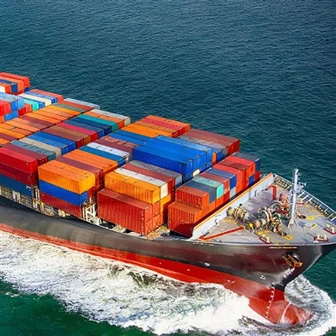
How Long Does It Take To Ship From China To Qatar By Sea?
Panorama of the time efficiency of core routes: the transportation network of the Persian Gulf Corridor
The shipping channels from China to Qatar are highly concentrated along the Persian Gulf, forming a transportation system with southern ports as the starting point and Doha Port as the core hub, covering more than 95% of Qatar's shipping needs:
1. Direct routes from southern ports: the golden trunk line from South China to Doha
Departure ports and covered goods: Shenzhen Yantian Port, Guangzhou Nansha Port, and Hong Kong Kwai Chung Port are the main starting points, carrying 80% of China-Qatar shipping goods, including electronic products, building materials, furniture, mechanical parts, etc.
Voyage data:
Shenzhen/Guangzhou to Doha Port (Doha): The direct ship voyage is about 18-22 days, such as the COSCO Shipping "Persian Gulf Express" voyage, with an average speed of 20 knots (about 37 kilometers/hour), and it can arrive in 18 days.
Hong Kong to Doha Port: Because barge transfer takes 1-2 days, the overall time efficiency is 20-24 days, which is suitable for less than container load (LCL).
Special cargo transportation: Extra-long and extra-heavy equipment (such as oil drilling parts) requires the use of frame boxes or open top boxes. The shipping company needs to coordinate special port operations in advance, and the time limit is extended by 3-5 days compared to general cargo.
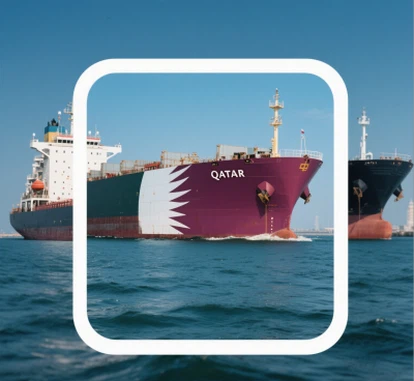
2. Eastern port transit plan: Supplementary option in East China
Shanghai/Ningbo to Doha: There are fewer direct ships, and most of them are transited through Dubai (Jebel Ali) and Bahrain (Bahrain), with a voyage of 25-30 days. For example, from Shanghai to Doha via Dubai, it takes a total of 28 days, which is 10 days slower than the direct ship, but the freight is 15% lower (about US$1,800/20GP vs US$2,100/20GP).
Qingdao/Tianjin to Doha: Affected by the freezing of northern ports in winter (December to February of the following year), some voyages need to detour to Busan, South Korea, with a time limit of 30-35 days, which is suitable for non-urgent bulk cargo (such as steel and cement).
Industry case: In April 2024, a cross-border e-commerce company in Hangzhou transported 5,000 3C products via a direct ship from Shenzhen to Doha. It took only 19 days for the ship to arrive at the port. After customs clearance, it was delivered to the capital Doha through Qatar's local logistics network. The whole journey took 22 days, which was 10 days shorter than the transit plan, and the damage rate of goods was reduced to 0.3%.
Analysis of the five core variables affecting time efficiency
Maritime transport time efficiency is a comprehensive result of port efficiency, ship performance, cargo attributes and external environment. Key factors need to be disassembled one by one:
1. Operation efficiency of Doha Port: "Efficiency Benchmark" in the Persian Gulf
Port infrastructure: As the only container port in Qatar, Doha Port will have a throughput of 2.8 million TEUs in 2023, equipped with 15 deep-water berths (water depth of 14.5 meters), which can berth 200,000-ton ships. The loading and unloading time of a single container at its automated terminal (Doha Port Terminal) is only 2.5 minutes, which is 50% more efficient than that of a manual terminal, and the average time a ship spends in port is compressed to less than 24 hours.
Peak season stress test: From November to December each year (Qatar "Shopping Festival" + logistics peak after the World Cup), the port congestion index rises by 30%, and the waiting time for container ships at anchorage is up to 5 days, resulting in an overall time extension of 10%-15%. Actual measurements in December 2023 showed that some voyages were delayed by 4 days due to waiting for berths, and the time to Doha increased from 18 days to 22 days.
2. Impact of differences in ship types and speeds
Container ships vs. bulk carriers:
Container ships (such as 10,000TEU) have an average speed of 18-22 knots, and a direct transit time of 18-22 days from Shenzhen to Doha;
Bulk carriers (such as 50,000-ton ships) have a speed of 14-16 knots, and a transit time of 25-30 days on the same route, which is suitable for bulk cargoes such as coal and ore.
Direct ships vs. transit ships: For each additional port of call (such as Dubai and Abu Dhabi) for a transit ship, the transit time is extended by 2-3 days. For example, from Guangzhou to Doha via Abu Dhabi, the total voyage is 7 days longer than that of a direct ship, but the freight can be reduced by 20% (suitable for construction materials with low timeliness requirements).
3. Goods type and customs clearance complexity
General goods customs clearance process:
General consumer goods (such as textiles and daily necessities) need to submit commercial invoices, packing lists, and certificates of origin (CO), and pre-declare through the Qatar Customs "e-Customs" platform. Customs clearance can be completed within 48 hours (inspection rate is about 5%).
Special goods requirements:
Food/drugs: Halal certification (application cycle 10-15 days) and Qatar Food and Drug Administration (QFDA) registration are required. The inspection rate during customs clearance is 20%, and the time is extended to 7-10 days;
Electronic products: GSO (Gulf Standardization Organization) certification is required. Some products (such as mobile phones and computers) need to apply for Qatar Communications Authority (CRA) license. Incomplete document preparation may cause customs clearance delays of more than 5 days.
4. Seasonal and weather time effects
Summer high temperature challenge: The temperature in the Persian Gulf in summer (June-August) often exceeds 45°C, and the efficiency of port loading and unloading operations decreases by 15%. Some goods (such as cosmetics and rubber products) need to wait in temperature-controlled warehouses, increasing the risk of 1-2 days of delay. In July 2024, a voyage was detained in Doha Port for 3 days for inspection due to excessive cargo temperature.
Winter monsoon impact: From December to February of the following year, affected by the northeast monsoon, the average wave height of the Arabian Sea is 2-3 meters, the ship speed decreases by 10%, and the time efficiency of direct ships from Shenzhen to Doha increases by an average of 2-3 days.
5. Geopolitics and emergencies
Risk of port strike: In October 2023, a strike by dock workers at Doha Port caused the ship to be detained for 4 days, involving more than 800 containers, and some goods were delayed for more than 10 days.
Channel safety issues: Occasionally, there are tanker accidents or military activities in the waters of the Persian Gulf. For example, in 2022, a voyage was temporarily diverted, and the time limit was extended by 5 days. The shipping company needs to purchase war insurance in advance (the premium is about 0.2% of the cargo value).
Practical strategies for optimizing timeliness: full process control from booking to delivery
1. Accurate selection of routes and shipping companies
Direct ship priority strategy:
Time-sensitive goods (such as e-commerce packages, precision instruments): Choose direct routes of COSCO Shipping and Evergreen Shipping, with a punctuality rate of over 90% (2023 data) to avoid the uncertainty caused by transit.
Cost-oriented goods (such as furniture and building materials): Consider transit ships, such as transiting through Dubai Jebel Ali Port, which can reduce freight by 15%-20%. At the same time, the shipping company can dynamically adjust the space to control the time limit to 25-30 days.
Comparison of shipping companies' on-time rates:
| Shipping company | Shenzhen to Doha on-time rate | Average time (days) | Advantageous cargo types |
|---|---|---|---|
| COSCO Shipping | 92% | 18-20 | High-time general cargo |
| Hapag-Lloyd | 88% | 20-22 | Special cargo (dangerous goods) |
| Wan Hai Lines | 85% | 22-24 | LCL cargo |
2. Standardized preparation of customs clearance documents
Core document list:
Commercial invoice (HS code must be indicated, accurate to 6 digits, such as "8517.62" for smartphones);
Packing list (weight/size of each piece of cargo must be subdivided, with an error of ≤3%, otherwise it may trigger customs inspection);
Certificate of Origin (CO) or FORM X (China-ASEAN Free Trade Area Certificate, some goods can enjoy tariff reductions);
Product certification (such as GSO certification for home appliances and building materials, Halal certification for food, which must be applied for 20 days in advance).
Advantages of electronic customs clearance: Submitting documents through the Qatar Customs "Nusuk" platform can shorten customs clearance time to 24 hours (traditional paper customs clearance takes 3-5 days), and the probability of inspection is reduced to 3% (data source: Qatar Customs 2024 report).
3. Cargo packaging and special needs processing
Moisture-proof and reinforcement: Qatar's air humidity is 60%-80% all year round. Electronic products need to be vacuum packed + moisture-proof beads (1500 grams per cubic meter), and wooden box packaging needs to be affixed with IPPC fumigation marks (to avoid fines at the port of destination, and the fine for a single box can reach US$200).
Transportation of large cargo: Equipment over 12 meters (such as engineering cranes) must apply for port overweight and overlimit permits in advance. Doha Port accepts a maximum single piece weight of 100 tons, but it must be reported to the shipping company 15 days in advance, and the transportation time is increased by 5-7 days.
4. Dynamic balance between cost and time efficiency
| Transportation plan | Time efficiency (days) | Cost (20GP container) | Suitable scenarios |
|---|---|---|---|
| South China direct ship | 18-22 | USD 2000-2500 | E-commerce goods, machinery parts |
| East China transit ship | 25-30 | USD 1600-2000 | Building materials, chemical raw materials |
| Sea-air combined transport (emergency) | 7-10 | USD 6000-8000 | High-value emergency items (such as chips) |
| Bulk carrier transport | 25-35 | USD 1200-1500 | Bulk goods such as coal and ore |
Enterprise practice: A Foshan ceramic company found that choosing a transit ship to transport tiles (volume 500CBM) saves USD 3,000 in freight compared to a direct ship. At the same time, by booking 4 weeks in advance, the time efficiency is controlled to 28 days to meet the cycle requirements of the Qatar construction site.
Latest industry trends: Infrastructure upgrades and technology empowerment to improve efficiency
1. Construction of new ports and logistics hubs
Lusail Port: As a supporting project for the 2022 World Cup, the port will be fully operational in 2024, mainly handling high-end consumer goods and luxury goods. The direct service time from Shenzhen to Lusail Port is 17-19 days. It is equipped with an automated warehousing system, and the cargo sorting efficiency is increased by 40%.
Expansion of Hamad Port: Three new berths will be added in 2023, and the container handling capacity will be increased to 5 million TEU/year. The direct ship time from Guangzhou to Hamad Port will be shortened to 16-18 days, becoming the "express channel" from South China to Qatar.
2. Digital tools reshape the logistics chain
Blockchain electronic bill of lading: Maersk and CMA CGM piloted blockchain bill of lading, shortening the document delivery time from 24 hours to 2 hours. During customs clearance, the inspection rate was reduced from 10% to 2% because the data cannot be tampered with. After a certain electronic company used it, the customs clearance time was reduced by 3 days.
AI time-limit prediction system: Cainiao International Logistics launched the "Persian Gulf Time-limit Brain", which integrates ship location, port congestion, and weather data. The accuracy of time-limit prediction is 92%, helping companies to plan production schedules in advance and increase inventory turnover by 15%.
3. Policy dividends and trade agreements
China-Qatar Free Trade Agreement: In the free trade agreement signed in 2023, 90% of the goods will achieve zero tariffs, and at the same time simplify the certificate of origin review process. The application time for enterprises is shortened from 5 days to 2 days, which indirectly improves customs clearance efficiency.
Qatar's "National Vision 2030": Invest $80 billion in the next five years to upgrade the logistics network. After the expansion of the highway from Doha to inland cities, local delivery time will be shortened by 30%. For example, the truck transportation time from Doha to Dukhan Industrial Zone will be reduced from 2 hours to 1.5 hours.
Summary: The core of time management is "precise matching + dynamic adjustment"
The time efficiency from China to Qatar by sea is essentially a precise match between route characteristics and cargo demand:
High time efficiency requirements (such as e-commerce, precision equipment): Choose a direct ship from South China, control the time efficiency within 20 days, and match electronic customs clearance and full-process monitoring to ensure the agility of the supply chain;
Cost-oriented goods (such as bulk building materials, daily necessities): Use transit ships or bulk carriers, accept 25-30 days of time efficiency, and reduce logistics costs through large-scale procurement and port pre-declaration;
Special goods (such as dangerous goods, food): Reserve 10-15 days of buffer time, complete certification and inspection preparations in advance, and avoid delays caused by policy risks.
Enterprises need to build a "three-dimensional management system":
Data monitoring: Real-time tracking of ship positions through MarineTraffic and ship API, setting timeliness warnings (if the ship fails to arrive at the port more than 3 days after the expected time, an emergency plan will be activated);
Supplier management: Select logistics companies with an on-time rate of more than 85% and rich customs clearance experience, and sign a timeliness guarantee agreement (such as compensation of 10% of the freight for delays of more than 5 days);
Flexible planning: In view of the high temperatures in summer and winter monsoons in the Persian Gulf, a 10% inventory buffer is reserved in the production plan to cope with possible timeliness fluctuations.
With the expansion of Hamad Port and the popularization of digital tools, the timeliness of China-Qatar shipping is expected to be further shortened to 15-18 days in the future, promoting the upgrade of bilateral trade from "weekly logistics" to "sub-weekly logistics". For manufacturing and cross-border e-commerce, accurate timeliness management is not only a means of cost control, but also a core element in building regional supply chain competitiveness - in the context of Qatar's accelerated industrialization and consumption upgrades, the optimization of shipping timeliness will directly translate into improved market response speed and customer satisfaction.