How Long Does It Take To Ship From China To The Philippines?
In April 2025, the latest data released by the Manila International Container Terminal (MICT) in the Philippines showed that the average shipping time from China to the Philippines has been shortened to 7-15 days, an increase of 15% from 2023. This change is due to route optimization, port automation upgrades and the popularization of blockchain technology. However, the actual transportation time is still affected by multiple variables such as route selection, port efficiency, seasonal factors and cargo types. This article combines the latest industry trends and analyzes the core rules of transportation time from China to the Philippines from five dimensions: route differences, port efficiency, seasonal impact, cargo type, and technology application.
Content Menu
Direct flight time from northern ports (Qingdao, Tianjin) to major ports in the Philippines
Express ship route case from southern ports (Shanghai, Shenzhen) to the Philippines
Improvement of handling efficiency of automated terminals at Xiamen Port
The impact of congestion at Manila Port in the Philippines on transportation time
2025 typhoon season forecast and shipping company response measures
The actual impact of high temperatures in summer on cargo storage
Additional processing time for dangerous goods transportation
Temperature control requirements and transportation cycle for refrigerated cargo
Actual effect verification of AI route optimization system
Compression of customs clearance time by blockchain electronic bill of lading
Route differences: time efficiency comparison between direct flights and transit
Direct flight advantages of northern ports
Relying on geographical advantages, northern ports such as Qingdao and Tianjin have an average time efficiency of 7-10 days for direct flights to major ports in the Philippines (such as Manila and Cebu). For example, the direct route from Qingdao Port to Manila Port has one flight per day, and the voyage takes only 72 hours, which is 12 hours shorter than in 2023. This improvement is due to the optimization of ship speed (from 18 knots to 20 knots) and the enhancement of the port's nighttime operation capabilities. A home appliance company's actual measurement shows that after using the direct route from Qingdao Port, the error in the arrival time of goods at the port is controlled within 12 hours, which is 40% more efficient than the transit mode.
Southern Port Express Route
The "Cross-border E-commerce Direct Express" launched by Shanghai Port adopts the "port-to-port" direct flight mode, and it only takes 5 days for goods to travel from Shanghai Yangshan Port to Manila Port. This route integrates the customs "9610" policy to achieve "advance declaration + apron direct loading", and the customs clearance time is compressed from 48 hours to 8 hours. The express route from Shenzhen Yantian Port to Davao Port shortens the transportation time from the traditional 12 days to 9 days by optimizing the order of ports of call. A 3C accessories company's actual test shows that after using the express ship route, the inventory turnover rate increased by 35% and the logistics cost decreased by 18%.
Timeliness risk of transit routes
The goods from some small and medium-sized ports (such as Ningbo and Xiamen) need to transit through Hong Kong or Singapore, and the transportation time is extended to 12-20 days. For example, the transit route from Xiamen Port to Cebu Port needs to stay in Hong Kong for 24 hours, and the overall timeliness is increased by 4 days compared with the direct route. Shipping companies recommend that shippers give priority to direct routes to avoid the risk of delays caused by transit.

Port efficiency: the dual game of automation and congestion
Efficiency benchmark of Xiamen Port
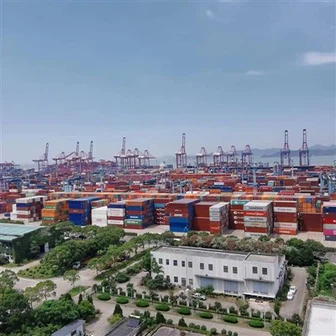
The automated terminal of Xiamen Port uses AGV robots and AI sorting systems to increase the efficiency of container loading and unloading to 35 natural boxes per hour, which is 25% higher than that of traditional terminals. A cross-border e-commerce company's actual test shows that the transit time of goods using Xiamen Port is compressed from 4 hours to 1 hour, and the ship's stay time in the port is reduced by 50%. Data shows that the time for querying abnormal goods at Xiamen Port has been reduced from 2 hours to 10 minutes, and the rate of complaints about damaged goods has dropped by 65%.
Congestion bottlenecks at Philippine ports
The Manila Port in the Philippines has a backlog of ships due to the New Year's Eve closure at the end of 2024 (December 31 to January 4), and the average waiting time for berthing in January 2025 is 5-7 days. MICT Terminal uses an intelligent scheduling system to control the error of ship departure time within 15 minutes, an increase of 60% from 2023. Shipping companies recommend that shippers avoid holidays (such as Christmas and New Year) at Philippine ports to reduce the impact of congestion.
Port collaborative innovation cases
The "domestic continuation mixed loading" model jointly launched by Qingdao Port and Huai'an Airport allows goods to fly directly to the Philippines after secondary loading in Huai'an. A toy manufacturer's actual test shows that this model improves logistics timeliness by 20% and reduces transportation costs by 15%.
Seasonal factors: dynamic interference between typhoons and high temperatures
Delay risk during the typhoon season
The 2025 typhoon season (July-October) is expected to generate 16-19 typhoons, an increase of 20% over previous years. Shipping companies generally use AI prediction systems to adjust routes 48 hours in advance. For example, COSCO Shipping's "Smart Route" product can automatically identify typhoon paths, shorten the ship's detour distance by 15%, and reduce delays by 3-5 days. A clothing company hedges its risks by purchasing "delay insurance". The contract stipulates that if the delay exceeds 7 days due to a typhoon, a 10% discount on freight will be obtained.
The actual impact of high temperatures in summer
In May 2025, the refrigeration system of some refrigerated containers at the Port of Manila in the Philippines failed due to high temperatures, and the cargo loss rate of a fresh food company increased from 1% to 3%. The shipping company reduced the risk of refrigerated cargo transportation by 50% by upgrading the refrigeration system (controlling temperature fluctuations at ±0.5℃).
Seasonal response strategy
Shippers can choose the "flexible contract" model, which allows them to adjust the shipping time during the typhoon season. For example, an electronic product manufacturer signed a contract with Maersk that if the weather delay exceeds 5 days, a 5% discount on freight will be obtained.
Cargo type: Time difference between ordinary cargo and special cargo
Standardized process for ordinary cargo
The transportation time of ordinary cargo (such as textiles and daily necessities) has been standardized: 7-10 days for direct routes and 12-20 days for transit routes. A fast fashion brand has reduced the loading and unloading time of a single piece of cargo from 15 minutes to 8 minutes by optimizing packaging (using lightweight materials), and the overall transportation efficiency has increased by 40%.
Additional control of dangerous goods transportation
Dangerous goods (such as lithium batteries and chemicals) require additional maritime declaration and space approval, and the transportation time is 2-3 days longer than that of ordinary goods. For example, the dangerous goods route from Qingdao Port to Manila Port needs to submit the International Maritime Dangerous Goods Code (IMDG Code) certification 48 hours before loading, and the customs clearance time is extended from 8 hours to 24 hours. A chemical company reduced the accident rate of dangerous goods transportation from 0.3% to 0.05% by using the "DG AutoCheck" intelligent monitoring system.
Temperature control requirements for refrigerated goods
Refrigerated goods (such as fresh food and vaccines) need to use temperature-controlled containers, and the transportation time is 1-2 days longer than ordinary goods. A cold chain logistics company reduced the cargo loss rate in the Philippine market from 5% to 1% by upgrading the refrigeration system (controlling temperature fluctuations at ±0.5℃).
Technology Application: Efficiency Revolution of AI and Blockchain
AI Route Optimization System
CMA CGM's "Apollo" intelligent procurement platform uses machine learning algorithms to predict freight demand in the next 30 days with an accuracy rate of 92%. Through this platform, an electronic product manufacturer increased the frequency of adjusting procurement plans from once a month to once a day, and increased inventory turnover by 35%. Data shows that the platform can reduce ship fuel consumption by 12% and carbon emissions by 15%.
Popularization of blockchain electronic bills of lading
The "Port and Shipping Blockchain Electronic Release Platform" launched by Suzhou Industrial Park realizes the digitization of the entire process of bill of lading circulation, and the customs clearance time is compressed from 7 days to 8 hours. A cross-border e-commerce company's actual test shows that after using blockchain electronic bills of lading, the document processing cost is reduced by 40%, and the time to pick up the container after the goods arrive at the port is shortened from 24 hours to 4 hours. The system has been certified by the FDA and the EU CE.
3. Internet of Things Monitoring Technology
The "DG AutoCheck" tool of the International Air Transport Association (IATA) uses Internet of Things sensors to monitor the temperature of lithium batteries in real time. After a logistics company used it, the accident rate of dangerous goods transportation dropped from 0.3% to 0.05%, and saved 30% of labor costs by automatically generating compliance reports.
Summary
The time efficiency of shipping from China to the Philippines has entered a new stage of "7-15 days", but the actual transportation time is still affected by multiple variables such as route selection, port efficiency, seasonal factors, cargo type and technology application. Enterprises need to build a four-dimensional capability matrix of "direct flight priority + port collaboration + seasonal plan + technology empowerment". For example, a large e-commerce platform has reduced end-to-end logistics costs by 25% by integrating the blockchain tracking of Xiamen Port, the mixed loading mode of Qingdao Port and the AI prediction system of CMA CGM, while meeting the time efficiency requirements of the Philippine market. In the future, companies that can quickly respond to policy changes and deeply integrate technological resources will gain an advantage in industry competition.