Japan Dedicated Logistics
With the development of cross-border e-commerce and the increasing frequency of international trade, the importance of dedicated logistics has become increasingly prominent. As an important trading partner of my country, Japan's new developments in the field of dedicated logistics have attracted much attention. Recently, Japan's dedicated logistics has ushered in a series of important changes and breakthroughs, injecting new vitality into the trade exchanges between China and Japan.
New logistics service launched in Japan
New direct flight route opened
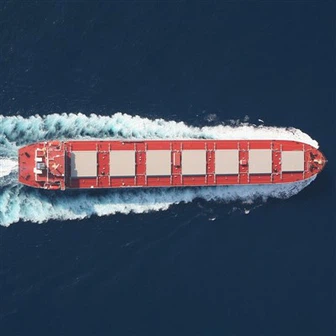
Recently, Heyuan Supply Chain (Jiaxing) Co., Ltd. announced the opening of a new direct cargo route from China to Japan. The route departs from Shanghai Port, China and goes directly to Tokyo Port, Japan, with three fixed flights per week. Compared with previous routes, the new route has greatly shortened the transportation time. Goods can arrive in Tokyo from Shanghai in just 2-3 days, greatly improving the logistics efficiency. This measure provides a more efficient logistics solution for those products that are sensitive to transportation time, such as fresh food, fashion fast-moving consumer goods, etc., which can ensure that the goods are delivered to the Japanese market in the shortest time to meet the immediate needs of consumers.
Analysis of the current pattern of Japan's dedicated logistics
1. Competition among logistics companies

At present, the Japanese dedicated logistics market is highly competitive, and many logistics companies are competing. In addition to the traditional large-scale state-owned logistics companies that occupy a certain market share with strong financial strength and extensive logistics networks, in recent years, some emerging private logistics companies have also emerged with flexible operating models and innovative service concepts. These companies have launched all-round competition in terms of service quality, transportation prices, and delivery timeliness, continuously optimizing their own businesses and promoting the development of the entire Japanese dedicated logistics market.
2. Diversification of logistics transportation methods
In terms of transportation methods, Japan's dedicated logistics presents a diversified pattern. Sea transportation is still the mainstream transportation method due to its large volume and low cost, and it undertakes most of the cargo transportation volume, especially bulk cargo and goods that do not require high transportation time. Air transportation, with its fast and efficient advantages, plays an important role in the transportation of high-value and time-sensitive goods such as fresh food and electronic products. In addition, with the development of railway transportation, the logistics service of China-Europe trains extending to Japan has gradually emerged. It combines the stability of railway transportation and the cost advantage of sea transportation, providing customers with a new logistics option. At the same time, road transport is indispensable in the short-distance transshipment and terminal distribution of goods, forming a seamless logistics network with sea, air and rail transport.
The impact of logistics development on Sino-Japanese trade
1. Cross-border e-commerce business is booming. Efficient Japanese dedicated logistics has strongly promoted the development of cross-border e-commerce between China and Japan. In the past, problems such as long logistics delivery time and opaque logistics information seriously restricted the development of cross-border e-commerce. Today, with the continuous optimization of logistics services, goods can be delivered to Japanese consumers faster, and consumers' shopping experience has been greatly improved, thus stimulating consumer demand. According to relevant data, in the past year, China's cross-border e-commerce exports to Japan increased by 35% year-on-year, a large part of which benefited from the improvement of logistics efficiency. More and more Japanese consumers are beginning to choose to buy goods from Chinese cross-border e-commerce platforms, covering multiple categories such as clothing, household goods, and electronic products.
2. Transformation and upgrading of traditional trade For traditional trading companies, the development of Japanese dedicated logistics has also brought new opportunities. On the one hand, the reduction in logistics costs makes the company's products more price competitive in the Japanese market, which helps companies expand their market share. On the other hand, fast and reliable logistics services can help companies achieve more accurate supply chain management, reduce inventory backlogs, and improve capital turnover efficiency. For example, some manufacturing companies have achieved timely supply of raw materials and rapid delivery of finished products by cooperating with high-quality logistics companies, thereby improving their production efficiency and market responsiveness, and promoting the transformation and upgrading of traditional trading companies towards digitalization and intelligence.
Logistics companies take innovative measures to enhance competitiveness
Technological innovation application
In order to improve logistics efficiency and service quality, many logistics companies have increased their investment in technological innovation. For example, Heyuan Supply Chain (Jiaxing) Co., Ltd. has introduced artificial intelligence and big data technologies to optimize logistics transportation route planning. Through the analysis of massive transportation data, the system can plan the best transportation route for each batch of goods based on real-time traffic conditions, weather conditions and other factors to avoid congestion and shorten transportation time. At the same time, using the Internet of Things technology, the company has achieved full monitoring of the cargo transportation process. Customers can understand the location, temperature, humidity and other information of the cargo in real time to ensure the safety of the cargo during transportation.
Future Outlook
Looking ahead, Japan's dedicated logistics is expected to usher in a broader space for development. With the continuous development and application of new technologies such as 5G, artificial intelligence, and the Internet of Things, the logistics industry will achieve a higher degree of intelligence and automation, further improve logistics efficiency, and reduce logistics costs. At the same time, with the deepening of exchanges between China and Japan in the fields of economy, trade, culture, etc., the demand for logistics services will continue to grow, which will prompt logistics companies to continuously innovate service models, expand service areas, and improve service quality to meet the diversified needs of the market. I believe that with the joint efforts of all parties, Japan's dedicated logistics will play a more important role in promoting the development of Sino-Japanese trade and promoting regional economic integration.