Red Sea Crisis And Early Peak Season Surge Disrupt Global Supply Chains For Some SMBs
In the spring of 2025, the global supply chain is experiencing dual challenges: on the one hand, retailers are preparing in advance to cope with the Red Sea crisis and geopolitical uncertainties, resulting in a surge in peak season demand; on the other hand, the detour costs and delays caused by the disruption of Red Sea shipping continue to ferment, further squeezing the survival space of small and medium-sized enterprises. Freightos data shows that the freight rate of 40-foot containers from Asia to Northern Europe climbed to US$4,603 in April 2025, up 30% from the beginning of the year, and the detour caused by the Red Sea crisis increased the shipping time by 10-14 days. Some small and medium-sized enterprises were forced to reduce orders or suspend exports due to the unbearable cost pressure. This article combines the latest industry trends and corporate cases to analyze the chain effects of these two factors on the global supply chain.
Table of Contents
Early peak season shipping and its impact
The impact of the Red Sea crisis on enterprises
Future expectations and market outlook
At the same time…
Early peak season shipping and its impact
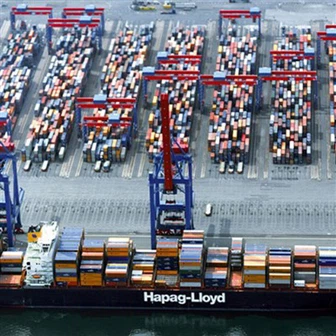
The phenomenon of "peak season forward" in the global supply chain in 2025 is particularly significant. Affected by the ongoing Red Sea crisis, retailers have moved their traditional second-half stocking cycle forward to the second quarter to avoid delivery delays. Freightos data shows that in April 2025, freight volume on the Asia-North America route increased by 12% year-on-year, and that on the European route increased by 9%, with off-season freight rates rising against the trend. For example, the freight rate for a 40-foot container from Asia to Northern Europe rose by 31% from $3,500 at the beginning of the year to $4,603. This surge in demand has led to increased port congestion, with the average waiting time for ships at the Port of Rotterdam extended to five days from two days last year, and the cargo detention time at the Port of Los Angeles increased by 48 hours.
Difficulties faced by small and medium-sized enterprises
Small and medium-sized exporters generally lack long-term logistics contracts and are forced to compete for limited capacity at spot prices. The head of a small home appliance company in Zhejiang said that the price of the June space booked through a freight forwarder had risen by 40% from the beginning of the year, and an additional 15% fuel surcharge was required. What is more serious is that the shift of the peak season forward has led to a sharp increase in capital turnover pressure: companies need to purchase raw materials 3-4 months in advance, but the payment collection cycle is extended to more than 60 days due to transportation delays. According to a survey by Freightos, 45% of small and medium-sized enterprises are considering reducing overseas orders due to cost surges, and 22% plan to turn to alternative markets such as Southeast Asia.
The trend of regionalization of supply chains is accelerating
To avoid risks, companies are accelerating the layout of near-shore supply chains. For example, the American clothing brand Boohoo transferred some orders from China to Mexico, using the rules of origin of the US-Mexico-Canada Agreement (USMCA) to reduce tariff costs. This adjustment has led to a surge in shipping volume on routes from Southeast Asia to the United States, with container shipping volume from Vietnam to the west coast of the United States increasing by 25% year-on-year, while shipping volume on routes from China to the United States fell by 12%.
The impact of the Red Sea crisis on companies
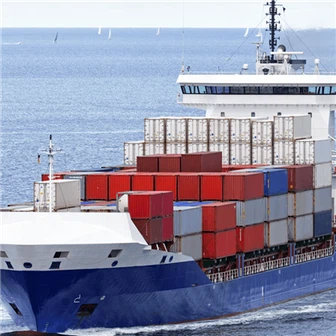
The Red Sea crisis continues to ferment, causing a systemic impact on the global supply chain. As of May 2025, 74% of the world's container capacity is forced to bypass the Cape of Good Hope, resulting in the transportation time from Asia to Northern Europe extending from 21 days to 35 days and a 40% increase in fuel costs. This "capacity black hole" directly pushes up freight rates: the freight rate for a 40-foot container on the Asia-Mediterranean route has soared from US$1,900 in January 2024 to US$5,495, an increase of 189%.
Logistics costs and delivery risks
Small and medium-sized enterprises are the first to bear the brunt. Zhejiang Zhongman Ice Making System Co., Ltd.'s goods exported to Europe need to arrive at the port 14 days later due to bypassing the Cape of Good Hope, and the accounts receivable cycle is extended by 10-15 days, which increases the pressure on working capital turnover. The shipping costs of Shishang Huzhou Hardware and Electrical Co., Ltd. have increased by 2-3 times compared with normal periods, and it is forced to negotiate with customers to share freight, and the profit margin of some orders has dropped to less than 5%. What's more serious is that some companies face breach of contract compensation for failure to deliver on time. For example, a furniture exporter was sued by a European customer for 20% of the order amount due to a 30-day delay, which directly led to a quarterly profit loss.
Limitations of air freight substitution
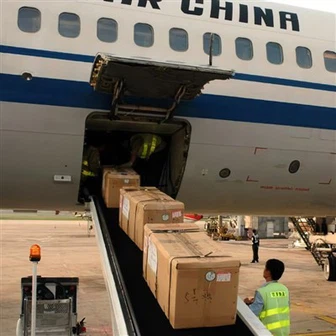
To ease the pressure on sea freight, some companies turned to air freight, but the cost surge is difficult to sustain. Freightos data shows that the price of air freight from China to Europe in April 2025 reached US$4.25/kg, more than 10 times higher than sea freight. An electronic product exporter said that the cost of its orders delivered by air freight increased by 300%, which can only maintain the urgent needs of core customers. In addition, the tight air freight capacity has made it difficult to find space. The cross-border e-commerce cargo volume at Hangzhou Xiaoshan Airport increased by 72.8% year-on-year, but it still could not meet the surging demand.
Rising compliance and insurance costs
The increase in insurance premiums caused by the Red Sea crisis has further increased the burden. The London marine insurance market has increased the war insurance rate in the high-risk area of the Red Sea from 0.07% to 0.75%-1%, and the insurance cost of a single voyage has increased by tens of thousands of dollars. At the same time, the U.S. Customs has strengthened the inspection of e-commerce packages. In May 2025, Los Angeles Airport will implement 100% inspection on all e-commerce imports. Many freight forwarders have been suspended from duty-free status, and the customs declaration costs of small and medium-sized sellers have soared from 10 cents/piece to 3 U.S. dollars/piece.
Future expectations and market outlook
Industry experts generally believe that the Red Sea crisis is difficult to ease in the short term, and supply chain disturbances will continue until the end of 2025. Drewry predicts that if the crisis continues, global container trade volume may fall by 2%-4% in 2025, and freight rates from Asia to the United States may exceed US$8,000/FEU. At the same time, the normalization of peak season demand may make "off-season not off-season" the new normal, and companies need to re-evaluate inventory strategies and logistics costs.
Freight rate and capacity reconstruction
Shipping companies are accelerating the adjustment of route networks. Maersk plans to cut trans-Pacific capacity by 20% and transfer ships to emerging markets such as Europe and the Middle East. Intra-Asian feeder shipping has opportunities. The Drewry Intra-Asia Container Index rose 6% in the second half of April 2025, and the volume of Southeast Asia to the Middle East route increased by 17%. However, this adjustment may lead to long-term capacity mismatch and aggravate the imbalance between supply and demand in the regional market.
Corporate strategy adjustment
To cope with the challenges, small and medium-sized enterprises need to adopt diversified strategies:
Supply chain regionalization: Transfer production capacity to tariff depressions such as Mexico and Turkey. For example, Shein's factory in Mexico can reduce tariff costs by 60%.
Application of digital tools: Use Freightos's WebCargo platform to monitor freight rate fluctuations in real time and optimize transportation plans. The error rate can be controlled within 0.5%.
Compliance upgrade: Invest in customs compliance systems. For example, a clothing company uses blockchain technology to trace the supply chain, and the inspection pass rate has increased by 30%.
Policy and industry game
Geopolitical risks may escalate further. China has announced an 84% tariff on US goods, and the EU, Japan and others are also planning to take countermeasures. This "tariff war" may lead to a shrinking global shipping demand. At the same time, domestic inflationary pressures in the United States have intensified, and consumer spending has decreased, further suppressing import demand.
The Red Sea crisis and the peak season surge are not isolated incidents. Other factors are also exacerbating the complexity of the supply chain:
The superposition effect of China's Golden Week
During the Spring Festival in 2025, China's port operations increased by 50% year-on-year, and Shanghai Port handled more than 100,000 TEU containers per day, resulting in a 2-3 day extension of ship waiting time. Although the official rumor of congestion has been refuted, small and medium-sized freight forwarders still face difficulties in booking, and some companies are forced to pay "expedited fees" to secure space.
The hidden worries of a global economic slowdown
The International Monetary Fund (IMF) predicts that global GDP growth will fall to 2.8% in 2025, and weak retail demand in Europe and North America may offset peak season growth. A toy exporter said that its European customers have cut their orders for 2025 by 15% and asked to extend the payment period to 90 days, further squeezing cash flow.
Technology and innovation may break the deadlock
Despite the challenges, technological innovation is reshaping the industry ecosystem. For example, the "airport direct loading" pilot launched by Hangzhou Xiaoshan Airport will increase customs clearance efficiency by 20%, and the application of blockchain technology will increase supply chain transparency by 40%. Freightos's WebCargo platform has achieved intermodal transport between airlines, helping companies reduce transit costs by 15%.
Summary
The double impact of the Red Sea crisis and the surge in the early peak season exposed the fragility of the global supply chain and the survival dilemma of small and medium-sized enterprises. In the short term, high freight rates, delivery delays and compliance costs will continue to plague the industry; in the long run, regionalization of supply chains, application of digital tools and policy games will become the key to breaking the deadlock. Companies need to find a balance between cost, efficiency and risk, while policymakers need to avoid excessive intervention that leads to market distortion. In the future, participants with resilience and innovation capabilities will be able to gain a foothold in the turbulence, and the industry as a whole will evolve in a more efficient and sustainable direction.