Why Is It Cheaper To Ship By Sea Than By Air
introduction
In the complex and dynamic field of global logistics, the choice between sea freight and air freight is a crucial decision that significantly impacts businesses' operational costs and supply chain efficiencies. Understanding the underlying reasons for the cost disparity between these two transportation modes is essential for enterprises to make informed and optimal choices. This article delves into the detailed factors that contribute to the lower cost of sea freight compared to air freight, providing comprehensive insights for businesses engaged in international trade and logistics operations.

Content
1. Factors in transportation cost composition
1.1Fuel cost
1.2Infrastructure and operating costs
1.3Labor costs
2. Factors of transportation speed and efficiency
2.1Cost differences due to differences in transportation speed
2.2Different manifestations of transportation efficiency
1. Factors in transportation cost composition
1.1 Fuel cost
Sea - going vessels usually use heavy oil, which is relatively low - priced. For example, although the fuel consumption of a large container ship is huge in total, due to the lower price of heavy oil compared to aviation kerosene, sea freight has a significant advantage in terms of fuel cost. In 2024, the average price of heavy oil in the international market was around $300 - $400 per ton, while the price of aviation kerosene was around $700 - $900 per ton.
Aircraft have a high fuel consumption rate because they need to overcome gravity and fly at high speeds at high altitudes. A Boeing 747 - 400 passenger aircraft can consume about 10 - 12 tons of fuel per hour. In contrast, even when a large container ship is fully loaded, its fuel consumption rate is relatively slow.
1.2Infrastructure and operating costs
Port facilities: Although the construction and operation costs of ports are high, these costs become relatively low when spread over a large number of goods. The main facilities of a port include docks, piers, yards, etc. Building a large - scale container terminal may require hundreds of millions of dollars in investment, but these facilities can be used for decades and can handle a large number of containers simultaneously. For example, the Yangshan Deep - water Port in Shanghai can berth multiple large container ships at the same time, and with efficient loading and unloading equipment, it can quickly complete the loading and unloading of goods. Heyuan Supply Chain (Jiaxing) Co., Ltd. cooperates with many well - known shipping companies at home and abroad, enabling it to make full use of port resources and further reduce costs.
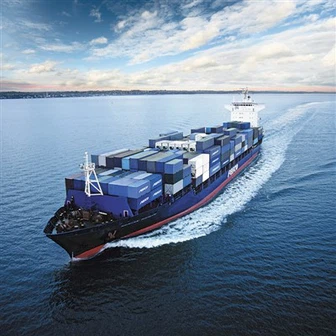
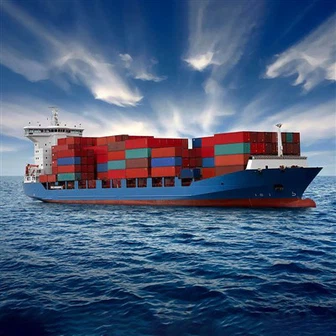
Ship costs: The construction cost of sea - going vessels is expensive, but their service life is long. The cost of a large container ship may be around $100 - $200 million, and its service life can reach 20 - 30 years. Moreover, the carrying capacity of ships is huge. A large container ship can carry thousands of twenty - foot equivalent units (TEUs). For example, the carrying capacity of ultra - large container ships can reach more than 20,000 TEUs. In this way, the purchase cost of the ship can be allocated to a large number of cargo units.
Airport facilities and aircraft costs: The construction and maintenance costs of airports are high, and airports need to be equipped with complex navigation, communication, security inspection and other equipment. The price of an airliner is also high. For example, the price of a Boeing 737 - 800 aircraft is about $100 million, and its service life is generally 20 - 25 years. At the same time, the cargo - carrying capacity of aircraft is relatively small. The cargo - carrying capacity of a general passenger aircraft is about 10 - 50 tons, and although the cargo - carrying capacity of cargo aircraft is relatively large, it is still far lower than that of sea - going vessels. This results in a much higher unit - cargo transportation cost for air transport compared to sea freight.
1.3Labor costs
The crew allocation of sea - going vessels is relatively streamlined. The number of crew members on a large container ship is generally around 20 - 30, including the captain, chief officer, second officer, chief engineer, etc. Their work mainly involves navigating the ship, maintaining equipment, and managing cargo.
Air transportation requires a large number of professionals, including pilots, flight attendants, ground crew, air traffic controllers, etc. For a Boeing 747 - 400 passenger aircraft, the flight crew generally includes 2 pilots and 10 - 15 flight attendants. In addition, ground crew are needed for aircraft maintenance, refueling, cargo loading and unloading, etc., resulting in high labor costs. Moreover, the training cost of aviation personnel is very high, and pilots need long - term professional training. These costs are all included in the transportation price.
2. Factors of transportation speed and efficiency
Sea freight is slow. The speed of a general container ship is about 18 - 22 knots (1 knot = 1 nautical mile per hour, and 1 nautical mile ≈ 1.852 kilometers). The sea freight from Shanghai, China to Los Angeles, USA takes about 12 - 15 days. Due to the long transportation time, the capital occupation cost of goods in transit is relatively high. However, for goods that are not very sensitive to time, such as bulk commodities (ores, coal, timber, etc.) and non - time - sensitive industrial products, the total cost of this transportation method (including the capital occupation cost of the goods' value) is still relatively low. Heyuan Supply Chain (Jiaxing) Co., Ltd. can further optimize costs when handling the sea freight business of such goods, leveraging its professional capabilities and resource advantages.
Air freight is fast. The cruising speed of an aircraft is generally about 800 - 900 kilometers per hour. The flight from Shanghai to Los Angeles takes about 10 - 12 hours. Because of the fast transportation speed, airlines can charge higher fees to cover their high - cost operations and at the same time meet the transportation needs of goods with extremely high time - sensitivity, such as electronic products, fresh products, and high - value components.

2.2Different manifestations of transportation efficiency

Although sea freight is slow, it has a large transportation scale. It can transport a large amount of goods at one time. In international trade, when the volume of goods is large enough, using sea freight can achieve economies of scale. For example, a large automobile manufacturing enterprise needs to import a large number of auto parts from abroad. These parts can be transported by container shipping, with thousands of containers transported at one time, reducing the unit transportation cost through the scale effect. Heyuan Supply Chain (Jiaxing) Co., Ltd. is good at integrating resources in its sea freight business, providing customers with efficient large - scale transportation services.
Due to the limited cargo - carrying capacity of aircraft, the transportation efficiency of air freight is mainly reflected in quick response and high - frequency flight arrangements. For example, some international express companies such as FedEx and DHL use dense route networks and frequent flight schedules to provide customers with fast transportation services. However, this high - efficiency service comes at a high cost, so the charges are relatively high.