Shipping Time From China To Belgium
Under the wave of globalized economy, international trade is becoming more and more frequent. As one of the core modes of international logistics and transportation, ocean shipping undertakes the task of transporting a large number of goods across borders. China, as the world's largest trading country, has close trade ties with European countries. Belgium, with its important geographical location in western Europe, has become one of the key gateways for Chinese goods to enter the European market with its excellent port conditions and developed inland transportation network. The shipping time from China to Belgium not only affects the efficiency of trade between the two countries, but also plays a vital role in the stability and cost control of the entire China-Europe supply chain, and therefore has attracted much attention from the industry.
Table of contents
1. Analysis of the current status of shipping time from China to Belgium
2. Key factors affecting shipping time from China to Belgium
3. Measures and practices to improve shipping time from China to Belgium
4. Future prospects of the industry
1. Analysis of the current status of shipping time from China to Belgium

1. Mainstream routes and transportation time
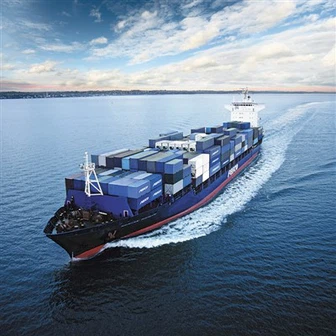
At present, the conventional shipping route from major Chinese ports such as Shanghai, Ningbo, Shenzhen, etc. to the Port of Antwerp in Belgium (the second largest port in Europe and the most important shipping hub in Belgium) takes about 30 to 40 days. This transportation time covers the time the ship spends at sea, as well as the time required to stop at ports along the way to load and unload goods and handle relevant procedures. For example, a container ship departing from the Port of Shanghai, under normal circumstances, arrives in the Mediterranean region after about 25 days of sea voyage, then enters European waters through the Suez Canal, and then takes about 5 to 10 days to arrive at the Port of Antwerp.
2. Time efficiency performance of different shipping companies
There are certain differences in the time efficiency performance of different shipping companies on this route. Some large international shipping companies, with their advanced ship technology, mature route planning and efficient operation management system, can relatively stably guarantee the transportation time efficiency. Take Maersk as an example. On its route from China to Belgium, by optimizing ship scheduling and port operation processes, it can control the transportation time to 30 to 35 days in most cases. However, some smaller shipping companies may experience large fluctuations in transportation time due to limited number of ships and insufficient route resources, and sometimes the transportation time may even exceed 40 days.
3. The relationship between cargo type and time efficiency
The type of cargo also has a certain impact on the time efficiency of sea transportation. For ordinary container cargo, the transportation process is relatively standardized and the time efficiency is relatively stable. However, for some special cargoes, such as dangerous goods, oversized and overweight cargoes, etc., the transportation time efficiency may be affected due to the need for additional transportation procedures, special loading and unloading equipment, and stricter safety supervision. For example, when transporting dangerous goods, ships need to undergo stricter security inspections and go through complex customs clearance procedures when docking at the port, which often leads to an extension of 2 to 3 days in transportation time.
2. Key factors affecting shipping time from China to Belgium
1. Maritime transport link
Ship speed and equipment condition: The speed of the ship is one of the direct factors affecting the timeliness of sea transport. Modern high-speed container ships usually have a speed of more than 20 knots (about 37 kilometers per hour), which can complete long-distance transportation in a relatively short time. However, some old ships may have a lower speed due to aging equipment and insufficient maintenance, thereby extending the transportation time. For example, some ships with a ship age of more than 20 years may have a speed 2 to 3 knots slower than new ships, which will increase the entire voyage time by 1 to 2 days.
Weather and sea conditions: Bad weather and complex sea conditions have a huge impact on sea transport. In winter, strong winds, heavy rains and other bad weather may occur in the North Indian Ocean and the Mediterranean region. To ensure safe navigation, ships may need to slow down or take shelter in safe waters. According to statistics, there are an average of 3 to 5 delays in sea voyages from China to Belgium due to bad weather each year, and each delay lasts from 1 to 3 days. In addition, during the typhoon season in summer, if a ship passes through a typhoon-affected area, it will also face greater safety risks and have to adjust its route or suspend sailing, which seriously affects the transportation time.
2. Port operation link
Port congestion: Ports in China and Belgium, especially some busy hub ports such as Shanghai Port and Antwerp Port, often face congestion problems. A large number of ships arrive at the port at the same time waiting to load and unload goods, which will lead to a decrease in port operation efficiency and a longer stay in the port. For example, during the peak trade season, the container throughput of Shanghai Port will increase significantly. If the port's loading and unloading equipment and manpower are insufficient, the ship may need to wait in line for 2 to 3 days before loading and unloading operations. Similarly, when handling a large amount of goods, the Port of Antwerp may also experience similar congestion, further delaying the transportation time.
Efficiency of customs clearance procedures: During the import and export process of goods, a series of complex customs clearance procedures need to be handled, including customs declaration, inspection, and inspection. If the customs declaration information provided by the enterprise is incomplete or inaccurate, or the customs inspection process is cumbersome, it will lead to a longer customs clearance time. In some cases, due to problems in the customs declaration process, goods may be detained at the port for 5 to 7 days, seriously affecting the shipping time.
3. Supply chain coordination link
Poor communication between freight forwarders and shipping companies: As an important bridge connecting shippers and shipping companies, the efficiency of communication and coordination between freight forwarders and shipping companies is crucial to the timeliness of sea transportation. If the freight forwarder fails to convey cargo information to the shipping company in a timely and accurate manner, or if there are communication errors in booking, changing transportation plans, etc., the cargo may miss the scheduled ship date and delay the transportation time. For example, the freight forwarder did not accurately inform the weight and size of the cargo when booking, resulting in the shipping company arranging inappropriate space and needing to readjust, which may cause the cargo transportation to be delayed by 1 to 2 days.
Inland transportation connection issues: The inland transportation link of goods from inland factories in China to ports, and after unloading at Belgian ports and transporting to inland destinations, will also affect the overall timeliness if it is not connected well with sea transportation. For example, road or rail transportation in inland China failed to deliver goods to the port on time due to traffic congestion, scheduling problems, etc., resulting in the goods missing the scheduled ship date. In Belgium, if there are problems in the transshipment link between the port and inland transportation, such as the goods waiting for inland transportation vehicles at the port for too long, it will also cause delays in transportation time.
3. Measures and practices to improve shipping time from China to Belgium
1. Optimization of shipping company operations
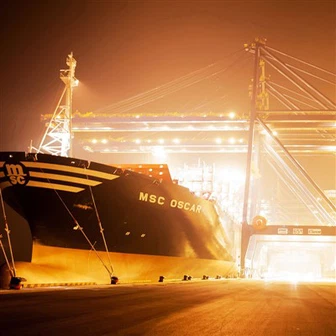
Upgrade ship technology and equipment: Some shipping companies actively invest in upgrading ship technology and updating equipment. For example, adopting new energy-saving propulsion systems to increase ship speed while reducing fuel consumption. Mediterranean Shipping Company (MSC) has put into use ships equipped with advanced propulsion technology on some routes. Compared with previous ships, the speed has increased by about 10%, effectively shortening the transportation time from China to Belgium.
Optimize route planning and scheduling: Through big data analysis and artificial intelligence technology, shipping companies can more accurately predict weather, sea conditions and port congestion, thereby optimizing route planning and ship scheduling. For example, COSCO Shipping uses intelligent shipping systems to dynamically adjust ship routes based on real-time data to avoid bad weather areas and congested ports. In some cases, it has successfully shortened transportation time by 2 to 3 days.
2. Improvement of port management and services
Improve port operation efficiency: Ports improve cargo loading and unloading efficiency by increasing investment in loading and unloading equipment, optimizing operating processes, and strengthening personnel training. In recent years, Shanghai Port has introduced a number of new automated container cranes and optimized the terminal operation process, shortening the average stay of ships in the port by about 1 day. The Port of Antwerp is also constantly improving the port management system to improve cargo handling capacity and reduce ship waiting time.
Simplify customs clearance procedures: The customs departments of China and Belgium are actively promoting customs clearance facilitation reforms, simplifying customs clearance procedures and improving customs clearance efficiency by implementing paperless customs declaration, advance declaration, joint inspection and other measures. For example, the "single window" platform promoted by China Customs allows companies to submit all customs declaration and inspection information at one time, greatly shortening customs clearance time, and the average customs clearance time is shortened by 2 to 3 days.
3. Supply chain collaborative innovation
Strengthen cooperation between freight forwarders and shipping companies: Freight forwarders and shipping companies strengthen communication and collaboration by establishing an information sharing platform. Freight forwarders can understand the shipping company's schedule, space and other information in real time, and make transportation arrangements for cargo owners in advance. At the same time, shipping companies can also obtain accurate cargo information provided by freight forwarders in a timely manner to improve the accuracy of transportation plans. For example, large freight forwarding companies such as Kuehne + Nagel have established in-depth cooperative relationships with many shipping companies. Through information sharing and collaborative operations, they have effectively reduced communication errors during transportation and improved the timeliness of sea transportation. Optimize inland transportation connection: Logistics companies integrate inland transportation resources, establish a multimodal transport system, and improve the connection efficiency between inland transportation and sea transportation. In China, some logistics parks actively develop sea-rail transport, transport goods to ports quickly by rail, and reduce the risk of congestion in road transportation. In Belgium, the connection between ports and inland railway and road transportation has also been strengthened to improve the efficiency of cargo transfer. For example, in some inland logistics centers in Belgium, by optimizing the cargo transfer process, the time for transporting goods from ports to inland destinations has been shortened by 1 to 2 days.
4. Future prospects of the industry
With the continuous growth of global trade and the continuous advancement of technology, the shipping time from China to Belgium is expected to be further improved. On the one hand, emerging technologies such as 5G, Internet of Things, blockchain, etc. will be more widely used in the field of shipping, realizing the intelligent upgrade of ship transportation, port operations, supply chain management and other links, and improving overall operational efficiency. On the other hand, countries will continue to strengthen cooperation in trade policies, customs facilitation and other aspects, creating a more favorable policy environment for shipping. However, all parties in the industry still need to work together to continuously optimize operational management and strengthen collaborative cooperation to cope with the challenges brought about by uncertain factors such as global climate change and trade protectionism, to ensure that the shipping time from China to Belgium can better meet the needs of international trade development and provide solid logistics guarantees for the prosperity of China-Europe trade.