Trump Tariffs Anxiety Hits Peak in Global Economy As Chinese Freight Market Crashes To Two-decade Low
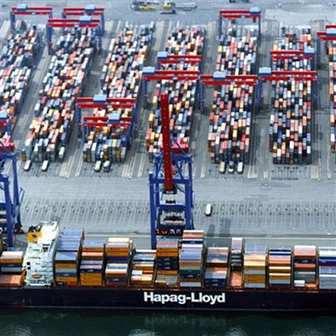
In April, the roar of gantry cranes was mixed with the idling sound of container trucks at Ningbo Zhoushan Port. In the yard of the world's largest port, piles of containers were waiting to be shipped to the United States, but they were stranded due to the "reciprocal tariffs" that took effect on April 2 by the Trump administration. Data showed that China's export container freight index in March plummeted 22% year-on-year, the largest drop since records began in 2005. At the same time, American consumers are experiencing the worst inflation in 30 years, and 70% of the daily necessities on Walmart shelves are still from China, and the tariff costs are ultimately passed on to every ordinary household.
Table of Contents
1. China's freight market under the impact of tariffs
2. The fission and reorganization of the global supply chain
3. Industry survival rules: cost reduction, efficiency improvement and market breakthrough
4. Expert warning: the long-term toxicity of tariff "chronic disease"
5. Future trends: a new balance point from confrontation to competition
China's freight market under the impact of tariffs
Port congestion and freight rate plunge
Data hit:
Shanghai Shipping Exchange data show that China's export container freight index (CCFI) fell 22% year-on-year in March, among which the freight rate on the US West Coast route dropped from US$4,500/FEU to US$2,800, a drop of 37.8%. Ningbo Zhoushan Port's container throughput fell 18% year-on-year, and the yard utilization rate was less than 60%. Some cargo owners chose to abandon their goods because they could not afford the demurrage.
Typical case:
The head of a cross-border e-commerce company revealed that the freight for a 20-foot container from Shenzhen to Los Angeles has increased from US$3,000 in 2024 to US$5,200. After adding a 10% tariff, the cost per box has increased by 40%. "We are forced to transfer 30% of our orders to overseas warehouses in Mexico, but the local logistics efficiency is only 60% of that in China."
Chain reaction of lost manufacturing orders
Dramatic changes in export structure:
China's main exports of electromechanical products to the United States (accounting for 45%) were hit the hardest, with exports to the United States falling 15% year-on-year in March. The head of a home appliance company said that the price of its air-conditioning products in the US market rose by 18% due to tariffs, sales fell by 25%, and it was forced to lay off 1,200 employees.
Risk of supply chain disruption:
Tesla's Shanghai factory faced a shortage of lithium iron phosphate due to the US's imposition of tariffs on battery materials, and was forced to transfer part of its production capacity to the German factory, resulting in an increase of US$2,000 in the cost of each vehicle.

The fission and reorganization of the global supply chain
The "sweet trap" of Southeast Asian countries
Vietnam's "roller coaster":
Although Vietnam has taken over 15% of China's manufacturing transfer, the 46% "reciprocal tariff" has eliminated its export advantage to the United States. The head of a sports shoe OEM factory said that the production cost of its Vietnamese factory is 12% higher than that of China. After adding tariffs, the product price is on par with that of Mexican OEM.
Thailand's "technical bottleneck":
An electronics company moved its hard disk assembly line to Thailand, but found that the local area lacked precision processing capabilities and core components still needed to be imported from China, resulting in a comprehensive cost reduction of only 5%, far below expectations.
Companies are forced to start "secondary transfer"
Mexico's "nearshore dividend":
Ford Motors transferred the production capacity of 100,000 electric vehicles from China to Mexico, using the US-Mexico-Canada Agreement (USMCA) to circumvent tariffs, but had to bear the high local logistics costs and insufficient supply chain support, and the production time was delayed by 6 months.
Africa's "experimental field":
A textile company built a new factory in Ethiopia and enjoyed a zero tariff policy, but faced problems such as power shortages and insufficient worker skills, and its capacity utilization rate was only 40% of the design value.
Industry survival rules: cost reduction, efficiency improvement and market breakthrough
Multimodal transport and digital transformation
Railway "counterattack":
The number of China-Europe trains in March increased by 28% year-on-year. A machinery company shortened the time to transport goods from Chongqing to Rotterdam to 18 days through "railway + sea transport", and the cost was 15% lower than pure sea transport.
The "smart revolution" of logistics companies:
SF Express deployed a fully automatic sorting system at the Langfang transfer station, reducing the processing time of a single box from 8 minutes to 3 minutes, and reducing labor costs by 50%.
Strategies for developing emerging markets
ASEAN's "rebalancing":
China's exports to ASEAN increased by 18% in March. A furniture company reduced its export share to the United States from 40% to 25%, and instead developed the Indonesian market, achieving an annual growth of 30% through local e-commerce platforms.
The "energy link" in the Middle East:
A photovoltaic company signed a 5GW power station order with Saudi Arabia, and through the "photovoltaic module + energy storage system" bundled sales, it circumvented US tariffs while opening up new profit growth points.
Expert warning: The long-term toxicity of the "chronic disease" of tariffs
Risk of global economic stagflation
JPMorgan Chase estimates:
If tariffs continue, the US GDP will shrink by 1.5% in 2025, the inflation rate will exceed 6%, and the 30-year US Treasury yield may soar to 5.5%.
China's "double squeeze":
Due to the obstruction of exports and weak domestic demand, China's GDP growth rate in the first quarter may fall below 4.5%, and the manufacturing PMI has been below the boom-bust line for three consecutive months.
Irreversible reshaping of the Sino-US trade pattern
The cost of "de-Sinicization":
It will take 5-8 years for the United States to rebuild its semiconductor supply chain, during which chip shortages may cause the automotive industry to lose more than $40 billion.
Technology decoupling is accelerating:
China's technology exports to the United States fell by 35%, but the number of patent applications in the new energy field increased by 42% year-on-year, forming a unique path of "export obstruction-innovation feedback".
Future trends: a new balance point from confrontation to competition
The role of regional trade agreements in breaking the deadlock
RCEP's "cushion":
The import and export volume of cross-border e-commerce between China and ASEAN increased by 28%. A cross-border logistics company shortened the transportation time of electronic products to 3 days and reduced costs by 20% through the "Nanning-Singapore" land route.
The EU's "strategic swing":
Although the EU imposed tariffs on Chinese electric vehicles, a Chinese car company successfully circumvented barriers through localized production in its Hungarian factory, and its European market share increased to 12%.
Redefining green technology and supply chain resilience
The "carbon neutrality race" of hydrogen steelmaking:
Chinese steel companies have reduced their carbon footprint by 40% through hydrogen technology, and the price of rebar exported to the EU is 15% lower than that of domestic German products.
The "new battlefield" of digital trade:
A cloud computing company deployed edge computing nodes in Southeast Asia, and through the "data localization" strategy, it reduced the game delay from 120ms to 30ms, and increased user retention by 40%.
Summary
Trump's tariff policy is like a boulder thrown into the global economy, and the ripples it has set off are reshaping the trade pattern. The short-term pain in China's freight market reflects the complex reality of the coexistence of fragility and resilience in the global supply chain. From the anxiety of port workers to the strategic adjustments of multinational companies, from "Made in China 2.0" in Southeast Asia to the new energy revolution in the Middle East, this tariff war is giving birth to a new economic order.
For China, the "dual circulation" strategy and technological innovation are the key to breaking the deadlock. China is building a more flexible supply chain system through reducing logistics costs and increasing efficiency (such as the "four arithmetic operations" case in Hebei), market diversification (such as an 18% increase in exports to ASEAN), and green technology breakthroughs (such as hydrogen steelmaking). For the world, the ultimate victims of tariff barriers are consumers and small and medium-sized enterprises. Only by returning to multilateral cooperation can we avoid the trap of "zero-sum game".